
This article explores seven key lessons learned from spending time with billionaires, entrepreneurs, and top performers. These principles include the power of unreasonable effort, questioning assumptions, decision reversibility, saying yes to opportunities, the impact of environment, choosing the right path, and the importance of thorough preparation. Applying these lessons can significantly enhance personal and professional success.
I have spent hundreds of hours with billionaires, world-class entrepreneurs, and top performers. From sitting in rooms with Elon Musk, managing billions of dollars at Goldman Sachs, to building businesses with Alex and Leila Hormozi, I have discovered that the top performers operate on seven specific principles that most people are never taught. These principles have been instrumental in my journey from an average kid in India to running multiple successful businesses in the United States.
In this article, I will walk you through these seven fundamental rules of success learned from the top 0.01%.
The first lesson, surprisingly, did not come from someone wealthy but from my parents in India. My father told me that no matter how talented I was, I might not get into college due to systemic barriers like the caste system and its unintended consequences that diminished meritocracy.
For example, my valedictorian friend with the highest GPA could not attend college traditionally and had to pursue correspondence courses. My father emphasized that talent alone is not enough; you must work as if everything is against you. Effort is the only lever you control.
He advised me to focus solely on tennis and academics, advocating for unreasonable effort—doing something so persistently that others think you are crazy. The magic formula is to combine what you are reasonably good at with unreasonable effort to outwork everyone else.
This lesson came from a backstage conversation with Dave Matthews. Unlike most songwriters who write lyrics first and then add music, Dave flipped the process by creating the melody first and then fitting lyrics to it.
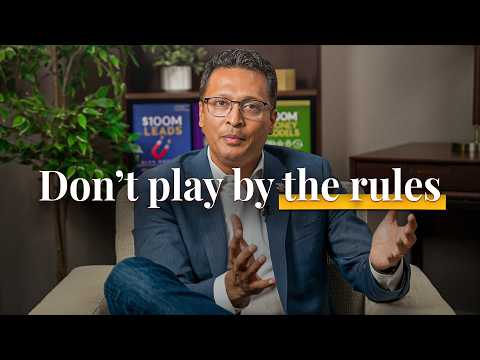
He explained that if you can’t solve a problem, it’s often because you are playing by the rules. The key is to question the frame of the problem itself, not just the solutions within it.
Every problem has unspoken assumptions—whether it’s needing money, connections, or following a certain path. The top 0.01% ruthlessly question these assumptions and don’t accept "we’ve always done it this way" as an answer.
Try identifying the assumptions in your current challenges and consider breaking them to unlock new possibilities.
One of the most impactful conversations I had was with Elon Musk. When I was juggling a startup and a Stanford master's program, I asked him what he would do.
Elon advised that Stanford will always be there, but the startup might not. This highlights the importance of decision reversibility—if a decision can be reversed, act quickly; if not, plan carefully.
Following this advice, I dropped out of Stanford to focus on my startup, which changed my life trajectory.
From Izzy Sharp, founder of Four Seasons Resorts, I learned a simple yet profound lesson: "The answer is always yes."
This is not just about customer service but a mindset. Most people are "no hinged," skeptical and critical of opportunities. Successful people are "yes hinged," defaulting to yes, which creates momentum and opens doors.
Saying yes shifts your mindset from "Can I do this?" to "How can I do this?" which unlocks massive possibilities.
Try saying yes to every opportunity for a week and observe the doors it opens.
Working at Goldman Sachs, I was surrounded by top performers—MBAs, athletes, military professionals, and musicians. Everyone was brilliant but shared two traits: a strong sense of superiority and crippling insecurity.
This combination created a powerful drive to outwork everyone else. I often worked from as early as 3 or 4 a.m. until 1 or 2 a.m., yet I was never the first in or last out.
The lesson is to put yourself in environments where you feel both deserving and slightly intimidated. This "magic cocktail" forces you to level up your work ethic beyond what you can manufacture alone.
After helping a client sell a healthcare company for $100 million, I realized that despite working hard, my role at Goldman Sachs was not fulfilling my entrepreneurial spirit.
The client pointed out that Goldman earned $1 million on the deal, but I had to work 100 times to make what he made once. This highlighted a mismatch between my role and my aspirations.
Some people are born advisors; others are born entrepreneurs. It’s crucial to find your path early and be honest with yourself.
If you feel jealous of others’ success and believe you could achieve the same, it might be a sign you’re in the wrong role. Don’t get good at something you hate.
The final lesson comes from working with Alex and Leila Hormozi. I shared a comprehensive money framework I developed over ten years. They completed all the homework in one weekend, demonstrating exceptional follow-through.
This level of preparation was also evident during their record-breaking book launch, where $106 million worth of books were sold in 72 hours. The world saw only the launch, but behind it was world-class preparation.
Preparation is a sign of respect and care. It’s about doing the work before the meeting, sales call, or event—like practice before game day.
Try this: pick one upcoming meeting or project and overprepare as if it’s your last. You will show up with more research and insights than anyone else, setting yourself apart.
These seven lessons took me decades to learn but can be absorbed in minutes:
Which one will you apply first? Master it, then move on to the next. These principles can transform your approach to success and help you reach the top 0.01%.



















