
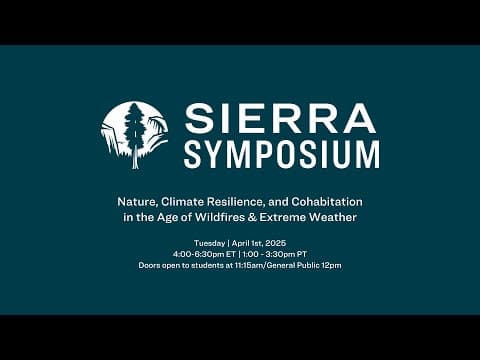
Dr. Jane Goodall emphasizes the importance of community-based conservation, the interconnectedness of environmental and socio-economic issues, and the role of youth in shaping a sustainable future during the Sierra Symposium.
The Sierra Symposium featured a profound conversation with Dr. Jane Goodall, a renowned primatologist and conservationist, who shared her insights on the importance of community-based conservation, the interconnectedness of environmental and socio-economic issues, and the role of youth in shaping a sustainable future. The event began with Samuel Lopez, a member of the San Gabriel Band of Mission Indians, acknowledging the sacred land and the enduring presence of Indigenous peoples.
Samuel Lopez emphasized the deep connection Indigenous peoples have with the land, viewing it not as a resource to exploit but as a living entity deserving of respect and stewardship. He highlighted the threats posed by climate change, including wildfires and biodiversity loss, and called for a return to traditional practices that prioritize harmony with nature. Lopez's message set the stage for the discussions that followed, emphasizing the need for collaboration and respect for Indigenous voices in environmental conservation.
Christopher Boone, Dean of the USC Price School of Public Policy, discussed the challenges and opportunities presented by urbanization. He noted that while cities are significant contributors to global emissions, they also offer pathways to sustainability through innovation and green jobs. Boone highlighted the importance of integrating sustainability principles into urban planning and decision-making to create a more sustainable future for all.
Dr. Alex Hall, Director of UCLA's Institute of the Environment and Sustainability, spoke about the need for interdisciplinary approaches to tackle climate change. He emphasized the importance of engaging communities affected by environmental issues and aligning research with their needs. Hall introduced the Climate and Wildfire Research Initiative, which aims to address the growing wildfire problem in Southern California through collaborative research and community engagement.
Dr. Lillian Pinta from the Jane Goodall Institute shared insights from her work in Tanzania, where community-centered conservation approaches have been implemented. She discussed the Takari program, which empowers local communities to take ownership of conservation efforts. By integrating traditional knowledge with modern technology, communities are able to monitor and protect their natural resources effectively.
Dr. Goodall emphasized the critical role of youth in conservation efforts through the Roots & Shoots program, which encourages young people to engage in projects that benefit their communities, animals, and the environment. She expressed hope in the growing movement of young conservationists who are passionate about making a difference and tackling the challenges of climate change and biodiversity loss.
Throughout the symposium, speakers highlighted the interconnectedness of environmental and socio-economic issues. Dr. Goodall stressed that addressing poverty and providing sustainable livelihoods are essential for effective conservation. She noted that when people have their basic needs met, they are less likely to engage in activities that harm the environment.
The Sierra Symposium served as a powerful reminder of the urgent need for collective action in addressing the climate crisis and the extinction crisis. Dr. Goodall's message resonated with attendees, encouraging them to think globally while acting locally. As we face unprecedented environmental challenges, the wisdom of Indigenous peoples, the innovation of urban centers, and the passion of youth will be crucial in shaping a sustainable future for our planet.
Dr. Goodall's final message was clear: every individual has the power to make a positive impact on the world. By choosing wisely and taking action, we can all contribute to a healthier planet for future generations.



















