
Singapore is expected to experience more intense monsoon rains in 2025 due to persistent La Niña conditions. This blog explores the implications of these weather patterns on infrastructure, the development of a new vulnerability assessment tool, and the need for recalibrating building standards to enhance climate resilience.
As Singapore enters 2025, the nation is preparing for an increase in wet days and more intense monsoon rains. The onset of La Niña conditions, which could begin as early as this month and last until April, is expected to exacerbate rainfall in the region. This blog post delves into the implications of these weather patterns, the development of a new vulnerability assessment tool, and the necessary recalibrations in infrastructure to enhance climate resilience.
La Niña is characterized by stronger trade winds over the Pacific Ocean, which push warm water further west towards Southeast Asia. This process leads to increased evaporation and cloud formation, resulting in heavier rainfall across the region. While these La Niña conditions are anticipated to subside around April, normal weather patterns are not expected to return until June.
The phenomenon is part of a larger climate cycle known as the El Niño Southern Oscillation (ENSO). Predictions regarding ENSO conditions after June remain uncertain, particularly due to the so-called spring predictability barrier, which complicates forecasting.
In response to the challenges posed by extreme weather, a research team from the National University of Singapore is developing a tool designed to assess the vulnerability of Southeast Asia to climate-related events such as floods, typhoons, and heat waves. This tool aims to provide near real-time data on the impacts and damages caused by these events.
Using natural language processing techniques and artificial intelligence, the system scans thousands of news articles to extract relevant information about extreme weather events. By identifying common themes and potential damages, the tool seeks to complement existing data available to policymakers, filling in gaps that may not be well understood.
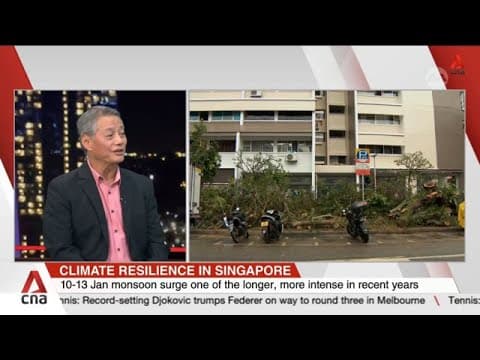
To better understand the implications of climate change on infrastructure, we spoke with Associate Professor Tan, Dean of the School of Science and Technology at the Singapore University of Social Sciences. He emphasized that flooding is just one of the extreme consequences of climate change. The increasing intensity of rainfall can disrupt transportation and lead to significant flooding.
However, the issue of water management is multifaceted. While Singapore may experience excessive rainfall, there may also be periods of drought, necessitating careful planning to ensure a stable water supply. This dual challenge highlights the need for infrastructure that can adapt to both extremes.
Interestingly, Professor Tan pointed out that wind patterns may also change due to La Niña effects. This shift necessitates a reevaluation of existing infrastructure design parameters to ensure they can withstand potential changes in wind direction and intensity.
The recalibration of infrastructure involves two key aspects: assessing existing buildings and establishing new design parameters for future constructions. For existing structures, it is crucial to evaluate whether the design parameters used in the past remain adequate in light of changing weather patterns.
For new buildings, updated design codes must reflect the latest statistical records of rainfall and wind speeds. This ensures that structures are resilient enough to cope with the increasing frequency and intensity of extreme weather events.
One specific area of concern is drainage systems, which were originally designed based on historical rainfall data. As rainfall becomes more intense, it is essential to reassess whether current drainage sizes can handle the increased volume. Urbanization further complicates this issue, as more concrete surfaces lead to increased surface runoff, reducing the ground's ability to absorb water.
The construction industry in Singapore is already moving towards sustainable technologies. New materials, such as timber, are being favored over traditional concrete and steel due to their lower environmental impact. Timber not only sequesters carbon but also supports prefabrication methods, which reduce waste and improve efficiency.
Policies play a crucial role in driving these changes. Without regulatory frameworks, there may be little incentive for the construction industry to adopt more sustainable practices. Policies that promote energy-efficient materials and construction methods are essential for ensuring that new buildings are designed with climate resilience in mind.
As Singapore prepares for the challenges posed by La Niña and the resulting intense monsoon rains, it is clear that proactive measures are necessary. From developing advanced vulnerability assessment tools to recalibrating infrastructure design, the nation must adapt to the realities of climate change. By embracing sustainable construction practices and implementing effective policies, Singapore can enhance its resilience against the impacts of extreme weather, ensuring a safer and more sustainable future for its residents.



















