
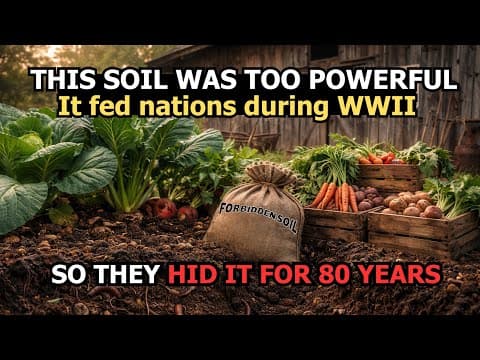
During World War II, 20 million American families grew 40% of the nation's vegetables using six natural soil secrets that tripled their harvests without chemicals. These methods, including chop and drop, forest soil inoculation, three sisters guild planting, compost tea brewing, cover crops, and seed saving, build soil health, reduce water needs, and promote independence from costly fertilizers and seeds. Rediscover these forgotten techniques to transform your garden sustainably.
In 1943, during World War II, 20 million American families grew 40% of the nation's vegetables. They did this without chemicals or corporate fertilizers—just soil, seeds, and six powerful secrets that tripled their harvests. These methods were so effective that the emerging fertilizer industry, worth $200 billion a year, needed people to forget them to create dependence on their products.
This article explores these six soil secrets from World War II that still outperform modern fertilizers, cost nothing, build soil health, and work even when supply chains collapse. These are methods that corporations never wanted you to know.
After World War II, surplus bomb factories were converted into fertilizer factories. To create customers, the industry needed to erase the knowledge that made people independent. This knowledge was buried for 80 years, removed from textbooks and mainstream agriculture.
Your grandmother likely didn’t haul plant material to a compost bin or wait months for decomposition. Instead, she cut plants at the base and let them fall where they grew. This method mimics a forest floor where leaves and branches fall and decompose in place, feeding the soil biology.
Leaving plant material on the soil shades it, holds moisture, and feeds fungi, bacteria, and other microorganisms that create soil structure and fertility.
Healthy soil is a living ecosystem full of bacteria, fungi, protozoa, and nematodes. Dead, compacted soil lacks these organisms. You can import life into your garden by collecting a few handfuls of dark, crumbly soil from an undisturbed forest floor under mature trees.
These organisms reproduce rapidly, transforming your garden soil within weeks. Victory garden manuals from 1943 recommended this practice.
The Three Sisters—corn, beans, and squash—are not just plants but a family that supports each other:
This guild planting:
Research shows these plants share nutrients through underground fungal networks, cooperating and communicating.
Compost tea is liquid biology, not fertilizer. It multiplies beneficial organisms that protect plants from disease.
This coats leaves with beneficial microbes and jumpstarts soil biology, protecting crops without fungicides or pesticides.
Bare soil is dying soil. Nature never leaves soil bare; something is always growing. After your fall harvest, scatter seeds of cover crops like crimson clover, winter rye, or hairy vetch.
In spring, cut them down and use chop and drop to continue the cycle.
Buying seeds means buying genetics selected for someone else’s soil and climate. Saving seeds from your strongest plants creates genetics adapted to your specific conditions.
Seed saving fosters independence from the $63 billion seed industry that profits from repeated purchases.
These six secrets—chop and drop, forest soil inoculation, three sisters guild planting, compost tea brewing, cover crops, and seed saving—are not just gardening hacks but survival systems. They build soil health, reduce dependence on corporations, and create sustainable abundance.
During World War II, 20 million families grew 40% of America’s vegetables without chemicals or corporate products. This knowledge was buried but never lost.
Try one secret this week. Cut and leave your plant material, collect forest soil, or save seeds from your best plants. These simple steps can reconnect you with the soil’s memory and your garden’s potential.
The soil didn’t forget. It waited for you to remember.
Start today, one garden at a time, one secret at a time.



















