
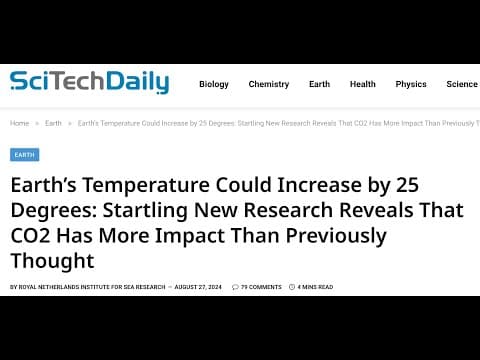
Recent research indicates that Earth's temperature could increase by up to 14°C due to rising CO2 levels, significantly exceeding previous estimates by the IPCC. This study, based on Pacific Ocean sediment analysis, highlights the urgent need for reevaluation of climate models and the potential catastrophic impacts of climate change.
Recent studies have unveiled alarming projections regarding Earth's future temperature, suggesting a potential increase of up to 14°C (or 25°F). This revelation, reported by SciTech Daily on August 27, 2024, emphasizes the significant impact of carbon dioxide (CO2) on global temperatures, far exceeding previous estimates by climate organizations.
The research indicates that doubling atmospheric CO2 could raise Earth's average temperature by as much as 14°C, a figure that surpasses the current predictions made by the United Nations' Intergovernmental Panel on Climate Change (IPCC). The study is based on a 45-year-old drill core extracted from the Pacific Ocean, which has provided new insights into the relationship between CO2 levels and temperature.
The sediment analysis reveals a stronger correlation between CO2 concentrations and temperature than previously understood. According to the lead author of the peer-reviewed paper, the temperature rise identified in this study is significantly larger than the IPCC's estimates of 2.3 to 4.5°C. This discrepancy raises concerns about the reliability of current climate models.
The researchers utilized a drill core from the Pacific Ocean, where conditions have preserved carbon for millions of years. The study employed a novel method to determine past atmospheric CO2 levels by analyzing the chemical composition of substances found in algae, specifically chlorophyll and cholesterol. This method allowed researchers to track CO2 concentrations over the last 15 million years.
The study found that CO2 levels dropped from approximately 650 parts per million (ppm) 15 million years ago to around 280 ppm at the onset of the Industrial Revolution around 1750. When plotting historical temperature and CO2 levels, researchers discovered that the average temperature 15 million years ago was over 18°C, which is about 4°C warmer than today's temperatures. This aligns with the IPCC's most extreme predictions for 2100, highlighting a troubling trend.
The implications of this research are profound. The study suggests that the IPCC's models may underestimate the potential for future temperature increases, which could have catastrophic effects on global ecosystems and human societies. The findings also echo concerns raised by the Advisory Group on Greenhouse Gases, which warned of the dangers of exceeding a 1°C increase above pre-industrial levels, potentially triggering self-reinforcing feedback loops in the climate system.
The stark contrast between the new findings and the IPCC's estimates calls for a reevaluation of climate models and policies. The research indicates that the relationship between CO2 and temperature is more complex and severe than previously thought, necessitating urgent action to mitigate climate change.
While the study presents a grim outlook, it also serves as a reminder of the importance of living in the present. As philosopher Marcus Aurelius noted, it is not death that one should fear, but rather the failure to truly live. In light of the potential for a 14°C rise in global temperatures, it is crucial to focus on the here and now, taking meaningful steps to address climate change and its impacts.
In conclusion, the alarming findings from this research underscore the urgent need for global action to combat climate change. As we face the possibility of unprecedented temperature increases, it is imperative that we reevaluate our understanding of climate dynamics and work towards sustainable solutions for the future.



















