This article explores the intriguing connections between Steven Spielberg and naval intelligence regarding UFO files, revealing how his access influenced iconic films like Close Encounters and E.T. It also delves into the challenges faced by other UFO-themed projects in Hollywood, including legal battles and creative restrictions, highlighting the complex interplay between government agencies and the entertainment industry.
The world of UFOs and extraterrestrial phenomena has long fascinated both the public and filmmakers alike. Among Hollywood directors, Steven Spielberg stands out not only for his iconic UFO-themed films but also for reportedly having unique access to real UFO files from naval intelligence. This article delves into the fascinating story behind Spielberg's connection with naval intelligence, how it influenced his films, and the challenges faced by other creators in the UFO genre.
Before the completion of the TV series Dark Skies, the creators were scouting locations for a significant crop circle sequence. During this time, they worked with Toby Hooper, the director known for Texas Chainsaw Massacre and Poltergeist. Hooper was committed to shooting the script as written, unlike other directors who wanted to make major changes.
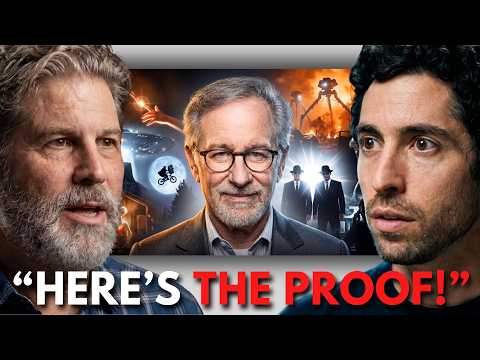
During a dinner at New Hall Ranch, a location north of Los Angeles, a conversation revealed a surprising piece of information: Steven Spielberg had been approached by individuals from naval intelligence after his success with Jaws. He was offered a deal granting him access to classified UFO information, which he accepted. This access reportedly informed his films Close Encounters of the Third Kind and E.T..
Spielberg's deal with naval intelligence provided him with access to various case files and information about UFOs. This access allowed him to base Close Encounters on true stories and incorporate authentic elements into his films. For example, the movie features crates labeled with TRW, and the communication sequences atop Devil's Tower reflect real attempts to communicate with extraterrestrials.
The film also includes references to Project Serpo, a purported exchange program involving twelve men dressed in suits, which adds to the authenticity and depth of the narrative.
The creators of Dark Skies faced significant obstacles, including legal and creative interference from powerful Hollywood entities. Early in production, Columbia TV executives warned them to remove the "Men in Black" characters from their show due to a competing Sony movie of the same name, produced by Steven Spielberg and Barry Sonnenfeld.
The executives threatened to shut down the production and destroy all footage if the demand was not met. Consequently, the Dark Skies team replaced "Men in Black" with "Cloakers," characters dressed in various colors instead of black suits.
Later, just before the show's debut, the producers received a list of 19 non-negotiable demands to alter their pilot episode. These included prohibitions on elevators, secret headquarters in Washington DC, farmers, and autopsy scenes—elements that overlapped with Spielberg's Men in Black. This level of intervention suggested a protective stance over UFO-related intellectual property and narratives.
Despite these challenges, the Dark Skies creators survived due to support from NBC's Don Olmire, who insisted on airing the pilot as it was. Interestingly, during this turbulent period, one of the Dark Skies writers was invited to meet Spielberg regarding a video game project, highlighting the complex and sometimes contradictory nature of Hollywood relationships.
Spielberg's deep interest in UFOs is evident not only in his films but also in his involvement with projects like Taken, where psychic and extraterrestrial themes are explored. His films often include subtle references to real UFO cases and phenomena, suggesting a genuine passion and knowledge of the subject.
Close Encounters of the Third Kind contains numerous authentic details, such as the involvement of Jaylen Heinik, chief astronomer of Project Blue Book, and the portrayal of UV radiation effects on characters. The film's narrative of people receiving symbolic downloads and converging on Devil's Tower mirrors reported UFO encounter experiences.
Similarly, E.T. portrays a symbiotic relationship between the alien and a child, with themes of empathy and invisibility to adults, reflecting real-world accounts of alien encounters.
Spielberg even screened E.T. at the White House for President Reagan, who reportedly acknowledged that some in the room knew the story was based on reality. Reagan's subsequent speech about uniting humanity against an alien threat further fueled speculation about government awareness of extraterrestrial phenomena.
The article also touches on the documentary Disclosure Day, which explores parapsychology and psychic phenomena related to UFOs. Spielberg's involvement in such projects and his endorsements suggest a deeper engagement with the topic beyond mainstream narratives.
The interplay between government agencies, Hollywood studios, and creators reveals a complex "deep state" dynamic managing the timing and content of UFO disclosures to the public.
Steven Spielberg's reported access to real UFO files from naval intelligence has significantly influenced his films, blending authentic details with compelling storytelling. Meanwhile, other creators in the UFO genre have faced legal and creative challenges, highlighting the power dynamics within Hollywood and government agencies.
The ongoing fascination with UFOs in media reflects a broader cultural and possibly political narrative about extraterrestrial life and disclosure. Spielberg's work remains a cornerstone in this genre, offering a unique window into the intersection of entertainment, government secrecy, and the quest for truth about UFOs.
This exploration underscores the importance of understanding the hidden stories behind popular media and the intricate relationships that shape the narratives presented to the public.