Water security is a pressing global challenge that requires innovative solutions to ensure that everyone has access to this vital resource. This blog post explores several strategies to increase water supply, focusing on dams and reservoirs, water transfer schemes, and desalinization.
Dams and Reservoirs
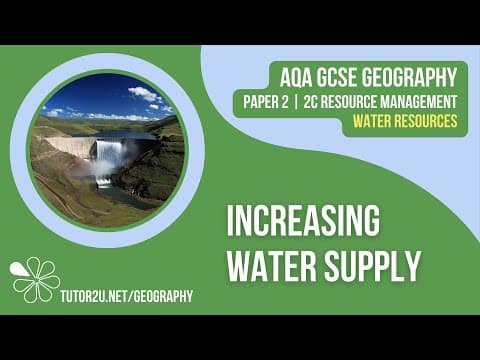
One of the most common methods to increase water supply is through the construction of dams and reservoirs. Dams block rivers and control the flow of water, allowing for the accumulation of water in a reservoir. This stored water can be utilized during dry periods, ensuring a steady supply for irrigation and other needs.
Advantages
- Irrigation Support: Dams can transport water for agricultural purposes, supporting large populations.
- Large Scale: They can be constructed on a massive scale, providing significant water storage capacity.
Disadvantages
- High Costs: The construction of dams is expensive. For example, the Three Gorges Dam in China, the world's largest dam, cost approximately $37 billion and displaced 1.3 million people.
- Environmental Impact: Dams can starve downstream ecosystems of water and lead to significant ecological changes.
- Evaporation Loss: Reservoirs can lose substantial amounts of water through evaporation, reducing their overall effectiveness.
Water Transfer Schemes
Water transfer schemes involve moving water from areas of surplus to areas of deficit through a network of canals and pipelines. These schemes are typically larger in scale than simple diversion projects.
Notable Examples
- China's South North Water Transfer Scheme: This ambitious project transfers water from the humid southern regions to the arid northern regions, which are experiencing rapid population growth and economic development.
- Lesotho Highlands Water Project: This project transfers water from Lesotho, a landlocked country with a water surplus, to South Africa, which faces water scarcity.
Advantages
- Reduced Water Insecurity: These schemes can significantly alleviate water shortages in deficit areas.
- Economic Benefits: They can stimulate economic growth through improved irrigation and construction jobs.
Disadvantages
- Complexity and Cost: The intricate systems of canals and pipelines can be costly and complicated to manage.
- Environmental Concerns: Water transfer can lead to ecological issues, such as declining fish stocks and increased pollution in both the donor and recipient areas.
Desalinization
Desalinization is the process of removing salt from seawater to produce fresh water suitable for drinking and irrigation. This method is increasingly being adopted by countries facing severe water shortages, particularly in the Middle East, the USA, Japan, and Spain.
How It Works
- Sea Water Intake: Seawater is drawn into the facility, with protective measures to prevent marine life from entering.
- Pre-Treatment: Filters remove solids like sand and cement.
- Reverse Osmosis: The filtered seawater is pushed through ultra-fine membranes under high pressure, allowing fresh water to pass while leaving concentrated salt behind.
- Mineralization: Minerals are added to the desalinated water to meet health guidelines.
- Storage and Distribution: The fresh water is stored and then distributed through regional networks.
- Waste Management: The concentrated seawater is returned to the ocean, diluted by ocean currents.
Advantages
- Increased Water Availability: Desalinization can significantly boost the supply of fresh water in arid regions.
Disadvantages
- High Costs: The process is expensive, making it less viable for many regions.
- Environmental Impact: The disposal of concentrated salt back into the ocean can harm marine ecosystems, and the process requires substantial energy, contributing to a large carbon footprint.
Conclusion
Increasing global water supply is a complex challenge that requires a multifaceted approach. While strategies like dams, water transfer schemes, and desalinization offer potential solutions, each comes with its own set of advantages and disadvantages. Understanding these methods is crucial for developing effective water management strategies that can ensure water security for future generations.