
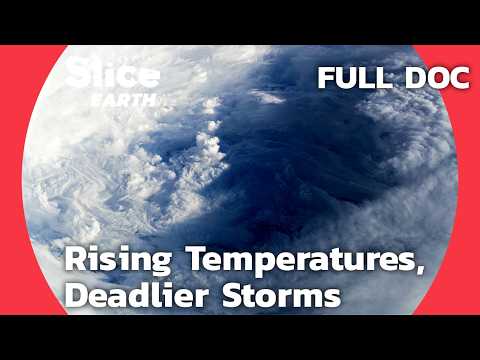
This blog post explores the formation, impact, and future of hurricanes in the context of global warming, highlighting their dual role as agents of destruction and rejuvenation, and the increasing challenges posed by climate change.
Hurricanes rank among the most dangerous storms on Earth, inflicting billions of dollars in losses each year. These storms are not only agents of destruction but also play a role in rejuvenating ecosystems. As climate change progresses, the intensity and frequency of hurricanes may increase, leading to greater impacts than those experienced today.
Hurricanes, known as typhoons in the Pacific and cyclones in Australia, are born from weather disturbances called African easterly waves. These waves originate on the east coast of Africa and are associated with the West African Monsoon, which is vital for agriculture in countries like Sagal, where a significant portion of the population relies on farming.
Dr. Ida Jong, a meteorologist at the National Weather Center in Sagal, explains that these easterly waves can develop into tropical depressions as they move across the Atlantic. However, only about one in ten of these systems becomes a hurricane. For a hurricane to form, several conditions must be met:
As the tropical disturbance travels over the ocean, winds evaporate heat and moisture from the seawater, fueling powerful thunderstorms. As these storms grow, they begin to rotate due to the Earth's rotational forces, potentially developing into hurricanes.
When a disturbance threatens to become a hurricane, a team of elite pilots known as hurricane hunters is dispatched to investigate. These pilots fly directly into the storm to gather real-time data that satellites cannot capture. Carl Newman, a hurricane hunter, describes their mission as crucial for understanding the storm's state and predicting its path.
During their flights, the hurricane hunters drop sensors into the storm, which transmit valuable weather data back to the aircraft. This information helps meteorologists locate the eye of the storm and assess its potential for intensification.
Meteorologists use the Saffir-Simpson scale to measure hurricane strength, categorizing storms from 1 to 5 based on sustained wind speeds. A category 1 hurricane has winds between 74 and 95 mph, while a category 5 hurricane exceeds 157 mph. The strongest recorded hurricane had winds over 190 mph, demonstrating the immense power these storms can wield.
Hurricanes can cause significant damage, but they also play a role in the natural cycle of ecosystems. For example, Puerto Rico's offshore reefs absorb 90% of the energy from hurricane waves, protecting coastal areas. In the Zapata swamps of Cuba, the Cuban crocodile has adapted to the annual hurricane season, seeking shelter in limestone caves during storms.
Toby Ramos, an expert on the Cuban crocodile, notes that hurricanes can flood nests during the reproductive season, leading to high mortality rates for eggs. However, older crocodiles have learned to seek refuge in caves, which provide protection from the storms.
Hurricanes also impact forests, as seen in Puerto Rico after Hurricane Hugo in 1989. Scientists observed that while the storm caused immediate destruction, it also facilitated rapid forest regeneration. The debris from the storm provided nutrients for surviving trees, allowing the forest to recover faster than expected.
Research in Puerto Rico has shown that hurricanes transport debris to the forest floor, where it is processed by organisms, leading to a rich source of nutrients for the ecosystem. This resilience highlights the dual role of hurricanes as both destructive and rejuvenating forces in nature.
As climate change continues to affect weather patterns, scientists are working to improve hurricane forecasting models. The first hurricane forecast was made in Cuba in 1875, and since then, advancements in technology have greatly enhanced our ability to predict storms. However, challenges remain, particularly in accurately forecasting storm intensity and landfall.
Dr. Jose Riera, a forecaster at the Cuban Meteorological Institute, emphasizes the importance of accurate forecasting for evacuation and disaster preparedness. Cuba has implemented effective hurricane protection plans, resulting in minimal loss of life during recent storms.
The economic costs of hurricanes can be staggering. For instance, Hurricane Mitch in 1998 resulted in 7,000 deaths and left 1.5 million people homeless. More recently, Hurricane Sandy caused over $68 billion in damages, while Hurricane Harvey's costs are estimated between $150 and $180 billion. Despite these risks, coastal development continues to increase, raising concerns about future vulnerabilities.
As sea levels rise and urban coastal development expands, the potential for catastrophic damage from hurricanes increases. Engineers and scientists are exploring ways to protect shoreline properties through improved building codes and infrastructure design. The lessons learned from past hurricanes, such as Hurricane Andrew in 1992, have led to stricter regulations aimed at minimizing damage during storms.
Hurricanes are a natural part of our environment, but their increasing intensity and frequency due to climate change present significant challenges. While they can rejuvenate ecosystems, the destructive power of future superstorms may overwhelm our fragile Earth. As we face a changing climate, improving prediction and protection measures will be crucial in adapting to the new normal of extreme weather. The balance between destruction and rejuvenation remains delicate, and only time will tell how our ecosystems and communities will respond to the challenges ahead.



















