
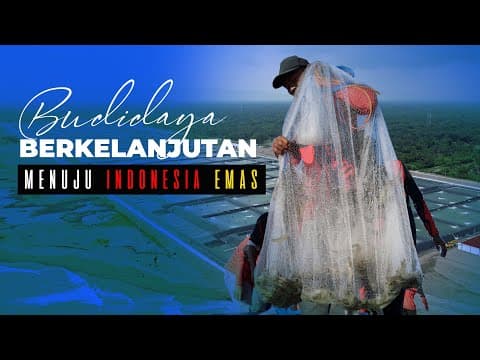
Indonesia, with its vast potential for aquaculture, is focusing on sustainable practices through a blue economy framework to enhance productivity, create jobs, and ensure environmental balance, aiming for a prosperous future.
Indonesia, the largest archipelagic country in the world with over 17,000 islands, is strategically positioned to harness its vast aquatic resources. The potential area for aquaculture is estimated at 17.91 million hectares, comprising 2.96 million hectares of brackish water, 2.83 million hectares of freshwater, and 12.12 million hectares of marine water. However, current utilization of aquaculture land is only at 6%.
The Ministry of Marine Affairs and Fisheries (KKP) is actively collaborating with various ministries and related institutions to develop priority programs for sustainable marine and fisheries development based on a blue economy. This approach aims to create a balance between ecological sustainability and economic growth, accelerating the development of sustainable marine economies.
One of the key initiatives is the development of sustainable aquaculture in coastal and inland waters. KKP is striving to enhance aquaculture production through two main strategies:
Export-Oriented Aquaculture Development
This strategy focuses on five main commodities: shrimp, lobster, crab, seaweed, and tilapia. By prioritizing these products, KKP aims to boost Indonesia's export potential in the aquaculture sector.
Local Wisdom-Based Aquaculture Villages
This initiative seeks to alleviate poverty while preventing fish extinction by empowering local communities through sustainable practices.
To increase aquaculture productivity, KKP is implementing several technological advancements:
KKP is also focusing on innovative models to achieve its export-oriented aquaculture development goals. Some notable models include:
Through sustainable aquaculture practices based on a blue economy, Indonesia is paving the way towards a prosperous future, often referred to as "Indonesia Emas" or Indonesia Gold. By balancing ecological integrity with economic growth, the country aims to enhance productivity, create job opportunities, and improve the livelihoods of its coastal communities, ensuring a sustainable and thriving marine economy for generations to come.



















