
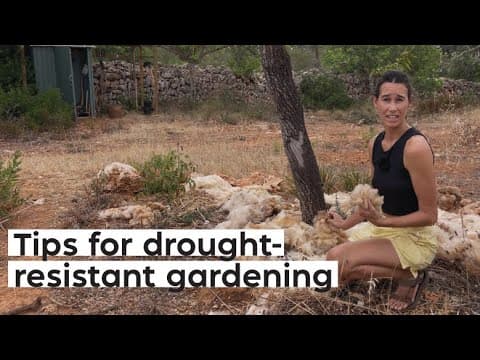
In this blog post, we explore effective techniques for sustaining a Mediterranean food forest during drought conditions. From water conservation methods to innovative irrigation systems, discover how to keep your plants thriving even in challenging climates. Learn about the importance of soil health, the benefits of using organic materials like sheep wool, and practical tips for managing water resources efficiently.
Welcome back to another insightful discussion on sustainable farming practices. Today, we will delve into the challenges and solutions for keeping a Mediterranean food forest alive during the hot summer months, particularly in drought conditions. With the right strategies, it is possible to maintain a thriving ecosystem even when water resources are limited.
Before we dive into the gardening techniques, let me introduce you to Pipa, our newest kitten rescued from the streets. Every summer in Mallorca, many stray kittens need homes, and Pipa is the latest addition to our farm family. At just two months old, she has quickly adapted to her new environment, bringing joy to both me and my other pets.
As summer settles in Mallorca, the heat and humidity become overwhelming. This year, we have not seen rain for over two months, which poses a significant challenge for maintaining our food forest. With a variety of trees, bushes, and herbs planted, it is crucial to find ways to keep them alive without our own water well, relying instead on trucked water deliveries.
One effective method to conserve water is to reuse it as much as possible. For instance, the dirty water from our ducks' pond is redirected to the garden. This water is nutrient-rich due to the ducks' waste, providing additional benefits to the plants.
Maintaining soil health is vital in a Mediterranean food forest. One of the key strategies is to keep the soil covered at all times. This can be achieved using biodegradable materials such as:
These materials help shade the soil, retain moisture, and prevent weed growth by blocking light from reaching weed seeds.
I have also planted specific species, like vetiver grass, which can be chopped and dropped around other plants. This not only provides ground cover but also has a deep root system that helps draw water down into the soil, benefiting the entire ecosystem.
One of my favorite mulching materials is sheep wool, which is abundant in our area. Despite being considered worthless for clothing, sheep wool offers numerous advantages in gardening:
I even add a bit of wool to my seed trays to promote healthy root growth in young plants.
To optimize water usage, I have set up a drip irrigation system that delivers water directly to the roots of the plants. This method minimizes evaporation and ensures that water penetrates deep into the soil, promoting healthy root development.
To reduce the time spent watering, I have automated most of my irrigation system. It primarily operates at night or early in the morning when temperatures are cooler, although low water pressure can sometimes limit effectiveness.
Despite the best systems in place, human error can still lead to water wastage. I have struggled with remembering to turn off taps due to my ADHD, which has resulted in significant water loss. To combat this, I have started using a rubber band as a reminder to close the tap after use. This simple trick may help me manage my watering tasks more effectively.
As I navigate the challenges of maintaining a Mediterranean food forest during a drought, I invite you to share your experiences and tips. What strategies have you found effective in your gardens? Together, we can learn and adapt to ensure our plants thrive even in the toughest conditions. Thank you for joining me today, and I look forward to seeing you in the next video!



















