
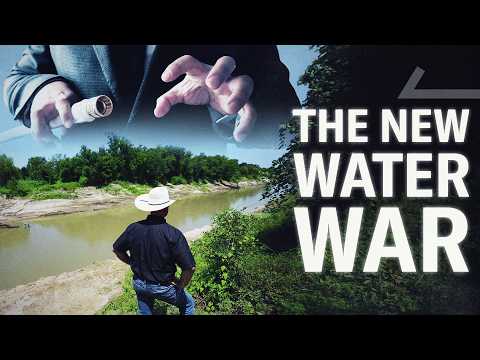
Texas is confronting a severe water shortage crisis exacerbated by Wall Street investors buying up water rights, treating water as a commodity. A massive groundwater project led by hedge fund manager Kyle Bass threatens to extract billions of gallons annually, sparking fierce opposition from local landowners and politicians. The debate centers on Texas's antiquated 'rule of capture' law, with calls for reform to protect communities and ensure sustainable water use.
Texas is currently at the forefront of what many are calling America’s new water wars. The state is grappling with a severe water shortage, and the situation is becoming increasingly complicated as private investors, particularly from Wall Street, are buying up water rights and treating water as a valuable commodity. This has sparked a fierce debate about water ownership, sustainability, and the future of Texas’s water resources.
A massive groundwater project is underway in East Texas, aiming to extract billions of gallons of water annually. This project is spearheaded by Kyle Bass, a hedge fund manager known for making hundreds of millions of dollars by shorting the subprime mortgage market. Bass claims he can deliver billions of gallons of water to Texas cities that are running out, positioning water as the "new oil" in a hotter and drier future.
Bass’s plan is part of a broader trend where private investors are betting on water scarcity to increase the value of water rights and agricultural land with water access. However, this approach has raised ethical concerns and fears among local communities.
John McCall, a lifelong Republican and rancher in East Texas, has become an unlikely water activist opposing Bass’s project. His family has owned their ranch for over 100 years, and he is deeply concerned about the impact of massive water extraction on local resources. McCall emphasizes that taking 15 billion gallons of water per year from the resource is unsustainable and will not work in the long term.
Similarly, Melissa Meador, who owns a small pecan orchard near the project site, fears the devastating effects of water depletion on her property. She expresses the harsh reality that without water, she and her animals would be forced to move, a prospect she finds frightening and heartbreaking. Meador highlights the emotional toll of knowing that someone like Kyle Bass wants to profit from their water, which is their home and livelihood.
Since 1904, Texas has operated under a groundwater law known as the "rule of capture." This law allows landowners to pump as much water as they want from beneath their property without liability to neighbors. Essentially, it means "whoever has the biggest pump wins."
This law is now under scrutiny as it enables large-scale water extraction projects like Bass’s to proceed without adequate regulation or consideration of community impact. Conservative Republican lawmakers from East Texas are pushing to reform this outdated law to protect local water resources and communities.
Representative Cody Harris and Senator Robert Nichols are leading efforts to protect East Texas’s water. They have called for hearings and discussions to address the water crisis and the implications of the rule of capture. Harris organized an 11-hour hearing to explore the complexities of groundwater rights and the potential consequences of unregulated pumping.
During the hearing, lawmakers grappled with difficult questions about water rights and fairness. For example, if one neighbor drills deeper wells and pumps more water, leaving others without access, who is in the right? These questions highlight the need for empathy and a balanced approach to water management.
The water crisis has united Texans across political and racial lines. Democrats, Republicans, Black, and White residents all agree on the necessity of protecting their water. This rare consensus underscores the critical importance of water as a shared resource and the urgency of addressing the crisis.
Texas stands at a crossroads in managing its water resources. The influx of Wall Street investment in water rights, exemplified by Kyle Bass’s groundwater project, has brought the issue into sharp focus. Local landowners and politicians are fighting back against what they see as an immoral commodification of water that threatens their homes and livelihoods.
Reforming the rule of capture and implementing responsible water management policies are essential steps to ensure sustainable water use for future generations. As Texas faces a hotter and drier future, the outcome of this fight will have profound implications not only for the state but also as a model for water governance in other regions facing similar challenges.
The battle over Texas’s water is more than a local issue; it is a critical test of how society values and protects one of its most vital resources.



















