
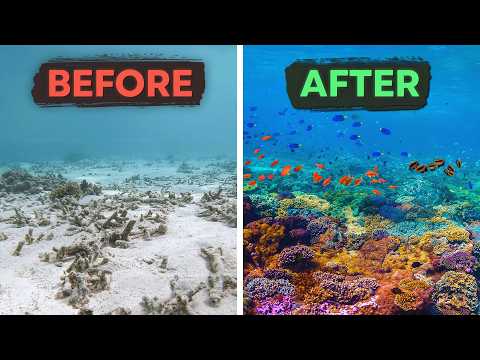
2024 has seen significant environmental victories, including the UK's closure of its last coal power plant, the largest dam removal in the US, and the protection of the world's third-largest rainforest in Papua New Guinea. These achievements highlight a global shift towards renewable energy and conservation efforts.
2024 has been a year full of hope and change for our planet. Amidst various global events, significant victories for the environment have emerged, showcasing a collective effort towards sustainability and conservation. Here, we highlight the ten biggest environmental wins of the year.
The United Kingdom has made a monumental step by closing its last coal power plant, the Ratcliffe-on-Soar Power Station in Nottinghamshire, in September 2024. Historically, the UK was a pioneer in coal power, with the first coal power plant opening in London in 1882. However, the country has shifted its focus towards renewable energy, reducing coal's contribution to its energy supply from 39% in 2012 to just 2% by 2019. This closure aligns with the OECD's goal to eliminate coal usage by 2030.
In a significant environmental restoration effort, all four dams on the Klamath River in California have been removed, allowing salmon populations to access their spawning grounds for the first time in a century. The Yurok tribe, who regard salmon as sacred, fought for this change after witnessing a drastic decline in salmon numbers due to the dams. The removal of these barriers marks a pivotal victory for both the tribe and the ecosystem.
Papua New Guinea has enacted the Protected Areas Act, safeguarding the world’s third-largest rainforest, which spans 76 million hectares. This law, years in the making, prevents commercial exploitation of the rainforest, which is home to 7% of the world's species. The act also promises to improve services for indigenous communities and train them as rangers to protect their environment.
India has announced the construction of a massive renewable energy park, the size of Singapore, in Khavda. This initiative is part of India's commitment to achieve net-zero emissions by 2070. The park will harness solar and wind energy, providing power to approximately 18 million households and significantly reducing reliance on fossil fuels.
China has unveiled the world’s largest onshore wind turbine, capable of producing 15 megawatts of power, enough to supply around 12,000 households. Additionally, Mingyang Smart Energy has introduced a 20 megawatt offshore wind turbine, with plans for a 22 megawatt prototype. These advancements in wind energy technology represent a significant leap towards cleaner energy production.
In June 2024, China activated the Ordo solar farm in Xinjiang, which spans 809 square kilometers, making it the largest solar facility globally. This farm is expected to generate over 6 terawatt-hours of electricity annually, enough to power over half a million people. This achievement underscores China's leadership in solar energy production.
California has established the Chumash Heritage National Marine Sanctuary, the third-largest marine sanctuary in the USA, covering over 186 kilometers of coastline. This initiative is part of the Biden administration's America the Beautiful initiative, aiming to protect 30% of the nation’s ecosystems by 2030. The sanctuary will be managed in collaboration with the indigenous Chumash people, emphasizing the importance of cultural heritage in conservation efforts.
In a bold move, Australia has declared that 52% of its oceans are now protected zones, surpassing its previous goal of 30%. This expansion includes a significant marine reserve around the Heard Island and McDonald Islands. The initiative aims to combat environmental degradation caused by climate change and pollution, positioning Australia as a leader in marine conservation.
Hawaii has reached a historic climate settlement with young activists, mandating the state to develop a detailed plan to achieve zero emissions in the transport sector by 2045. This legal victory highlights the role of youth in climate advocacy and reinforces Hawaii's commitment to clean energy, following its promise to transition to 100% renewable energy by 2045.
As a culmination of these efforts, wind and solar energy have officially surpassed coal in electricity production in China, marking a historic first. This shift is crucial for reducing greenhouse gas emissions and combating climate change, although challenges remain as China continues to be the largest emitter globally.
The environmental victories of 2024 reflect a growing global commitment to sustainability and conservation. From legislative changes to technological advancements, these wins demonstrate that collective action can lead to significant progress in protecting our planet. As we move forward, it is essential to continue supporting these initiatives and hold governments accountable for their environmental commitments.



















