
Jakarta, the world's fastest sinking city, faces a dire future with 40% of its land below sea level by 2050. The Indonesian government plans a $40 billion sea wall and is relocating the capital to Nusantara, but these solutions face criticism for their environmental impact and social inequities.
Forget Venice. There’s a far bigger city that’s sinking a hell of a lot faster: Jakarta. Home to more than 11 million people, Jakarta is a bustling megacity known for its towering skyscrapers, rich history, and status as the economic, cultural, and political center of Indonesia, a nation of over 280 million spread across 17,000 islands. However, Jakarta is facing a crisis as it sinks at a staggering rate of up to 15 centimeters per year, with some areas experiencing a decline of up to 26 centimeters annually. In stark contrast, Venice sinks at a mere 1 to 2 millimeters per year. Current estimates indicate that at least 40 percent of Jakarta is already below sea level, and projections suggest that much of the city could be underwater by 2050.
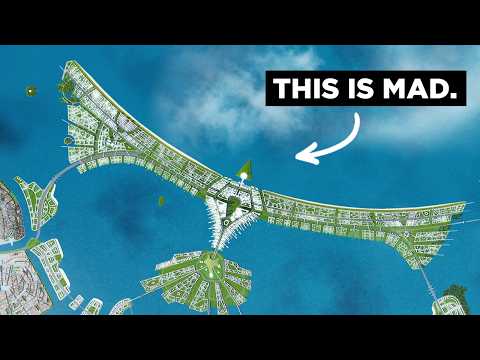
In response to this alarming situation, the Indonesian government has proposed an ambitious engineering solution: a 32-kilometer sea wall along Jakarta Bay, complemented by 17 artificial islands. This colossal project, which is expected to cost around $40 billion, aims to protect the city from tidal surges and rising sea levels. The design of the sea wall includes a section shaped like the Garuda, a mythical bird that symbolizes Indonesia.
While the government embarks on this grand plan, it is also taking the drastic step of relocating the capital to Nusantara, a new city being constructed in the jungle, far from the flooding metropolis of Jakarta. This dual approach highlights the urgency of the situation and the lengths to which the government is willing to go to address the crisis.
To understand the current predicament, it is essential to look back at Jakarta's history. The city is situated on a low-lying coastal plain at the mouth of 13 rivers, with the Ciliwung River being the most significant. Historically, the area has been prone to flooding, exacerbated by heavy monsoon rains during the wet season. The Dutch established Batavia (now Jakarta) in the early 17th century, attempting to model it after Amsterdam by constructing canals for transportation and drainage. However, poor maintenance and a lack of understanding of the tropical climate led to stagnation, mosquito-borne diseases, and increased flooding.
After Indonesia gained independence in 1945, Jakarta's population exploded due to rural migration, leading to rapid urban expansion without proper planning. Informal settlements developed along riverbanks, narrowing waterways and increasing runoff. The loss of green spaces and natural floodplains, coupled with inadequate waste management, further intensified flooding.
One of the most critical factors contributing to Jakarta's sinking is groundwater extraction. To meet the water needs of its vast population, water is pumped from underground aquifers, causing the land above to sink. This practice has been prevalent due to limited access to piped water, especially in poorer areas. Despite government efforts to regulate water extraction, enforcement has been challenging, leading to the proliferation of illegal wells.
Many experts suggest that refilling aquifers and enforcing regulations could alleviate the problem. However, economic disincentives exist for water companies to provide piped water to low-income residents, who often rely on public hydrants. This creates a vicious cycle where poorer communities are forced to extract their own water, exacerbating the issue.
Alternative proposals include drilling infiltration wells to allow rainwater runoff to drain back into aquifers and restoring lost floodplains and green spaces. These natural methods, similar to the sponge cities being developed in China, could help mitigate flooding.
Instead of pursuing these more sustainable solutions, the Indonesian government has opted for the construction of the sea wall. This ambitious project, designed by a company in Rotterdam, aims to be a barrier against tidal surges and sea-level rise. The wall will be built in stages, with the first phase focusing on strengthening existing dykes along the coast. By 2030, these dykes will be extended into a giant sea wall, which will eventually become a reservoir to store rainwater and provide drinking water for the city.
However, experts have raised concerns about the environmental impact of the sea wall. It could disrupt marine ecosystems, alter sea currents, and lead to the erosion of nearby islands. Additionally, there are fears that the wall may trap polluted water from Jakarta's rivers, turning the enclosed bay into a stagnant and toxic lagoon. Critics also point out that the project displaces coastal communities, particularly fishing villages, without adequate compensation or relocation plans, exacerbating economic inequality.
While the sea wall project is still in its early stages, the construction of Nusantara, the new capital city, is already underway. Located miles away from Jakarta, Nusantara is designed to be a smart and green urban center, with renewable energy sources and extensive green spaces. The project, estimated to cost around $35 billion, is structured in five phases, aiming for completion by 2045, coinciding with Indonesia's centennial of independence.
Despite its ambitious vision, Nusantara has faced criticism for encroaching on heavily forested areas and displacing local indigenous groups. Initial investors have withdrawn, raising concerns about the project's financial sustainability. While the presidential palace nears completion, essential infrastructure like the airport remains unfinished, leading to significant delays.
The story of Jakarta serves as a cautionary tale about urban planning and environmental management. From ancient myths of lost cities to modern-day realities, the sinking city of Jakarta highlights the consequences of neglecting infrastructure and the environment. While grand megaprojects like the sea wall and Nusantara may seem like solutions, they often fail to address the root causes of the problems.
Ultimately, providing vulnerable communities with access to clean, piped water and investing in sustainable urban planning may prove to be more effective than constructing a palace in the jungle. As Jakarta races against time, the world watches closely, hoping for a solution that prioritizes both people and the planet.



















