
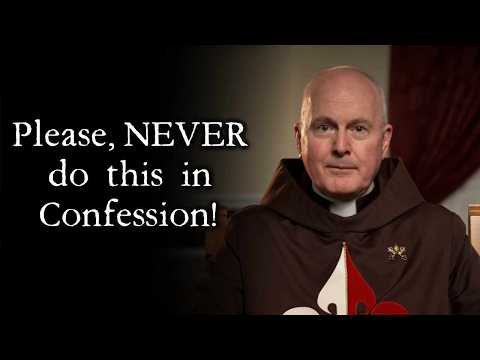
This article explores the sacrament of reconciliation, explaining that the worst thing a priest hears in confession is not a grave sin but the refusal to acknowledge one's own sins. It highlights the theological foundation of confession, the necessity of recognizing sin, expressing sorrow, and resolving to amend, and encourages seeking grace through the Blessed Virgin Mary for true repentance.
What is the worst thing a priest hears in confession? Is it murder, sins against chastity, or sacrilege? Surprisingly, it is none of these. While all such sins are grave, there is something far worse that a priest can hear during confession. This article delves into this profound truth, grounded in the theology of the sacrament of reconciliation, and offers guidance for those seeking true forgiveness.
To grasp the gravity of the worst thing a priest can hear, it is essential to understand the theological foundation of confession.
It is often said, especially by Protestants, that only God can forgive sins. This statement is true and echoes the argument the Pharisees used against Jesus Christ. Indeed, only God has the authority to forgive sins.
So how do priests hear confessions and forgive sins? Priests do not have the authority to forgive sins by themselves—not even bishops or the pope possess this power independently. Even the Blessed Virgin Mary, the holiest of creatures, cannot forgive sins.
In confession, priests act as ministers of God's pardon, exercising the power given to them by Jesus Christ through His sacrifice on the cross. The forgiveness granted in confession originates from God, not the priest.
Imagine a wealthy king whose subjects owe him debts. The king, out of mercy, authorizes his minister to cancel these debts. The minister can forgive any debt, large or small, but only under three conditions:
Even if the debtor falls into debt again, the minister can forgive it again, provided these conditions are met.
Given the analogy, what could be the worst thing the minister could hear? It is not someone admitting to owing a million or even a billion dollars. The greater the debt, the greater the joy in forgiving it.
The worst thing a priest can hear in confession is when someone says, "I am fine. I have not committed any sins. I am just here to thank God." Even worse is when a person accuses others of sins but does not confess any sins themselves.
This refusal to acknowledge one's own sins ties the priest's hands. The person has a debt to be pardoned but does not meet the conditions for forgiveness because they do not recognize themselves as sinners.
Jesus Christ died and shed His blood to pardon all sins. Priests have the power to apply the merits of Christ's passion to forgive sins. However, if a person does not acknowledge their sins, the priest cannot forgive them.
Many who refuse to acknowledge their sins have already passed away. Their encounter with God at judgment and their eternal destiny are sobering considerations.
Some readers may worry that they have not truly acknowledged their sins or do not feel genuine sorrow or resolve to amend their lives. This worry often stems from a theological misconception.
People sometimes believe they can overcome sin by their own strength or virtue. This is incorrect. No one can make a supernatural act of repentance or a firm resolution to avoid sin without God's grace.
If you do not feel sorrow or resolve, do not despair. Ask God for His grace, which He never withholds.
It is highly recommended to seek this grace through the intercession of the Blessed Virgin Mary, the Mother of God. God never refuses any petition made by her.
The best way to receive continual grace is to consecrate yourself to Jesus Christ through Mary. This consecration ensures that Mary constantly intercedes for you, multiplying your prayers and graces.
Before your next confession, perform a sincere examination of conscience. Acknowledge your sins and confess them honestly.
Even if it has been months or years since your last confession, do not worry. Priests do not judge or feel shock at the sins confessed. Instead, they rejoice in being instruments of God's forgiveness.
Do not delay or hesitate. Confess soon and often.
The worst thing a priest hears in confession is not a grave sin but the refusal to acknowledge one's own sins. True forgiveness requires recognizing our sins, feeling sorrow, and resolving to amend our lives, all empowered by God's grace.
May the blessing of Almighty God, the Father, the Son, and the Holy Spirit, descend upon you and remain with you forever. Salve Maria.



















