
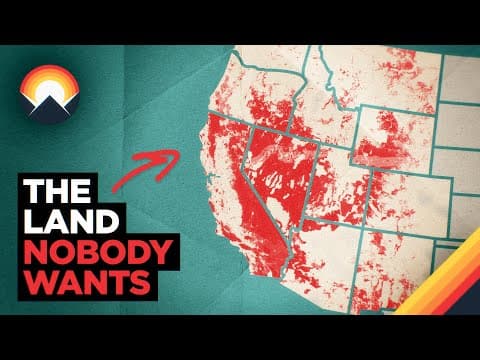
The Bureau of Land Management (BLM) oversees vast areas of public land in the U.S., including the Black Rock Desert where Burning Man takes place. This post explores the BLM's complex responsibilities, challenges, and the unique land use conflicts it navigates, highlighting its role in managing what is often considered America's least valuable land.
Each year, the iconic Burning Man festival, which attracts around 880,000 attendees, requires a permit from the Bureau of Land Management (BLM) to operate on public land in the Black Rock Desert. This process illustrates the BLM's significant yet often overlooked role in managing vast areas of land across the United States.
The BLM is responsible for overseeing 8.2 million acres of land in the Winnemucca District of Nevada, which is more land than the entire country of Qatar. This agency manages areas deemed less valuable for human use or wildlife conservation, often referred to as "America's worst land."
The BLM's jurisdiction stems from the historical allocation of land during the westward expansion of the United States. Initially, all land was federally owned, and as settlers moved west, land was distributed for various uses, including agriculture and infrastructure. The land around the Black Rock Desert was designated for the Transcontinental Railroad, leading to a patchwork of private and public land ownership.
To host Burning Man, the festival must adhere to strict environmental regulations set by the BLM. The agency requires that the festival leaves no more than one square foot of trash per acre. In 2023, after a particularly muddy festival, Burning Man barely passed inspection, failing 11 out of 120 points. This close call highlights the delicate balance the BLM must maintain between allowing large events and protecting the environment.
The BLM's duties extend far beyond managing festivals. It is tasked with a wide range of responsibilities, including:
The BLM operates under a vague mandate that requires it to balance conservation with public use. This often leads to conflicts between different land users, such as ranchers, environmentalists, and recreational users. For instance, ranchers rely on BLM land for grazing, while conservationists advocate for the protection of wildlife habitats.
The BLM has faced significant criticism from various groups. Ranchers argue that the agency does not adequately protect their rights, while environmentalists claim it favors resource extraction over conservation. This tension was exemplified in the 2016 standoff at the Malheur National Wildlife Refuge, where ranchers protested federal land management policies.
The BLM's challenges are compounded by its limited resources and the complexity of its responsibilities. With only 200 law enforcement rangers nationwide, the agency often relies on partnerships with local law enforcement to manage large events like Burning Man. The agency's ability to effectively manage its lands is hindered by its need to satisfy a diverse array of stakeholders.
The Bureau of Land Management plays a crucial role in managing America's public lands, often under challenging circumstances. As the agency navigates the complexities of land use, it faces the ongoing challenge of balancing conservation with public access and resource management. Understanding the BLM's responsibilities and the conflicts it encounters is essential for appreciating the management of America's vast and varied landscapes.



















