
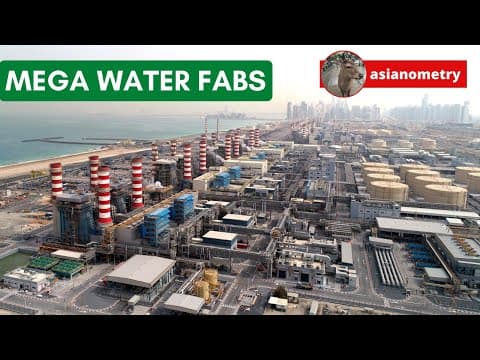
Desalination plants in the Gulf, particularly in Saudi Arabia and the UAE, provide significant freshwater but pose environmental and security risks. The reliance on massive thermal desalination methods like Multi-Stage Flash (MSF) raises concerns about energy consumption, brine disposal, and national security. A shift towards decentralized, energy-efficient methods like Reverse Osmosis (RO) is necessary for sustainable water management in the region.
Desalination has become a crucial solution for water-scarce regions, particularly in the Gulf Cooperation Council (GCC) countries. However, the scale and methods of desalination raise significant concerns about sustainability and security. This article explores the desalination landscape in the Gulf, focusing on the largest plants and the implications of their operations.
The GCC countries, which include Saudi Arabia, Kuwait, the United Arab Emirates, Qatar, Bahrain, and Oman, are among the most water-stressed regions globally. With less than 100 cubic meters of renewable freshwater available per person, these nations face severe water scarcity. For context, an average household of four uses about 136 cubic meters of freshwater annually. The limited surface water available is often contaminated, as seen in Saudi Arabia's Al-Asfar Lake, which suffers from agricultural runoff.
Groundwater extraction has intensified in the GCC, leading to negative consequences such as land subsidence. Only about 10% of the extracted groundwater is recharged, while the population has doubled from 26.2 million in 1995 to 56.4 million in 2021. This rapid urbanization, with 85% of the population living in cities, has increased water demand, particularly for agriculture, which consumes up to 85% of the region's water resources. Given these challenges, desalination is viewed as a necessary solution for producing renewable freshwater.
Jeddah, a major city in Saudi Arabia, has a long history of desalination, dating back to 1907 when it acquired its first desalination machine. This marked the beginning of a trend that would see the GCC invest heavily in desalination technology. By the 1950s, Kuwait had installed the first modern-style distillation plant, and Saudi Arabia established a dedicated Water Desalination office in 1966, which later became the Saline Water Conversion Corporation.
Today, Saudi Arabia and the UAE dominate desalination production in the GCC, with Saudi Arabia producing 2.9 million cubic meters of freshwater and the UAE 2.2 million cubic meters daily.
The majority of large-scale desalination plants in the Gulf utilize thermal methods, particularly Multi-Stage Flash (MSF) desalination. This process involves heating seawater and reducing pressure to evaporate it, allowing for the collection of freshwater. While MSF plants can process vast amounts of seawater, they are highly energy-intensive, consuming between 10 to 25 kilowatt hours per cubic meter of water produced.
Despite their efficiency in producing freshwater, MSF plants face significant challenges, including salt scaling, which reduces heat transfer efficiency. Operators employ various strategies to mitigate these issues, such as maintaining optimal brine temperatures and using scale inhibitors. However, the energy demands of MSF plants remain a critical concern, particularly in a region reliant on fossil fuels.
Reverse Osmosis (RO) has emerged as a more energy-efficient alternative to thermal desalination. This method uses pressure to push seawater through a semi-permeable membrane, effectively filtering out salt and impurities. RO requires only 4 to 5 kilowatt hours per cubic meter of water, significantly less than MSF.
While RO is gaining traction, particularly in Bahrain, the GCC continues to rely heavily on MSF due to existing investments and infrastructure. However, as environmental and economic pressures mount, there is a growing interest in hybrid systems that combine the strengths of both MSF and RO.
Both thermal and membrane desalination processes generate brine, a byproduct that poses significant environmental challenges. For every two cubic meters of freshwater produced, one cubic meter of brine is generated, often containing heavy metals and other harmful substances. The disposal of this brine is costly and environmentally damaging, as it can harm local ecosystems if not managed properly.
The massive desalination plants in the Gulf, particularly those utilizing MSF technology, are impressive feats of engineering but raise serious concerns about sustainability and security. The concentration of desalination capacity in a few large plants poses risks, including vulnerability to attacks that could cripple water supplies.
While desalination is essential for meeting the water needs of the region, a shift towards more decentralized and energy-efficient methods like Reverse Osmosis is crucial. This transition would not only enhance water security but also promote sustainable water management practices in the GCC, ensuring that water supplies are resilient and accessible to communities across the region.



















