
This article explores the Catholic Church's teaching on dinosaurs and the biblical figures Behemoth and Leviathan from the Book of Job. It clarifies that these creatures are symbolic representations of chaos and evil, not dinosaurs, and explains how scripture and science coexist without conflict. The Church embraces scientific evidence of dinosaurs living millions of years before humans while interpreting scripture as theological truth rather than scientific text.
Many people have encountered claims that dinosaurs are mentioned in the Bible, particularly through the figures of Behemoth and Leviathan described in the Book of Job. Some videos and interpretations, especially within young earth creationist circles, insist that these creatures are actually dinosaurs, suggesting that humans and dinosaurs coexisted. However, this interpretation conflicts with sound biblical scholarship and the teachings of the Catholic Church.
The idea that Behemoth and Leviathan are dinosaurs has gained popularity, but it oversimplifies and misinterprets the biblical text. The Catholic Church teaches that these creatures symbolize something far deeper and more mysterious than any biological animal. Understanding their true meaning enriches faith rather than undermines it.
Catholics often face confusion when confronted with questions about dinosaurs and the Bible. On one side, some Christians insist on a literal six-day creation timeline in Genesis, where dinosaurs lived alongside Adam and Eve. On the other, secular voices claim that faith and science are incompatible.
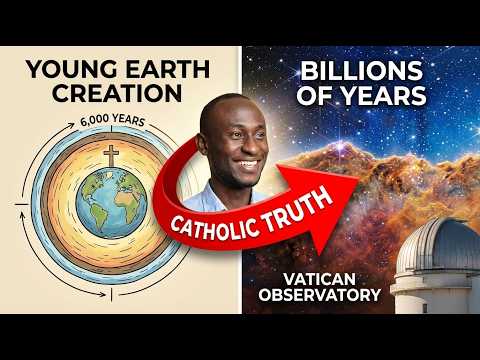
The Catholic Church rejects this false dichotomy. It does not require belief in a young earth and allows the faithful to accept scientific evidence for an ancient earth and the existence of dinosaurs millions of years before humans.
The Catechism of the Catholic Church teaches that God created the world according to His wisdom and that all creation, including creatures that lived long before humanity, reflects God's magnificent design.
Misreading scripture by imposing modern scientific categories onto ancient poetic texts causes us to miss the theological truths the sacred authors intended. This misunderstanding can lead young people to abandon faith when they feel forced to choose between the Bible and established science.
The Book of Job is a profound meditation on suffering, divine sovereignty, and human limitation. After Job’s friends fail to explain his suffering and Job demands answers from God, the Lord responds by revealing the wonders and mysteries of creation.
In chapters 40 and 41, God draws Job’s attention to two creatures that symbolize immense power: Behemoth and Leviathan.
Behemoth is described as having strength in its loins, a tail like a cedar tree, and bones like tubes of bronze. It lives undisturbed by raging rivers.
Leviathan is portrayed as even more terrifying, a creature no human can capture or control.
The United States Conference of Catholic Bishops (USCCB) notes that Behemoth and Leviathan are primeval monsters of chaos. They symbolize cosmic evil forces that only God can control.
Ancient Near Eastern literature often used sea monsters and chaotic beasts as symbols of forces opposed to God's order.
The Catechism teaches that God created all things in a state of journeying toward perfection and that alongside physical evil, moral evil entered through Satan and the angels who rejected God.
Saint Thomas Aquinas and Saint Albert the Great recognized these creatures as representing powers beyond ordinary animals.
God’s speech about Behemoth and Leviathan serves to humble Job. When God asks Job if he can control these creatures, the answer is no. This challenge illustrates that only God has authority over the proud, wicked, and chaotic forces threatening creation.
The Catholic understanding is that these passages are powerful symbolic poetry, not zoological descriptions. The Catechism teaches that scripture contains various literary forms that must be interpreted according to the sacred authors’ intentions.
Descriptions such as Behemoth breathing fire or having impenetrable scales are poetic exaggerations conveying theological truths, not scientific observations.
This approach honors scripture’s authority by reading it as inspired literature rather than a scientific textbook.
Catholics can fully embrace scientific discoveries about dinosaurs while recognizing that Job 40 and 41 address different questions about divine sovereignty and the problem of evil.
Professor Peter Dodson, a Catholic paleontologist, describes dinosaurs as "the jewels of God's creation," praising God through their magnificent existence over 160 million years.
Some Christians argue that Behemoth’s tail like a cedar must refer to a sauropod dinosaur, not a hippopotamus, and that accepting an old earth compromises biblical authority.
While respecting their sincere concern, the Catholic Church does not share this interpretive approach. The USCCB identifies these creatures as symbolic chaos monsters, not biological species.
The Hebrew word for Behemoth is a plural form of "beast," suggesting a superlative or ultimate beast. The description includes impossible details for any real animal, signaling a meaning beyond natural history.
The Catechism affirms that scripture’s inspired truth is what God intended for our salvation, not to provide scientific information about geology or paleontology.
Scientists at the Vatican Observatory teach that God works through the laws of nature in ongoing creation, making evolution compatible with faith in God as Creator.
Father William Stoeger emphasized that God grounds all existence and order rather than filling gaps in scientific explanation.
This allows Catholics to read Genesis as true theological revelation about who created and why, while accepting scientific evidence about how and when creation occurred.
Dinosaurs are not mentioned in the Bible because scripture was not written to catalog prehistoric fauna. Behemoth and Leviathan represent chaotic forces of evil and suffering that only God can master.
The Catholic Church embraces both the truth of scripture, rightly interpreted according to its literary forms and divine intention, and the truth of God’s creation as revealed by science.
These truths do not compete because they answer different questions.
When discussing dinosaurs with children, one can confidently say that God created these magnificent creatures as part of His ongoing work of creation, and they lived long before humans.
When reading Job, recognize that God teaches a far more important lesson: He alone controls the powers of chaos, evil, and death that humans cannot tame.
Reading Job chapters 38 through 42 slowly can inspire humility and trust in God’s sovereignty over all that threatens or confuses us.
God’s truth is bigger than false choices between faith and science, and understanding this harmony strengthens our faith and appreciation for creation.



















