
The 2023 Pastors' Conference emphasized the importance of service, particularly to the poor, as a core aspect of the church's identity. Through biblical examples, historical context, and contemporary challenges, the conference highlighted the need for churches to actively engage in social outreach to foster genuine faith communities and attract younger generations.
At the 2023 Pastors' Conference, Dave Murillo presented a compelling argument for the integral role of service within the church, particularly focusing on serving the poor. He emphasized that service is not merely an ancillary activity but a fundamental aspect of the church's identity and mission.
Murillo began by asserting that diakonia, or service, has always been central to the church's mission. He urged attendees to recognize that serving the least, the last, and the lost is not just an option but a core component of what it means to be the church. He noted that while churches may intellectually acknowledge this, the practical application often falls short.
Murillo encouraged churches to actively engage in robust service initiatives within their communities. He highlighted that when churches prioritize outreach to the poor, they often experience an unintended consequence: attracting young, disaffected individuals who have distanced themselves from the church. This demographic, often referred to as the "nuns"—those identifying as having no religious affiliation—may be drawn back to faith communities that demonstrate genuine care for the marginalized.
To illustrate his points, Murillo used the metaphor of a ship with three propellers:
Murillo emphasized that all three propellers must be functioning together for the church to fulfill its mission effectively.
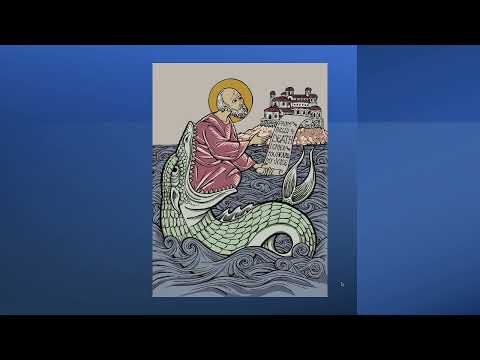
Murillo turned to the Book of Jonah as a cautionary tale about neglecting the call to serve the poor. Jonah's initial refusal to heed God's command to go to Nineveh serves as a reminder of the church's tendency to avoid uncomfortable calls to action. Instead of running away, Murillo urged churches to embrace their calling to serve those in need.
Jonah's story illustrates the struggle between comfort and the call to serve. Despite being a prophet, Jonah initially chose to flee from God's command, demonstrating a reluctance that many in the church may feel today. Murillo pointed out that the pagan sailors on Jonah's ship exhibited more faith than Jonah himself, highlighting the irony of a prophet running from his mission.
Murillo provided historical context, referencing the teachings of Pope Benedict and the early church fathers, who emphasized the inseparable nature of charity from the church's identity. He cited examples from church history, including St. Basil of Caesarea, who established one of the first organized hospitals to care for the poor, and St. Ambrose of Milan, who urged the wealthy to share their resources with those in need.
Murillo also discussed Martin Luther's introduction of the "common chest" in Wittenberg, which was designed to collect funds for the poor. This initiative demonstrated a practical application of the church's responsibility to care for the marginalized, ensuring that those in need received assistance.
In the modern context, Murillo acknowledged the challenges faced by churches in serving the poor, particularly in a society that often prioritizes comfort and safety. He warned against the dangers of becoming too comfortable within established structures, urging churches to remain vigilant and responsive to the needs of their communities.
Murillo highlighted the importance of engaging younger generations, who are increasingly disillusioned with traditional church structures. He argued that by actively serving the poor, churches can demonstrate authenticity and credibility, potentially drawing back those who have left the faith.
In conclusion, Murillo's message at the 2023 Pastors' Conference served as a powerful reminder of the church's calling to serve the poor. By embracing service as a core aspect of their identity, churches can not only fulfill their mission but also foster genuine connections with their communities and attract those who are searching for authentic faith experiences. The call to serve is not just a duty; it is an expression of the church's very nature and a vital part of its witness to the world.



















