
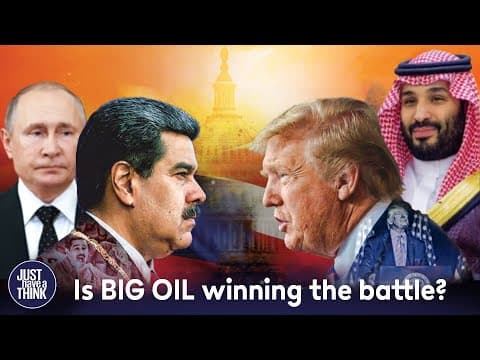
The International Energy Agency (IEA) has faced intense pressure from fossil fuel interests, leading to fluctuating projections on renewable energy growth and fossil fuel demand. Despite progress in renewable adoption, geopolitical tensions, critical mineral dependencies, and energy security concerns complicate the transition. The IEA's latest report warns that delaying action risks surpassing 1.5°C warming, urging urgent investment and policy shifts to avoid catastrophic outcomes.
For over two decades, the International Energy Agency (IEA) has been a key player in shaping global energy outlooks. Originally founded in the early 1970s to coordinate responses to oil supply disruptions and ensure energy security through fossil fuel stockpiling, the IEA's stance on renewable energy has historically been cautious, if not skeptical.
Throughout the 1990s and early 2000s, the IEA published its Annual World Energy Outlook reports projecting only linear growth for solar power. Industry analysts have since criticized these projections as not just inaccurate but almost laughably wrong, given the rapid expansion of renewables in recent years.
This conservative outlook was perhaps unsurprising given the IEA's origins and its close ties to fossil fuel interests.
Ahead of the COP26 climate conference in Glasgow in 2021, the IEA released a landmark report titled Net Zero by 2050. Fatih Birol, the IEA's executive director, declared that there was no need for new fossil fuel supply investments, signaling a significant shift in the agency's position.
The 2023 World Energy Outlook reflected more plausible renewable growth projections, indicating a growing recognition of the urgent need to transition to clean energy.
However, this shift did not sit well with the incoming Trump administration in the United States. The administration pressured the IEA to abandon its promotion of clean power and net zero emissions, urging a return to fossil fuel advocacy.
In March 2025, Fatih Birol made a speech in Houston, Texas, emphasizing the need for investment in fossil fuels to address declines in existing fields. This marked a notable pivot back toward fossil fuel support.
The IEA's 2025 World Energy Outlook presents multiple scenarios rather than a single forecast, reflecting the complex and uncertain future of global energy.
Current Policy Scenario (CPS): Reintroduced under pressure from fossil fuel interests, this scenario assumes continuation of existing policies without new climate commitments. Under CPS, oil and gas demand continue rising through 2050.
Stated Policy Scenario (Steps): Reflects government pledges and policies that may be implemented in the future, projecting oil demand peaking around 2030 and gas around 2035.
Net Zero Emissions by 2050 (NZE): The pathway necessary to achieve carbon neutrality by mid-century and avoid catastrophic environmental and societal consequences.
The fossil fuel industry strongly opposes the NZE scenario, labeling it "net stupid zero" or a "sinister goal," while favoring scenarios that maintain or increase fossil fuel demand.
The IEA reports that wind and solar accounted for about 20% of electricity generation in advanced economies in 2024. Projections under different scenarios include:
Current Policy Scenario: Wind and solar rise to one-third of electricity generation in advanced economies by 2035, and 45% in China.
Stated Policy Scenario: Advanced economies reach 40%, China 50%, and developing nations nearly 25%, aided by investments in grids, storage, and market reforms.
Industry analysts Wood Mackenzie and Rystad corroborate rapid renewable growth, projecting solar capacity doubling by 2030 and renewables providing 55% of global power generation within a decade.
Rystad highlights a critical insight: while primary energy consumption may peak and decline, useful energy consumption continues to grow due to improved efficiency. Renewables and electrification increase energy conversion efficiency, meaning less primary energy is needed to power economic activity.
This efficiency shift is crucial for sustaining societal infrastructure amid the energy transition.
The global energy landscape is complicated by geopolitical fragmentation, with international energy trading under pressure. Critical minerals essential for renewables, batteries, and electric vehicles are increasingly controlled by China, creating vulnerabilities.
Physical and cyber attacks on energy infrastructure add further risks. These challenges underscore the need for supply chain diversification and resilient energy systems.
New technologies such as artificial intelligence, large language models, and cryptocurrencies contribute to rising energy demand. The IEA's stated policy scenario projects global energy demand increasing by an amount equivalent to the current demand of the entire European Union over the next decade.
Electrification of cooking, cooling, and transportation further drives demand.
Despite progress, momentum behind climate mitigation has slowed. The IEA's 2025 report warns that the risk of surpassing 1.5°C warming is higher than ever, possibly inevitable.
Delays in action will increase the difficulty and cost of adaptation and resilience. Business-as-usual scenarios lead to insecure supply chains, higher costs, and more fossil fuel lock-in.
Urgent investment is needed not only in renewable generation but also in grids, energy storage, smart systems, and resilient networks to avoid stranded assets.
The battle over the future of global energy is complex and fraught with competing interests. While the IEA has made strides in acknowledging the necessity of a clean energy transition, fossil fuel interests continue to exert significant influence, complicating the path forward.
Renewable energy growth is promising, but geopolitical, technological, and infrastructural challenges remain.
The window to avoid catastrophic climate impacts is closing rapidly, demanding decisive policy action, investment, and global cooperation.
The future of energy will shape the stability and well-being of societies worldwide, making it imperative for governments, industries, and citizens to engage thoughtfully and urgently with these issues.
What are your thoughts on the IEA's evolving stance and the influence of fossil fuel interests on global energy policy? Share your views and experiences in the comments below.



















