
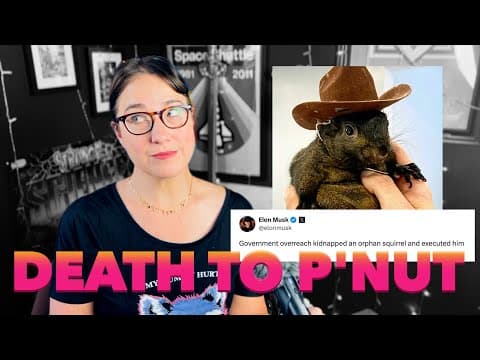
The story of P'nut the squirrel highlights the dangers of keeping wild animals as pets and the responsibilities that come with animal care. Mark Longo's decisions led to the tragic euthanization of P'nut, raising questions about wildlife rehabilitation and the ethics of exploiting animals for social media fame.
Growing up in a house surrounded by woods, I often encountered the peculiar behavior of squirrels. These creatures, known for their territorial nature, would launch acorns at anyone who dared to venture too close to their trees. This amusing yet dangerous behavior serves as a backdrop to a more serious story involving a pet squirrel named P'nut and the consequences of keeping wild animals as pets.
Mark Longo, a resident of Western New York, found himself in a unique situation about eight years ago. After witnessing a squirrel get run over by a car, he noticed its baby, known as a kit, running up his leg and into his arms. Unable to find a wildlife rehabilitation facility to take the kit, Longo decided to nurse it back to health himself. Eventually, he released the kit into his backyard, but after it was attacked, he and his partner made the decision to keep it as an indoor pet, naming it P'nut.
As time passed, Longo began filming videos of P'nut dressed in costumes and enjoying snacks, which gained significant popularity on social media. However, the focus of the videos shifted from P'nut to Longo himself, who capitalized on his looks by creating an OnlyFans account called "Squirrel Daddy."
Recently, the story took a dark turn when New York State officials raided Longo's home, capturing P'nut and ultimately euthanizing him. Along with P'nut, Longo's pet raccoon, Fred, was also euthanized. Longo expressed his outrage through conservative media outlets, claiming he was treated like a terrorist and attributing the incident to online activist trolls.
This narrative quickly gained traction among conservatives, framing P'nut's death as a case of government overreach. However, while it is true that P'nut did not do anything wrong, the circumstances surrounding his captivity raise significant ethical questions.
While many people love animals, it is crucial to recognize that not all animals are suitable as pets. Longo's decision to keep P'nut as a pet, despite the inherent risks and legal implications, was misguided. Wild animals, including squirrels, have specific needs that must be met for their well-being.
Longo's failure to provide proper care for P'nut included neglecting to take him to a veterinarian or ensure he received necessary vaccinations, such as the rabies vaccine. Rabies is a highly infectious and deadly virus that can affect all warm-blooded species, including humans. The absence of a rabies vaccine poses a significant risk not only to the animal but also to the community.
When state officials arrived to take P'nut, he bit one of the workers, highlighting the dangers of keeping a wild animal without proper training and care. Longo's actions not only endangered himself and his pet but also the workers who were trying to ensure public safety.
The laws in New York State, like many others, prohibit keeping wild animals as pets without a license. These regulations are in place to protect both the animals and the public. Longo's decision to keep P'nut and later bring home a wild raccoon further complicated the situation, as raccoons are also known vectors for rabies.
Longo's case serves as a cautionary tale about the responsibilities that come with caring for animals, particularly wild ones. Instead of attempting to raise P'nut as a pet, he should have contacted animal control or a licensed wildlife rescue for guidance. These organizations are equipped to rehabilitate wild animals and prepare them for life back in their natural habitat.
Moreover, exploiting P'nut for social media fame ultimately led to his tragic fate. Had Longo not posted videos of P'nut online, it is unlikely that state officials would have intervened. This raises important questions about the ethics of using animals for entertainment and the potential consequences of such actions.
The story of P'nut the squirrel is a heartbreaking reminder of the complexities involved in wildlife care and the ethical considerations that must be taken into account. While it is easy to sympathize with Longo's plight, it is essential to recognize that his decisions led to the unnecessary loss of a life. As we navigate our relationships with animals, we must prioritize their well-being and respect their natural behaviors. Wild animals belong in the wild, and it is our responsibility to ensure they remain there.



















