
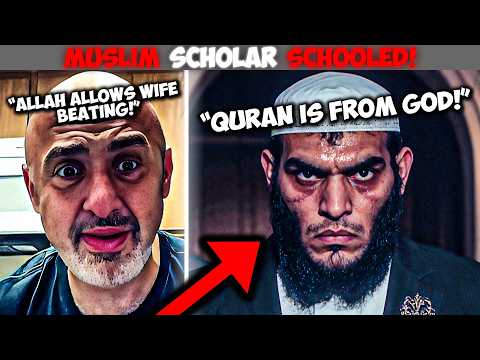
In a heated debate, Shabir Ally and Sam Shamoun discuss the interpretations of religious texts, particularly focusing on the Quran and the Bible, the role of women, the nature of sin, and the concept of salvation. The debate highlights significant theological differences between Islam and Christianity, particularly regarding the nature of Jesus, the concept of original sin, and the interpretation of scripture.
In a recent debate, Shabir Ally and Sam Shamoun engaged in a rigorous discussion that delved into the interpretations of religious texts, particularly the Quran and the Bible. This debate not only highlighted their differing theological perspectives but also raised critical questions about the nature of God, sin, and salvation.
Shabir Ally opened the debate by asserting the Quran's authority, claiming that he could confidently state that the Arabic text of the Quran is the word of God. He challenged Shamoun to present a similar claim about the Bible, suggesting that many people are unaware of the contents of their own scriptures. This led to a discussion about the treatment of women in both texts, where Ally pointed out that the Quran and the Bible present vastly different views.
Ally referenced Revelation 14:4-5, arguing that it implies women will not enter paradise, contrasting this with the Quran's treatment of women. He emphasized that many Christians do not fully understand their own scriptures, which he believes undermines the claim that the Bible is the uncorrupted word of God.
Sam Shamoun countered by stating that Ally misinterpreted the context of Revelation, arguing that it speaks specifically about a chosen group of 144,000 from Israel, and not a blanket statement about women. He urged Ally to read the scripture in context, highlighting the importance of understanding the original intent of biblical passages.
The debate shifted to the nature of sin, particularly regarding the figure of Muhammad in Islam and Jesus in Christianity. Shamoun claimed that the Quran acknowledges Muhammad's sins, citing various verses, while also questioning why Muhammad was bewitched, a claim he supported with references from Islamic tradition.
Ally responded by explaining that the Quran teaches that all humans, including prophets, are fallible and in need of God's forgiveness. He emphasized that seeking forgiveness is a fundamental aspect of being human, and that even Muhammad sought forgiveness multiple times a day.
A significant point of contention was the concept of original sin. Shamoun argued that Christianity provides a solution to the problem of sin through Jesus' sacrifice, while Ally contended that Islam does not teach original sin but rather original forgiveness. He explained that humans are not born condemned but acquire sins through their actions, which can be forgiven through repentance.
The debate also explored the nature of Jesus, with Shamoun asserting that Jesus is both God and man, while Ally argued that Jesus was a prophet and messenger of God. Shamoun pointed to various biblical passages to support the divinity of Jesus, while Ally highlighted the limitations of Jesus as depicted in the Gospels, suggesting that these limitations indicate his humanity.
Ally criticized the Apostle Paul, suggesting that his teachings diverged from the original message of Jesus. He argued that Paul's writings have significantly shaped Christian doctrine, often in ways that contradict the teachings of Jesus. Shamoun, on the other hand, defended Paul, asserting that his writings are essential to understanding the Christian faith.
The discussion also touched on the nature of rewards in the afterlife, particularly regarding the concept of sexual pleasures in paradise as described in the Quran. Shamoun questioned the morality of such rewards, while Ally defended the idea by explaining that the pleasures of paradise are devoid of the negative consequences associated with them in the earthly realm.
The debate between Shabir Ally and Sam Shamoun was a profound exploration of the theological differences between Islam and Christianity. It raised critical questions about the interpretation of sacred texts, the nature of sin and salvation, and the role of key religious figures. As both speakers presented their arguments, it became clear that the dialogue surrounding these topics is complex and deeply rooted in historical and cultural contexts. The discussion not only highlighted the differences in belief systems but also emphasized the importance of understanding and respecting diverse perspectives in the realm of faith.



















