
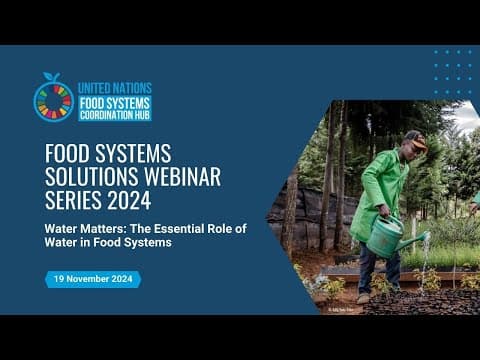
The 2024 Food Systems Solutions Webinar highlighted the essential role of water in food systems and food security, emphasizing the need for integrated water management and cross-sector collaboration to address global water challenges and ensure sustainable agriculture.
The Food Systems Solutions Webinar, hosted by the UN Food Systems Coordination Hub in collaboration with FAO's Land and Water Division, focused on the vital role of water in food systems and food security. The event featured presentations and discussions on how water is integrated into national food systems pathways and the importance of addressing water-related challenges to achieve sustainable agriculture.
Mia Madson, a policy officer at the UN Food Systems Coordination Hub, opened the webinar by introducing the agenda, which included a presentation on national food systems pathways and a panel discussion on the interlinkages between water and food systems. Mr. Leifang Lee, Director of the FAO Land and Water Division, provided opening remarks emphasizing that without water, there can be no food systems. He highlighted that agriculture is responsible for over 70% of global freshwater withdrawals, making it the largest user of this precious resource.
Mr. Lee pointed out that water is crucial for nutritional security, energy production, and maintaining ecosystem health. However, global water availability and quality are deteriorating due to climate change, mismanagement, and increasing competition for water resources. By 2050, the demand for freshwater is projected to increase by at least 24%, posing significant challenges for sustainable agriculture.
Natalie Dubler from the FAO Land and Water Division presented an analysis of how water is reflected in national food systems pathways. The analysis assessed 116 national pathways submitted as of July 2023, revealing that:
The analysis used ten indicators to assess the integration of water in the pathways, with institutional coordination being the most recognized indicator. This highlights the importance of cross-sector collaboration in mainstreaming water management into national policies.
Based on the findings, several policy recommendations were made to enhance the integration of water in food systems:
The panel featured representatives from various sectors, including Maurice Opondo from the Kenyan government and Tamisha Lee from the Jamaica Network of Rural Women. They shared insights on the importance of water in food production and the need for practical actions to strengthen water-food linkages in national policies.
The webinar underscored the critical role of water in achieving food security and sustainable agriculture. It highlighted the need for integrated water management approaches and cross-sector collaboration to address the challenges posed by climate change and water scarcity. As the global demand for freshwater continues to rise, it is imperative that countries prioritize water in their food systems pathways to ensure a sustainable future for all.



















