
This blog post explores the deeper meanings behind the story of Lot's wife, who turned into a pillar of salt. It delves into the systemic sins of Sodom, including pride, cruelty, and the normalization of evil, revealing why her attachment to the city led to her tragic fate. The narrative challenges readers to reflect on their own attachments and the consequences of looking back at a life that God has called them to leave behind.
Have you ever stopped to ask what Lot's wife was really looking at when she turned back? The story of Lot's wife, who turned into a pillar of salt, is often simplified in Sunday school lessons. We hear that she looked back and was struck down by God, but what if that’s not the whole story? What if she wasn’t just being nosy or rebellious? What if she was trying to save something? This blog post delves into the disturbing narrative of Sodom and Gomorrah, exploring the reasons behind Lot's wife's fatal choice and what it reveals about sin, attachment, and escape.
If you grew up hearing the story of Sodom and Gomorrah, it likely sounded something like this: God sees a wicked city, and Abraham begs Him to spare it. God agrees, stating that if He can find just ten righteous people, He won’t destroy it. Spoiler alert: He doesn’t find them. Two angels are sent to Sodom, disguised as travelers, and they are met by Lot, Abraham’s nephew. Lot senses something divine about them and insists they stay at his house, even baking unleavened bread for them, indicating urgency.
As night falls, the men of the city surround Lot’s house, demanding the strangers be brought out for vile purposes. In a shocking turn, Lot offers his own daughters to the mob, pleading for the safety of his guests. This act highlights the depravity of Sodom and the sacredness of hospitality in ancient culture. The angels intervene, blinding the mob and delivering a dire message: "Get out now. Gather your family and flee, for by sunrise, this place will be ashes."
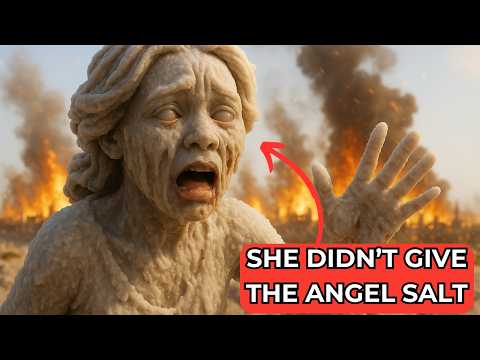
Despite the urgency, Lot hesitates. Perhaps it’s fear, attachment, or shock. The angels physically drag Lot, his wife, and their daughters out of the city. As they escape, the angels give one simple instruction: "Do not look back." But Lot's wife does look back, and in that instant, she becomes a pillar of salt—a frozen monument to regret and a warning that still echoes today.
What was happening in Sodom that made Lot's wife look back? The common narrative suggests that Sodom was destroyed solely due to sexual immorality, but the truth is far more complex and disturbing. In Ezekiel 16:49, God outlines the charges against Sodom: pride, gluttony, and apathy. The people had everything—wealth, abundance, food—but they turned their backs on the suffering. They not only ignored the needy but actively hated them.
The book of Jasher, an ancient text, reveals that Sodom had laws against kindness. Helping someone in need could lead to punishment. One story tells of a woman who secretly fed a starving man and was burned alive for her act of compassion. This was not merely sin; it was systematic cruelty, where compassion was illegal and mercy was a crime.
According to the Apocalypse of Abraham, Sodom was under demonic influence. The people worshiped dark powers, engaged in ritual sacrifices, and were consumed with unnatural lusts—not just sexually but spiritually. They craved power and control, and nothing was sacred. The most basic decency, hospitality, was corrupted. In Sodom, evil was celebrated, and goodness was punished.
The corruption had become law, and the city was a place where light could not survive. The destruction of Sodom was not just judgment; it was an intervention against a city that had become a portal for darkness.
When Lot's wife turned back, she was not merely longing for a home; she was mourning a life that had become normal to her. She had grown numb to the darkness around her. The destruction of Sodom was not just about fire and brimstone; it was about the spiritual rot that had taken hold of the city. Lot's wife was not just escaping a city; she was being torn away from the only world she knew.
Some ancient texts suggest that Lot's wife was from Sodom, raised in its streets, and deeply tied to its values. If true, this means she was not just a visitor but a product of the very culture that was being destroyed. Her hesitation to leave was not just fear; it was attachment to a life that, despite its darkness, was familiar and comfortable.
Before we can understand why Lot's wife looked back, we must uncover the hidden stories of Sodom that paint a darker picture of the city. One story tells of Lot's daughter, Palith, who was burned alive for helping a starving man. Another reveals the existence of torture beds in public spaces, where strangers were punished for not conforming. These stories illustrate the horrific reality of life in Sodom, where cruelty was normalized and kindness was punished.
Abraham, in a prophetic vision, saw the impending doom of Sodom, recognizing it as a place of demonic worship and chaos. The kings of Sodom and Gomorrah institutionalized wickedness, passing laws that encouraged mock trials for the poor and punished generosity. Lot's wife was not just leaving behind a city of pleasures; she was leaving behind a throne of filth.
Lot's wife is often remembered simply as a cautionary tale, but her transformation into a pillar of salt carries profound symbolism. In ancient cultures, salt represented preservation and covenant, but it also signified desolation. By becoming a pillar of salt, Lot's wife embodied the very destruction she clung to. She was frozen in the act of disobedience, a monument to what happens when one cannot let go of a life that has been judged.
Her story serves as a mirror for anyone who hesitates when God calls them to move forward. It challenges us to reflect on what we are still longing for that God has already rescued us from. The danger lies in trying to bring yesterday into tomorrow, in holding onto memories that should be left behind.
Lot's wife was not just a side character in the story of Sodom; she was a reflection of our own struggles with attachment and nostalgia. Her fate serves as a warning about the consequences of looking back when God has called us to move forward. The true danger is not just in staying behind but in trying to bring the past into our future.
As we reflect on the story of Lot's wife, we must ask ourselves: What are we still holding onto that God has called us to let go of? Are we willing to move forward, even when it hurts to let go? The journey to freedom requires us to release the past fully, for only then can we step into the promise of a new life. Let us not become monuments of what could have been, but rather embrace the future that awaits us, free from the chains of our past.



















