
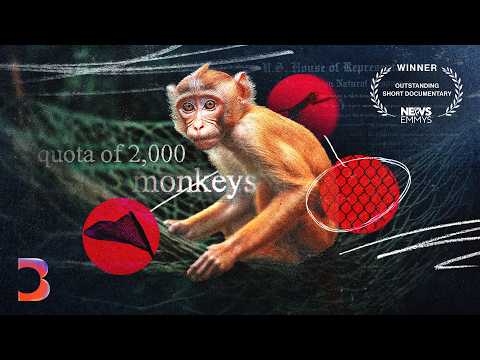
The blog explores the alarming rise of monkey laundering, a practice involving the illegal capture and sale of long-tailed macaques for research purposes, particularly during the COVID-19 pandemic. It details the undercover investigations by the US Fish and Wildlife Service, the complexities of wildlife trafficking, and the implications of a recent trial that exposed the dark realities of this multi-billion dollar industry.
The demand for long-tailed macaques has surged in recent years, particularly for research purposes related to diseases like Alzheimer's and COVID-19. This blog post delves into the disturbing practice of monkey laundering, where wild macaques are captured and sold under false pretenses as captive-bred animals. The implications of this trade are profound, affecting both animal welfare and public health.
Researchers have increasingly turned to long-tailed macaques due to their hardiness and resilience in laboratory settings. The COVID-19 pandemic exacerbated this demand, with prices skyrocketing to $50,000 per monkey. This surge led to rampant poaching, as wild-caught monkeys often carry infectious diseases, making them unsuitable for research. The challenge lies in distinguishing between wild-caught and captive-bred monkeys, as visual identification is nearly impossible.
Wildlife trafficking is primarily driven by greed. Once animals are commodified, it becomes easy to overlook their sentience. Each year, over 30,000 long-tailed macaques are traded, raising critical questions about their destination and the entities purchasing them. The illegal trade often involves complex underground networks that facilitate the smuggling of various wildlife, including monkeys.
The US Fish and Wildlife Service (USFWS) is one of the oldest law enforcement agencies in the United States, tasked with protecting wildlife. The agency's special agents operate globally, investigating wildlife trafficking. A significant operation, dubbed "Operation Long Tail Liberation," was initiated to uncover the smuggling of monkeys from Cambodia to the US. This operation aimed to disrupt the supply chains that facilitated this illegal trade.
Monkey laundering refers to the process of taking wild monkeys, moving them to facilities, and falsifying paperwork to make them appear as if they were born in captivity. This practice is illegal, yet it has become a common method for companies to meet the high demand for research monkeys. The investigation into this practice began in earnest when a whistleblower from Vanny Bio Research in Cambodia came forward with alarming information about the company's operations.
Francis Yeung, an employee at Vanny Bio Research, revealed that the company was capturing wild macaques to supplement their captive-bred stock. His insights provided a unique opportunity for investigators to trace the supply chain of these monkeys. Yeung's information led to the establishment of a detailed undercover operation aimed at documenting the smuggling process.
The onset of COVID-19 had a dramatic impact on the monkey trade. With China halting its exports of monkeys, Cambodia stepped in to fill the void, increasing its exports from 5,000-6,000 to 30,000 monkeys annually. This sudden influx raised suspicions among investigators, who noted that the numbers were mathematically impossible given the breeding capabilities of the facilities.
In November 2022, the US Department of Justice unveiled an indictment detailing a massive monkey smuggling scheme involving Vanny Bio Research. The indictment included over half a million pieces of evidence, including internal emails and shipping records. However, the trial that followed revealed significant challenges in proving the case against the accused, particularly a Cambodian government official, Masphal Kry.
Despite the overwhelming evidence presented, the trial concluded with Kry being found not guilty. The jury struggled to establish his direct involvement in the conspiracy, highlighting the complexities of prosecuting wildlife trafficking cases. The outcome was a disappointment for many, as it underscored the difficulties in holding individuals accountable in a multi-billion dollar industry.
While the trial did not result in convictions, it shone a light on the dark world of monkey laundering and the illegal wildlife trade. The case revealed that wild monkeys were being funneled into the US biomedical industry, raising ethical and scientific concerns. The demand for these animals in the US is a significant driver of the illegal trade, and the responsibility lies not only with traffickers but also with the companies purchasing these monkeys.
The investigation into monkey laundering is far from over, with several individuals still awaiting trial. The revelations from this case have sparked discussions about the ethical implications of using wild animals in research and the need for stricter regulations. As the demand for monkeys continues, it is crucial to address the systemic issues that allow such practices to thrive, ensuring that wildlife trafficking is met with the scrutiny it deserves.



















