
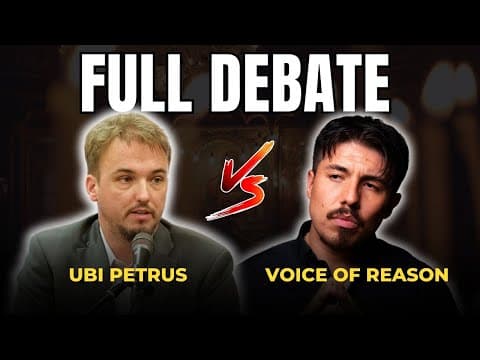
This blog post summarizes a debate between Ubie Petrus and Alex Voice of Reason regarding whether the Orthodox Church is the one holy Catholic and apostolic church. The discussion covers various theological arguments, historical references, and the implications of church unity and authority.
The debate surrounding the identity of the Orthodox Church as the one holy Catholic and apostolic church is a significant topic within Christian theology. This post summarizes a recent debate held at Our Lady of Wisdom parish, featuring Ubie Petrus defending the Orthodox position and Alex Voice of Reason presenting counterarguments.
The debate was structured into several segments:
Ubie Petrus began by asserting that the Orthodox Church fulfills the definitions of being one, holy, Catholic, and apostolic. He referenced historical examples, such as:
Ubie argued that the Orthodox Church maintains its identity despite historical schisms and that the essence of being Catholic is not solely based on geographical spread but on shared faith and apostolic succession.
Alex Voice of Reason countered by stating that the Orthodox Church, while it may be holy and apostolic, lacks the unity and universality required to be considered the one true church. He pointed out:
Ubie responded by reiterating that the Orthodox Church's historical disputes do not invalidate its claim to be one and Catholic. He argued that the church's unity is expressed through shared faith and sacraments, even amidst internal disagreements. He cited the teachings of early church fathers to support his claims.
Alex countered by emphasizing that the lack of a central authority in the Orthodox Church leads to confusion and disunity. He argued that the Catholic Church's ability to convene councils and maintain doctrinal integrity is essential for identifying the true church. He pointed out that the Orthodox Church's claims to Catholicity are undermined by its inability to resolve significant theological disputes.
During the cross-examination, both speakers challenged each other's positions. Ubie questioned Alex on the implications of the Catholic Church's historical decisions, while Alex pressed Ubie on the practicalities of Orthodox governance and unity.
The open debate allowed for a more dynamic exchange of ideas. Ubie maintained that the Orthodox Church's historical continuity and adherence to apostolic tradition validate its claims. Alex argued that without a clear and unified governance structure, the Orthodox Church cannot claim to be the one holy Catholic and apostolic church.
In their closing statements, Ubie reiterated the importance of historical context and the Orthodox Church's commitment to maintaining its traditions. Alex concluded by emphasizing the necessity of unity and governance in identifying the true church, arguing that the Catholic Church fulfills these criteria.
The debate highlighted the complexities of church identity and the ongoing discussions within Christianity regarding authority, unity, and tradition. While both speakers presented compelling arguments, the question of whether the Orthodox Church is the one holy Catholic and apostolic church remains a topic of significant theological exploration and dialogue.



















