
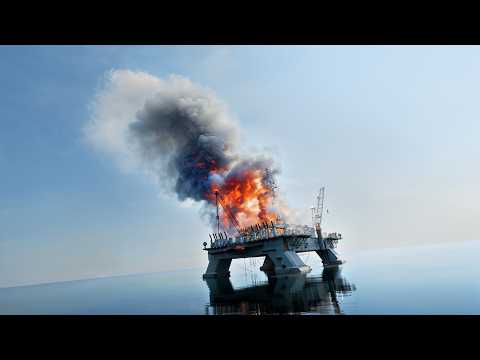
The Deepwater Horizon disaster, which occurred on April 20, 2010, resulted in the worst oil spill in U.S. history, releasing an estimated 134 to 210 million gallons of oil into the Gulf of Mexico. This blog post details the events leading up to the explosion, the immediate aftermath, and the extensive efforts to contain the spill, highlighting the environmental impact and the challenges faced by engineers and responders.
On April 20, 2010, an explosion on the Deepwater Horizon oil drilling platform in the Gulf of Mexico marked the beginning of the worst oil spill in U.S. history. This catastrophic event released millions of gallons of oil into the ocean, creating an environmental disaster that would have lasting repercussions. This blog post delves into the timeline of events, the engineering challenges faced, and the environmental impact of the spill.
On the evening of April 20, 2010, everything appeared normal aboard the Deepwater Horizon. The crew was busy finishing up the borehole, unaware of the impending disaster. The Deepwater Horizon was not an oil extraction platform but a drilling rig, tasked with creating the initial borehole and installing a wellhead on the seafloor. Once this was completed, a smaller rig would take over for extraction.
As the crew prepared to abandon the well, they conducted a pressure test. Suddenly, they noticed a significant spike in pressure readings, indicating that oil and gas had unexpectedly entered the well. Despite the alarming signs, the crew decided to proceed with their operations. Just before 10 p.m., a geyser of mud and seawater erupted from the well, followed by an explosion that sent oil and gas rushing up to the platform.
The explosion resulted in the tragic loss of 11 crew members, with 115 others rescued. Emergency responders faced significant challenges due to the remote location of the rig and the ongoing fire fueled by the leaking oil. After two days of burning, the Deepwater Horizon sank to the ocean floor, marking the beginning of a massive oil leak.
Initially, BP reported that no oil was escaping into the sea, but this was soon corrected. The company faced immense pressure to close the leak as the extent of the spill became apparent. Engineers deployed a remote-operated vehicle to assess the situation and discovered that the blowout preventer (BOP), designed to prevent such disasters, had failed to function as intended.
The BOP had two systems to close the well: pipe rams and annular preventers. Unfortunately, these systems were activated too late, allowing oil and gas to escape. The crew attempted to engage the blind shear ram, a final fail-safe mechanism, but it failed due to a power loss. This left the well vulnerable, and oil began leaking into the Gulf.
To address the leak, engineers devised a plan to drill a relief well that would intersect with the original well, allowing them to pump mud and cement to seal the leak. However, this process would take months, and the oil continued to spill into the ocean.
In an effort to contain the spill more quickly, engineers considered using a coffer dam, a large steel and concrete structure designed to cover the leak. However, as the dam was lowered into the depths of the Gulf, it encountered problems with methane hydrates forming and blocking the opening, leading to its abandonment.
Next, engineers attempted to siphon oil directly from the well using a smaller pipe, which yielded some success. They also tried a method known as the "junk shot," where heavy drilling mud and various materials were pumped into the well to stop the flow. Unfortunately, this method was also unsuccessful due to the high pressure of the escaping oil.
After several failed attempts, engineers returned to the idea of a containment dome, opting for a smaller cap that could be placed directly on the BOP. This required cutting the damaged pipe, which risked increasing the oil flow. Despite the risks, the cap was successfully installed, significantly reducing the amount of oil leaking into the ocean.
Over the following weeks, engineers continued to improve the caps, eventually leading to a complete seal of the well. After 86 days of continuous leaking, the well was finally sealed on July 15, 2010, marking a significant milestone in the containment efforts.
The Deepwater Horizon disaster resulted in an estimated loss of approximately 134 million gallons of oil, with independent scientists suggesting that the actual figure could be as high as 210 million gallons. This massive spill had devastating effects on marine life and ecosystems in the Gulf of Mexico. Reports indicated lower survival rates for nearshore animals, with over 900 dolphins washing ashore, many of them dead.
BP has contested the higher estimates, arguing that they do not account for the oil that was siphoned before it could enter the Gulf. However, the true extent of the spill remains uncertain, and the environmental damage is undeniable.
The Deepwater Horizon disaster stands as a stark reminder of the risks associated with offshore drilling and the potential for catastrophic environmental consequences. The engineering challenges faced during the containment efforts highlight the complexities of addressing such high-stakes problems. Ultimately, the disaster resulted in significant loss of life and irreparable damage to the ecosystem, underscoring the need for stringent safety measures in the oil industry.



















