
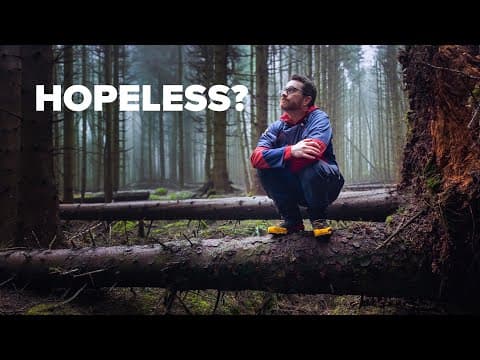
This blog post explores the historical and current state of tree cover in Ireland, revealing the reasons behind the drastic reduction in trees, the impact of agriculture and forestry practices, and the challenges faced in restoring native woodlands. It discusses the roles of various historical groups, the current forestry practices, and the future outlook for Ireland's forests.
Ireland's forests have a long and complex history, marked by significant deforestation and changing land use practices. In this post, we will delve into the reasons behind the drastic reduction in tree cover in Ireland, the current state of its forests, and the challenges that lie ahead in restoring native woodlands.
When asked why there are so few trees in Ireland, many people might point to the English invaders who cut them down to build ships. However, this narrative only scratches the surface of a much deeper and more complicated history. By the time the English arrived, the native Irish had already cleared approximately 85% of the island's trees, leaving only 15% of tree cover around 600 years ago. At that time, Ireland had less tree cover than the European average, which stands at about 39% today.
The ancient Irish were indeed known for their reverence for trees, but they also engaged in extensive deforestation. Trees were cut down for various reasons:
Cattle were a symbol of wealth and status, leading to significant land clearing to accommodate grazing.
Around 1,000 years ago, the Vikings arrived in Ireland, bringing with them new challenges for the forests. They exploited Ireland's timber resources for shipbuilding and established settlements, including the founding of Dublin. However, the Vikings were not solely responsible for the decline in tree cover; they were part of a larger pattern of exploitation that had already begun.
The English invasions in the 1600s marked a significant turning point. They took control of the land and continued the trend of deforestation, primarily for construction and fuel. By 1925, Ireland's forest cover had dwindled to just 1%. The remaining trees were often located in areas unsuitable for agriculture.
Fast forward to today, and the situation remains dire. Currently, Ireland's native tree cover stands at a mere 2%. While it is true that trees can regrow naturally if land is left undisturbed, the presence of sheep grazing on the hills has hindered this process. Sheep consume young saplings, preventing forests from regenerating.
Today, the total tree cover in Ireland is approximately 11%, but 9% of this consists of commercial plantations, primarily non-native species. These plantations are often planted closely together to maximize growth, which limits biodiversity and makes them vulnerable to disease and storms. Surprisingly, Ireland imports about 30% of its timber, including utility poles, which are predominantly sourced from Scandinavia.
In the Republic of Ireland, the forestry sector is managed by Coillte, a semi-state organization. While Coillte has plans to improve biodiversity and recreation in forests, it still primarily focuses on commercial timber production. Recent agreements with investment funds raise concerns about prioritizing quick returns over ecological health. Although Coillte aims to designate 50% of its forests for nature, the specifics of this plan remain unclear.
In contrast, Northern Ireland lacks a cohesive forestry strategy. The government has made commitments to plant new woodlands, but the focus remains on monoculture plantations, with minimal requirements for native species. The lack of public engagement and transparency in forestry practices raises concerns about the future of Northern Ireland's forests.
The future of Ireland's forests is fraught with uncertainty. While there are efforts to improve the situation, the reality is that large areas of native woodlands take centuries to regenerate. The tragedy is that no one alive today will witness the return of significant quantities of native Irish woodland. However, there is a glimmer of hope as new forestry practices that balance timber production with ecological restoration are being explored.
As we navigate these challenges, it is crucial to advocate for sustainable forestry practices that prioritize the health of our forests and the biodiversity they support. Only then can we hope to see a brighter future for Ireland's trees and the ecosystems they sustain.



















