
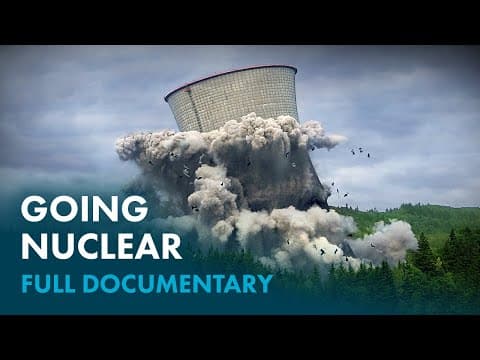
The Trojan Nuclear Power Plant, operational from 1976 to 1993, faced numerous challenges including safety concerns, public opposition, and mechanical failures, ultimately leading to its closure and the end of Oregon's nuclear power ambitions.
When the Trojan nuclear power plant came online in 1976, it ushered in a new era for the Pacific Northwest. Years of research and development had been poured into nuclear power, which promised to bring mankind into an age of limitless energy. Trojan was the first step in a much grander vision, as dozens more nuclear plants were already being planned across Oregon and Washington. With a designed lifespan of 35 years, Trojan promised to serve our energy needs well into the 21st century. So how is it then, after just 17 years of operation, did we find ourselves here?
On September 28, 1937, President Franklin D. Roosevelt visited the Pacific Northwest to deliver a speech at the dedication of the Bonneville Dam, a major public works project on the Columbia River. This dam, along with the Grand Coulee Dam, transformed the Northwest, making electricity accessible to many local residents for the first time. The power from these dams helped give Oregon and Washington the lowest electric rates in America, fostering a growing population and increasing demand for energy.
As the population boomed, the demand for energy surged. By the 1960s, Portland General Electric (PGE) began developing plans for nuclear power plants, inspired by the Peach Bottom Atomic Power Station in Pennsylvania. In 1967, PGE announced plans to build Oregon's first nuclear power plant, the Trojan Nuclear Power Plant, near the Columbia River.
PGE hired the Bechtel Corporation to design and build the plant. The reactor core would contain uranium fuel rods submerged in water, creating heat through nuclear fission. However, the plant faced its first controversy regarding the temperature of water discharged into the Columbia River, which could harm local salmon populations. To address this, PGE invested in a cooling tower to regulate the water temperature.
Despite these efforts, concerns about the plant's safety grew. Geologists warned about localized fault lines in the region, but construction continued with little oversight. The Trojan plant opened in 1976, but soon faced mechanical issues and unplanned outages.
As the plant operated, anti-nuclear activists raised concerns about nuclear waste and safety. The issue of radioactive waste disposal became a significant point of contention, especially after the Hanford site became known for its environmental hazards. In 1976, Oregon voters rejected Ballot Measure 9, which aimed to impose stricter regulations on nuclear plants, but protests continued.
In 1977, a significant protest occurred when hundreds of demonstrators occupied the Trojan plant, marking a turning point in the anti-nuclear movement. Activists coordinated efforts to raise awareness about the plant's safety issues, leading to increased scrutiny from the public and regulators.
The nuclear power industry faced a PR nightmare after the Three Mile Island accident in 1979, which raised public fears about nuclear safety. In Oregon, concerns about Trojan intensified after the eruption of Mount St. Helens in 1980, which reminded residents of the region's geological risks.
In 1980, Measure 7 was passed, effectively banning the construction of new nuclear plants in Oregon until a national waste disposal site was established. This marked a significant shift in public sentiment against nuclear power.
Despite its initial promise, Trojan faced ongoing mechanical failures, particularly with its steam generators, which began to show signs of corrosion. By the early 1990s, PGE acknowledged that the generators needed replacement, but the costs were prohibitive.
In 1992, PGE announced that Trojan would continue operating until the steam generators were no longer usable, but public opposition remained strong. Activists pushed for measures to shut down the plant, citing safety concerns and the accumulation of nuclear waste.
On January 4, 1993, PGE's Board of Directors voted to permanently cease operations at Trojan. The decision came after years of controversy and public pressure. The decommissioning process began, with plans to remove radioactive elements and dismantle the plant.
The closure of Trojan marked the end of Oregon's nuclear power ambitions. The plant's legacy serves as a reminder of the complexities and challenges associated with nuclear energy.
In the years since Trojan's closure, PGE has shifted its focus toward natural gas plants and wind farms, but the Pacific Northwest remains dominated by hydroelectric power. The Trojan Nuclear Power Plant stands as a testament to the region's energy history, illustrating the challenges of balancing energy needs with safety and environmental concerns. Oregon's effective ban on nuclear power remains in place, reflecting a complicated and controversial past that continues to shape the state's energy landscape.



















