
This blog post explores various historical and contemporary attempts by humans to control animal populations, highlighting the failures and unintended consequences of these efforts, including the infamous Emu War in Australia, culling of elephants, rats, jackals, coyotes, badgers, and wolves.
We love animals, but it’s no secret that they don’t always reciprocate our affection. From consuming our crops to spreading diseases, there are numerous instances where humans have sought to keep wildlife at bay. However, these efforts often backfire spectacularly. This post delves into some of the most notable examples of animal control gone awry, including the infamous Emu War.
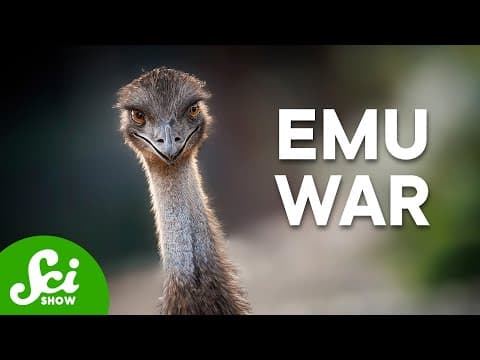
The Emu War began in 1932 in Australia when farmers faced a massive flock of approximately 20,000 migratory emus that were devastating their crops. Frustrated and overwhelmed, the farmers called in the Australian military, armed with machine guns, to assist in culling the birds.
The first military operation took place in Western Australia, where soldiers attempted to flush the emus towards the gunners. However, the birds quickly scattered into nearby timber, and the soldiers managed to cull only a handful of emus. The realization dawned that the emus were not a dense, easily-targeted mass but rather a scattered flock, making them difficult to control.
As the military continued its efforts, the emus appeared to become increasingly clever. Reports suggested that the birds designated sentries to alert the flock of approaching humans. In one instance, a soldier's vehicle malfunctioned after running over an emu, causing chaos and preventing any shots from being fired. Despite some eventual successes, the panicked emus ended up trampling more crops than they consumed, leading to greater losses for the farmers.
The Emu War concluded later that year when the wheat harvest was over, leaving no more crops to attract the emus. This bizarre chapter in history serves as a reminder of the folly of trying to wage war against nature.
While emus may be comical, other animals pose serious threats to human safety and agriculture. Elephants, for instance, can destroy crops and are responsible for numerous human fatalities in rural areas of Africa and India. In an attempt to manage elephant populations, culling has been employed, particularly in Kruger National Park, South Africa.
Between 1967 and 1996, thousands of elephants were culled under the belief that they were damaging vegetation and biodiversity. However, this approach had dire consequences. The younger elephants, left without their mature counterparts, exhibited a lack of social skills and became more dangerous to humans. In several nature preserves, these cull survivors were involved in fatal encounters with people and even killed rhinos.
Research indicated that the absence of older bulls led to younger males breeding earlier and exhibiting aggressive behavior. When mature bulls were reintroduced, the violence subsided, highlighting the importance of social structures in elephant herds.
Rats are another common nuisance, known for their ability to invade homes and spread diseases. Many people resort to traps or poisons, such as warfarin, an anticoagulant that causes fatal internal bleeding in rodents.
However, after decades of exposure to warfarin, rats developed resistance to the poison. By the late 1950s, the first cases of warfarin-resistant rats were documented. Over time, these rats not only survived but thrived, leading to the emergence of larger, more resilient populations. This prompted researchers to develop even more potent poisons, but resistance continued to evolve, creating a cycle of pharmacological warfare.
Human efforts to control carnivore populations, such as jackals and coyotes, have also proven ineffective. Culling these animals is often intended to reduce livestock predation, but studies show that it can lead to increased populations.
In South Africa, culling black-backed jackals resulted in younger jackals moving into vacant territories and breeding earlier than their predecessors. Similarly, in South Carolina, coyote populations rebounded quickly after culling, as younger coyotes took advantage of the available territory. This pattern also applies to larger carnivores like cougars, where increased hunting led to more dangerous encounters with humans.
In the UK, badgers are carriers of bovine tuberculosis (bTB), leading to culling efforts aimed at controlling the disease. However, studies have shown that culling has little effect on reducing bTB prevalence.
A randomized cull in 1998 found that badger culling did not significantly impact disease spread. Subsequent culling campaigns resulted in badgers expanding their ranges and increasing their interactions with cattle, ultimately exacerbating the problem. The costs of these culling efforts often outweighed any potential benefits.
In a more extreme example, the Canadian government attempted to bolster declining caribou populations by culling grey wolves from helicopters. This strategy backfired as the surviving wolves adapted their behavior to avoid being targeted, making them harder to hunt.
Interestingly, the changes in wolf behavior may inadvertently benefit caribou populations, as the wolves shifted their focus to more abundant prey like moose. This highlights the complexity of ecological interactions and the challenges of wildlife management.
These stories illustrate the often humorous yet sobering reality of humanity's attempts to control animal populations. When we try to outsmart nature, we frequently find ourselves outmatched. As we move forward, it is crucial to learn from these experiences to avoid creating even more significant ecological challenges in the future.



















