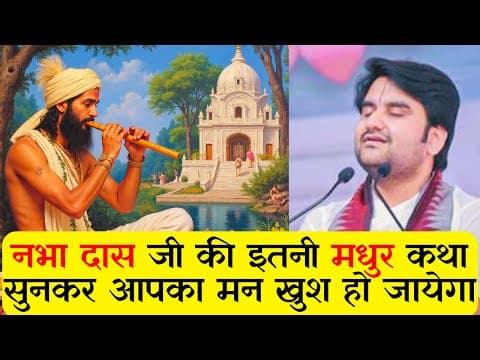
This blog post explores the captivating narrative of Shri Nabha Das Ji, his divine encounters, and the significance of devotion as narrated in a live katha. It highlights the importance of remembering divine figures and the transformative power of bhakti.
In a recent live katha, Shri Nabha Das Ji shared a profound narrative that resonates deeply with devotees and seekers of spirituality. This tale not only highlights the significance of devotion but also illustrates the transformative power of remembering divine figures.
Shri Nabha Das Ji was instructed by his guru, Shri Agradas Ji, to sing the glories of the devotees. Following this command, he began by recounting the 24 incarnations of the Lord. As he closed his eyes in meditation, he started to write down the stories of the devotees that came to his mind. However, he soon realized that he had not yet sung the praises of Vrindavan, a place of immense spiritual significance.
Despite his efforts, Nabha Das Ji found it challenging to bring Vrindavan into his consciousness. He prayed to Shri Agradas Ji for guidance, expressing his concern that while he could remember the devotees, the essence of Vrindavan eluded him. Agradas Ji advised him to focus on singing the glories of Shri Krishna and to remember Shri Kishori Ji (Radha), which would help him connect with the essence of Vrindavan.
As soon as Nabha Das Ji began to chant the names of Shri Krishna, he experienced a divine revelation. He saw the form of Kishori Ji manifest in his heart, and shortly after, other divine figures such as Shri Hit Vamsa Mahaprabhu, Swami Shri Haridas Ji, and Shri Hariram Vyas appeared before him. This moment marked a significant turning point in his spiritual journey.
Nabha Das Ji emphasized that understanding the essence of Mahaprabhu Ji's devotion is a rare gift. While many may gather to listen to the tales of divine figures, only a true devotee can grasp the depth of these teachings. He compared this understanding to a secret that only a few can unlock, highlighting the unique bond between a devotee and the divine.
The narrative then shifted to a historical account involving Vyasa Mishra, a pious Brahmin known for his astrological skills. During a time of conflict, he provided crucial guidance to a Mughal king, leading to the king's victory. In return, the king offered him a place in his court. However, despite his success, Vyasa Mishra faced a personal challenge: he had no children to carry on his lineage.
Vyasa Mishra's elder brother, Shri Narasimha Ashram Ji, a revered ascetic, visited him and sensed his distress. When Vyasa Mishra confided in him about his desire for a child, Narasimha Ashram Ji advised him to accept the divine will and focus on devotion. However, Vyasa Mishra's wife, Tara Ji, expressed concern about the implications of their situation on their spiritual journey.
Moved by Tara Ji's words, Narasimha Ashram Ji prayed to the Lord, seeking a solution. The Lord responded, assuring him that Vyasa Mishra's lineage would continue through divine grace. He instructed Narasimha Ashram Ji to inform Vyasa Mishra that a child would be born to him, and the child would be named Harivansh, symbolizing the continuation of their sacred lineage.
The tale of Shri Nabha Das Ji and Vyasa Mishra serves as a reminder of the power of devotion and the divine grace that can transform lives. It illustrates that while challenges may arise, faith and devotion can lead to miraculous outcomes. The essence of bhakti, as conveyed through these narratives, encourages us to remember and honor the divine, fostering a deeper connection with the spiritual realm.