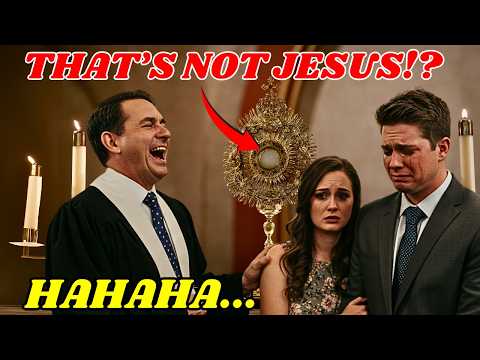
Brandt Peter's encounter with a Protestant pastor challenged his belief in the Eucharist, leading him to a transformative journey through scripture. This blog explores the significance of the Eucharist in Catholic faith, addressing common misconceptions and affirming its role as a true communion with Christ.
Imagine sitting in a church office hand in hand with your fiancé, excited to plan your wedding. You expect a warm chat about flowers and music. Instead, you're thrown into theological combat. This was the experience of Brandt Peter, a young Catholic man engaged to a Southern Baptist girl. The new pastor, fiery and fresh out of seminary, turned what should have been a 15-minute formality into a 3-hour spiritual inquisition.
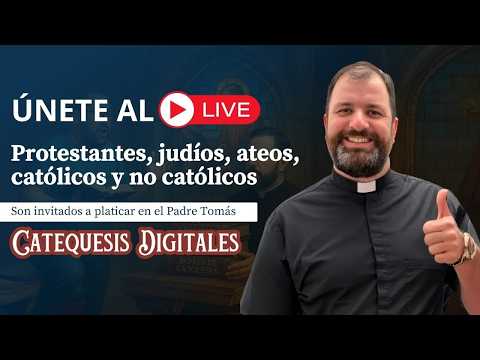
The pastor posed challenging questions: Why do Catholics pray to Mary? Where's purgatory in the Bible? And then he struck a nerve with the Eucharist, saying, "You Catholics actually believe that the bread and wine become Jesus. Don't you realize if you could eat Jesus, you'd become Jesus? That's cannibalism." Brandt left that meeting crushed, confused, and curious.
Later that night, still shaken, he turned to the Bible, desperate for clarity. He opened the word and his eyes fell straight on John 6:53-54: "Unless you eat the flesh of the Son of Man and drink his blood, you have no life within you. He who eats my flesh and drinks my blood has eternal life, and I will raise him up on the last day." This moment ignited a fire in Brandt's soul, beginning a journey that would change everything.
Many Christians, including some Catholics, struggle to believe that Jesus is truly present in the Eucharist. Pew research revealed that nearly 70% of Catholics see the Eucharist as just a symbol. This misunderstanding is significant and not new. From the very beginning, people found Jesus' teaching about the Eucharist hard to accept. In John 6:60, they exclaimed, "This is a hard saying. Who can accept it?" Just six verses later, many of his disciples turned away and no longer followed him.
What do we do when Jesus says something that offends our senses? Do we explain it away or trust that he means what he says, even when we don't fully understand? To find the answer, we need to step into the world of ancient Judaism. Jesus was speaking to Jews who knew their scriptures and lived under the law of Moses, which forbade drinking blood. Leviticus 17:11 states, "You shall not drink the blood, for the life is in the blood." So when Jesus says, "Eat my flesh, drink my blood," it was shocking and scandalous.
In Jewish tradition, sacrifice was the only way to enter into communion with God. You brought an animal to the temple, the priest offered it, the blood was poured out, and sometimes you ate part of the offering. The Jews were familiar with sacred meals, but the idea that God himself would become the sacrifice was revolutionary. Brandt Peter explains in "Jesus and the Jewish Roots of the Eucharist" that Jesus was fulfilling the ancient hopes of Israel for a new exodus, a new covenant, and a new sacrifice.
At the Last Supper, Jesus took bread and wine, foods from the Passover table, and said, "This is my body. This is my blood of the covenant" (Matthew 26:26-28). This phrase, "blood of the covenant," comes from Exodus 24, where Moses sealed the old covenant with animal blood. Now, Jesus offers his own blood, the true lamb of God.
Returning to the Protestant pastor's mocking accusation, "If you ate Jesus, you'd become Jesus," there is a profound truth in this statement. St. Augustine wrote, "You will not change me into yourself as you do with food, but you will be changed into me." The Catechism of the Catholic Church states in paragraph 1391 that "Holy communion augments our union with Christ." It doesn't just remind us of Jesus; it makes us one with him.
Brandt Peter later discovered another significant verse in 1 Corinthians 10:16, where St. Paul writes, "The cup of blessing that we bless, is it not a participation in the blood of Christ? The bread we break, is it not a participation in the body of Christ?" Paul, a former Pharisee, emphasizes that the Eucharist is not just a symbol but a true communion in the body and blood of Christ.
Paul's reference to the cup of blessing from the Jewish Passover meal is crucial. This cup represented the final cup that sealed the Passover sacrifice. Paul does not say this cup represents Christ's blood; he states it is a sharing in it. This understanding draws from Exodus 24, where Moses seals the covenant with blood, and the people respond by feasting in God's presence.
Even early church fathers like St. Ignatius of Antioch, writing around 107 AD, insisted that the Eucharist is the flesh of our Savior, Jesus Christ. The Catechism of the Catholic Church affirms this in paragraph 1376, explaining that this change is called transubstantiation. In paragraph 1324, it proclaims the Eucharist as the source and summit of the Christian life.
So, how do we make sense of this? What does it mean for us today? Let's revisit the pastor's statement: "If you ate Jesus, you'd become Jesus." He was right, just not in the way he thought. St. Augustine noted that no one partakes of this flesh without first adoring it. We consume the Eucharist not to change it into ourselves but so that we might become one with Christ.
When you eat a banana, your body breaks it down and turns it into energy. However, the Eucharist is unique; it is the only food that transforms you into it. This is why Paul can write in Romans 12:1, "Offer your bodies as a living sacrifice." When we receive him in holy communion, we become members of his mystical body, united and transformed.
Have you ever seen someone come out of adoration different, lighter, more peaceful? This change is not merely psychological; it is spiritual. It is the effect of union with Christ, the Eucharist doing what it is meant to do.
Some may argue that Jesus contradicts the real presence when he says the flesh profits nothing. However, in John 6:63, Jesus contrasts human flesh with spirit-given faith. He is not denying his flesh; just ten verses earlier, he states, "My flesh is true food" (John 6:55).
Yes, Leviticus 17 forbids drinking animal blood because life is in the blood. However, Jesus offers divine blood, fulfilling the law rather than violating it. As Dr. Peter explains, Jesus gives new meaning to the ancient command, allowing for eternal communion with God.
In the ancient Jewish world, symbols were not empty signs; they made present the reality they represented. Jesus did not say, "This is like my body"; he said, "This is my body."
Where do we go from here?
The Eucharist is not a symbol; it is Jesus, body, blood, soul, and divinity. This belief is not medieval; it goes back to the Bible, the church fathers, and Jesus himself. You were made for communion. The Eucharist is not just what we do as Catholics; it is who we are. If you've doubted or struggled to believe, welcome. You're not alone. Take a step today: read 1 Corinthians 10, spend five minutes in front of the Blessed Sacrament, and ask Jesus, "Are you really here?" Listen, because once you see it, you'll never be the same.
Let us pray: Lord Jesus, increase our faith in your real presence. Draw us deeper into the mystery of your love. Help us to adore you, receive you, and become one with you in this great gift of the Eucharist. Amen.