
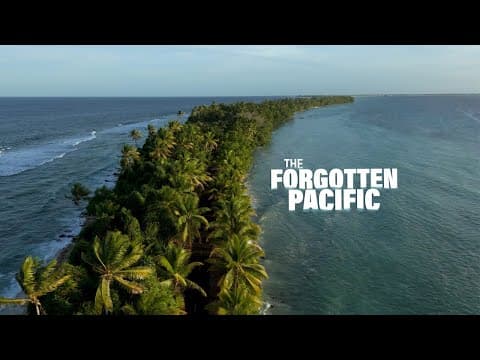
The documentary 'The Forgotten Pacific' highlights the severe impacts of climate change on Pacific Island nations, emphasizing the resilience and activism of local communities fighting for their survival and cultural identity amidst rising sea levels and environmental degradation.
The documentary "The Forgotten Pacific" sheds light on the devastating effects of climate change on Pacific Island nations, particularly focusing on the Marshall Islands and Tuvalu. It presents a poignant narrative of resilience, activism, and the urgent need for global action against climate change.
The Pacific Islands are currently facing immediate threats from climate change, including tropical cyclones, droughts, sea-level rise, and saltwater inundation. These challenges lead to loss of life and livelihoods, creating an atmosphere of fear and uncertainty within communities. As one local activist noted, the Marshall Islands contribute only 0.0007% of global emissions yet face some of the harshest impacts of climate change.
In response to these challenges, communities have united under the mantra, "We are not drowning; we are fighting." This rallying cry symbolizes their determination to combat climate change and advocate for a transition away from fossil fuels. The documentary emphasizes the interconnectedness of ocean, land, and people, highlighting a Samoan saying: "A logo tai, ua logo uta," which translates to the idea that what is felt towards the sea is also felt towards the land.
The film features personal stories from climate activists who began their journeys at a young age. One activist recalls learning about climate change in school and dedicating her life to climate work, supported by her family and community. This grassroots activism has grown into a larger movement, with young Pacific Islanders forming networks to advocate for their islands.
Tuvalu, often referred to as "The sinking island," faces existential threats from rising sea levels. With a population of 11,000, the island is experiencing significant land loss, affecting fisheries and agriculture. The documentary captures the daily reality of life during king tides, where locals continue their routines despite the encroaching waters, showcasing their resilience and determination to adapt.
The documentary highlights the importance of indigenous knowledge in combating climate change. In Tuvalu, communities are planting mangroves to protect shorelines from erosion and flooding. These natural defenses not only safeguard the land but also provide habitats for marine life, illustrating a sustainable approach to environmental challenges.
As the threat of climate change looms, discussions around migration become increasingly relevant. The recently signed Falepili Union allows Tuvaluans to migrate to Australia, raising concerns about cultural preservation. The documentary explores the emotional weight of leaving ancestral lands and the efforts to maintain cultural identity through digital initiatives, ensuring that even if the physical land is lost, the culture endures.
The Marshall Islands have a unique history, having been a testing ground for nuclear weapons in the mid-20th century. Today, they face the dual threat of climate change and the legacy of nuclear contamination. Activists in the Marshall Islands are at the forefront of climate action, advocating for justice and environmental protection while dealing with the repercussions of past injustices.
The documentary emphasizes the ocean's critical role in regulating the planet's climate. It serves as a carbon sink, absorbing excess heat and carbon dioxide. However, the ocean is also suffering from pollution and over-extraction, which exacerbates the impacts of climate change. The voices of Pacific Islanders are crucial in advocating for ocean conservation and sustainable practices.
Across the Pacific, communities are taking proactive steps to adapt to climate change. In Fiji, locals are planting heat-resistant corals to revitalize damaged reefs, while in Futuna, traditional knowledge is being combined with modern techniques to rebuild homes and infrastructure. These efforts highlight the resilience and ingenuity of Pacific Islanders in the face of adversity.
The documentary concludes with a hopeful message about the future of climate activism in the Pacific. Young warriors are emerging, inspired by their ancestors and committed to protecting their homes. The call for a fossil fuel non-proliferation treaty is a significant step towards global cooperation in addressing climate change, emphasizing the need for collective action.
"The Forgotten Pacific" serves as a powerful reminder of the urgent need for global action against climate change. It showcases the resilience of Pacific Island communities and their commitment to fighting for their survival and cultural identity. As the world grapples with the climate crisis, the voices of the Pacific must be heard, advocating for a sustainable future for all.



















