
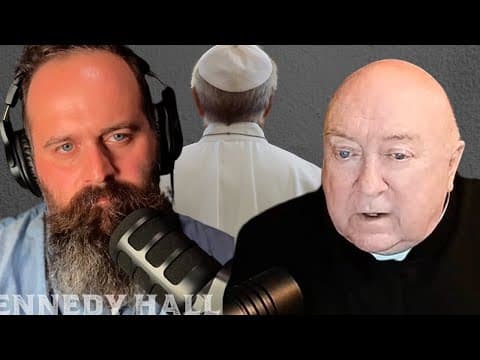
In a recent podcast, Father Charles Murr discusses the implications of Pope Francis's passing, the future of the Latin Mass, and the upcoming papal conclave. He expresses relief at the end of Francis's pontificate, critiques modern Catholicism, and shares insights on the potential direction of the Church under a new pope, emphasizing the importance of tradition and orthodoxy.
In a recent podcast, Father Charles Murr shared his thoughts on the passing of Pope Francis, the implications for the Catholic Church, and the future of the Latin Mass. His reflections provide a deep dive into the current state of the Church and the potential directions it may take following the upcoming papal conclave.
Father Murr expressed a sense of relief upon hearing of Pope Francis's death. He candidly admitted that while many might frame the event as tragic, he felt it was a necessary end to a pontificate marked by ambiguity and confusion. He noted that the Church had endured significant challenges during Francis's tenure, and his passing could signal a new beginning.
During the discussion, Father Murr highlighted a shift in how modern Catholics view the papacy compared to historical perspectives. He reminisced about his childhood in Italy, where the papacy was seen with a mix of reverence and familiarity. He contrasted this with the contemporary view that often elevates the pope to an untouchable status, akin to a demigod. This change, he argues, is not natural and detracts from the authentic relationship between the faithful and the papacy.
Father Murr referenced Dante Alighieri's works, noting that Dante's critiques of church leaders would likely lead to excommunication in today's climate. He emphasized that Dante's insights remain relevant, as they reflect the shortcomings of church leadership throughout history. The conversation turned to the importance of recognizing the degrees of sin and virtue, drawing parallels to the varying responsibilities of church leaders.
The pandemic, according to Father Murr, served as a catalyst for many Catholics to reevaluate their faith and the Church's role in their lives. He observed that during this time, many turned to traditional practices and the Latin Mass, seeking a deeper connection to their faith. This shift has led to an increase in conversions to Catholicism, particularly among those drawn to traditionalist movements.
Looking ahead, Father Murr expressed optimism about the future of the Latin Mass. He believes that the next pope will likely permit the traditional Mass to flourish, similar to the approach taken by Pope Benedict XVI. He emphasized that the Church's growth is closely tied to its adherence to tradition and orthodoxy, suggesting that a return to these roots could revitalize the faith.
As the papal conclave approaches, Father Murr shared his hopes for a new pope who embodies true Catholic values. He expressed a desire for a leader who will prioritize orthodoxy and unity within the Church. He mentioned Cardinal Sarah as a potential candidate, praising his character and commitment to the faith. The discussion underscored the importance of electing a pope who can navigate the complexities of modern Catholicism while remaining faithful to its traditions.
Father Murr's insights provide a compelling perspective on the future of the Catholic Church in light of Pope Francis's passing. His reflections on the importance of tradition, the potential for growth within the Church, and the upcoming conclave offer hope for a revitalized Catholic identity. As the Church stands at a crossroads, the choices made in the coming months will undoubtedly shape its trajectory for years to come.



















