
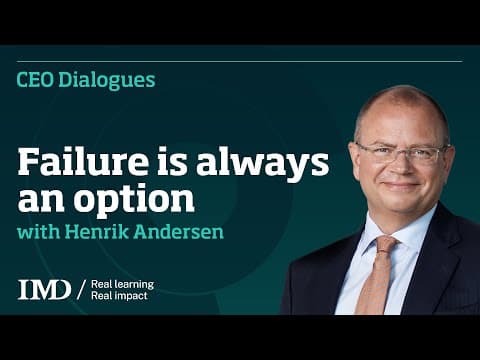
Henrik Andersen, CEO of Vestas, discusses the evolution of wind energy costs, the challenges of supply chain management, and the importance of government support in accelerating the energy transition. He emphasizes the need for a collaborative approach between local and central governments to streamline permitting processes and highlights Vestas' commitment to sustainability and innovation in the wind energy sector.
In a recent dialogue, Henrik Andersen, the CEO of Vestas, shared valuable insights into the current state and future of wind energy. Vestas, a Danish company with over 125 years of history, is the global leader in sustainable energy solutions, particularly in wind turbines. With operations in 30 countries and nearly 30,000 employees, Vestas generates around 15 billion euros in revenue annually. This blog post summarizes key points from the discussion, focusing on the cost of wind energy, supply chain challenges, and the role of government in facilitating the energy transition.
Historically, wind energy was considered more expensive than fossil fuels. However, Andersen noted a significant shift in the last decade. After the financial crisis of 2009-2010, government subsidies were necessary in about 99% of global markets to support wind energy. Today, that figure has dropped to less than 1%.
The levelized cost of energy (LCOE) for onshore wind now stands at approximately 40 to 45 euros per megawatt-hour, making it cheaper than coal and fossil fuels. In fact, onshore wind energy is about one-tenth the cost of new nuclear electricity. This cost advantage positions wind energy as a competitive and sustainable alternative to traditional energy sources.
One challenge with wind energy is its dependence on weather conditions. Andersen explained that onshore wind turbines typically operate at a capacity factor of 40 to 50%, depending on location. Offshore wind, while more expensive than onshore, can still be competitive with fossil fuels, especially when located near shore.
Vestas has installed approximately 160 gigawatts of wind energy capacity over the past four decades, which has resulted in the reduction of 220 million tons of CO2 emissions annually. This reduction is equivalent to the emissions produced by 130 million passenger cars. Remarkably, wind turbines become CO2 neutral within four to five months of operation and remain CO2 negative for their lifespan of up to 30 years.
Andersen provided an overview of Vestas' value chain, which involves sourcing thousands of components from a global supply chain. The company designs, manufactures, installs, and services wind turbines, working with clients such as Ørsted and various global utilities. The commissioning of turbines marks the beginning of revenue generation for customers, highlighting the importance of service and maintenance partnerships.
Despite Vestas' strong product offerings and market position, Andersen acknowledged that the company has faced challenges with low gross and EBITDA margins, particularly in 2022. Supply chain disruptions caused by the COVID-19 pandemic led to component shortages and increased costs, impacting profitability.
Andersen emphasized the need for a more agile approach to contract negotiations, reducing the binding offer period from six to nine months to just one month. This change aims to mitigate the impact of market volatility on Vestas' operations.
A significant barrier to growth in the wind energy sector is the lengthy permitting process. Andersen highlighted that the capacity stuck in the approval process is about four times the volume currently under development. He attributed this to a political system that delegates permitting authority to local communities, leading to bureaucratic delays.
To address this issue, Andersen advocates for a centralized approach to permitting, with clear time limits to expedite the process. He believes that local governments should also benefit from energy generation to incentivize faster approvals.
Vestas operates in over 80 countries, with a strong presence in the US, Europe, and Asia Pacific. Andersen noted that while the US has a long history of renewable energy development, the recent Inflation Reduction Act (IRA) has further accelerated growth in the sector. He also sees potential in Latin America for hydrogen production and renewable energy development.
Despite the challenges posed by climate change, Andersen remains optimistic about the energy transition. He believes that it is now cheaper to save the planet than to destroy it, citing a growing recognition of the need for sustainable solutions. The shift in public sentiment towards renewable energy is encouraging, as consumers increasingly demand stable and affordable energy sources.
Henrik Andersen's insights into the wind energy sector underscore the importance of innovation, collaboration, and government support in driving the energy transition. As Vestas continues to lead the way in sustainable energy solutions, the company remains committed to overcoming challenges and seizing opportunities in the evolving energy landscape. The future of wind energy looks promising, with the potential to play a crucial role in achieving global sustainability goals.



















