
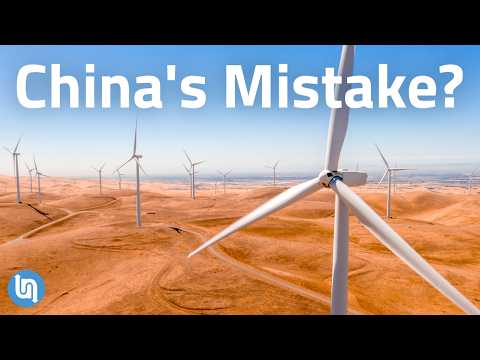
The Gansu Wind Farm in China, the world's largest wind farm, faces significant challenges despite its impressive capacity to generate renewable energy. Issues such as curtailment, competition from coal, and transmission difficulties highlight the complexities of scaling renewable energy projects in remote areas. This blog explores the farm's achievements, challenges, and the lessons that can be learned for future renewable energy initiatives.
Wind energy has become a cornerstone of renewable energy initiatives worldwide, but the scale of projects like the Gansu Wind Farm in China can be difficult to comprehend. This blog post delves into the details of the Gansu Wind Farm, the largest wind farm in the world, its achievements, and the challenges it faces.
To grasp the significance of the Gansu Wind Farm, it's essential to understand the scale of wind energy production. Just one gigawatt (GW) of energy can power between 750,000 to a million homes. In the United States, the largest wind farm, the Alta Wind Energy Center in California, produces about 1.5 GW. However, the Gansu Wind Farm dwarfs this with a staggering capacity of 20 GW, enough to power millions of homes.
The Gansu Wind Farm is located in Gansu Province, a remote and economically challenged area in northwest China, near the Gobi Desert. This location was chosen due to its favorable conditions for wind energy generation, including high winds and ample space. The project was commissioned in 2008 as part of China's initiative to reduce its reliance on fossil fuels and increase renewable energy production.
Construction began in 2009, and by 2010, the first phase was completed, featuring over 3,500 wind turbines. By 2021, the farm had expanded to over 7,000 turbines, covering approximately 39,000 square kilometers, equivalent to about 426,500 football fields.
The Gansu Wind Farm represents a significant achievement in renewable energy infrastructure. It has become a cornerstone of China's efforts to transition to greener energy sources. The farm's capacity has grown impressively, and it has been recognized for its innovative integrated wind power coordinated control system, which helps manage the energy produced.
According to Wu Yangdong, the Communist Party secretary of Jiuquan, the Gansu Wind Farm has transformed the region: "We finally made it — we turned the lifeless Gobi into an unlimited chamber of treasure. We are building a Three Gorges dam on wasteland."
Despite its success, the Gansu Wind Farm faces significant challenges that hinder its full potential:
One of the primary challenges is curtailment, where excess energy produced cannot be utilized. In 2012, up to 39% of the wind capacity was wasted due to a lack of demand. The local grid was unable to absorb the energy generated, leading to significant losses.
The cost of wind energy in Gansu is higher than that of coal-fired power plants, making it less competitive. In 2012, wind power was priced at 0.54 yuan per kWh, while coal power was only 0.3 yuan per kWh. This economic disparity creates a strong incentive for local industries to continue relying on coal, which is abundant in the region.
The geographical distance between Gansu and major population centers in eastern China complicates energy transmission. Most of China's industry is located in the east, while Gansu is remote and mountainous. The province is working on high-voltage direct current (HVDC) transmission lines to transport energy, but these solutions are costly and can lead to energy loss during transit.
While Gansu has invited companies to establish operations near the wind farm, the harsh desert environment and remoteness make it less appealing for large tech firms. Although there are reports of interest from companies like Huawei, the region's challenges persist.
Despite these challenges, the Gansu Wind Farm remains a success story. In 2020, the ban on further investments was lifted, and by 2021, the efficiency of the farm's renewable energy production rose to 95%. China continues to invest in renewable energy infrastructure, with fossil fuels now making up less than half of the country's total installed generation capacity.
The lessons learned from the Gansu Wind Farm can inform future renewable energy projects worldwide. It highlights the importance of aligning energy production with local demand and ensuring that infrastructure keeps pace with energy generation.
The Gansu Wind Farm exemplifies both the potential and the challenges of large-scale renewable energy projects. As countries strive to meet climate goals, the experiences from Gansu can provide valuable insights into the complexities of transitioning to renewable energy. The future of energy generation will depend on overcoming these hurdles and finding innovative solutions to harness the power of wind effectively.



















