
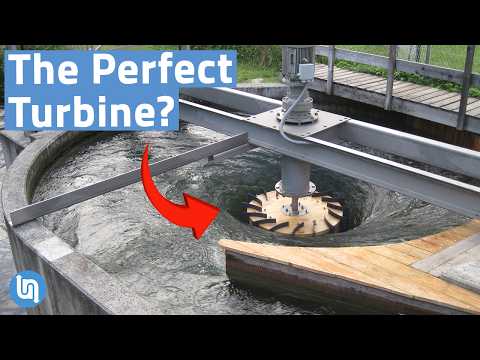
Small hydropower (SHP) presents a promising solution to the challenges of traditional hydropower systems, offering efficient, eco-friendly energy generation with innovative designs like bladeless turbines and fish-friendly systems. This blog explores the benefits, technologies, and potential of SHP in reshaping our energy landscape.
Hydropower has long been recognized as a reliable source of energy, free from the intermittency issues that plague other renewable sources. However, the aging infrastructure of traditional hydropower systems poses significant risks. Approximately 95% of existing hydropower systems in the United States were built before 1995, with over half operating with equipment designed more than 80 years ago. This situation raises concerns about reliability and safety for both human and animal populations.
Despite the challenges faced by large dams, small hydropower (SHP) offers a viable alternative that could revolutionize energy generation. SHP systems can harness the power of flowing water without the need for massive dams, thus minimizing ecological footprints. Companies like Vortex Hydrokinetics and Turbulent are leading the charge with innovative designs, such as bladeless turbines and fish-friendly systems, that promise to make hydropower safer and more accessible.
SHP allows nearby communities to benefit from electricity generated by rivers without the drawbacks of traditional dam systems, which require high velocity, high volume flow, and significant hydraulic head. The hydraulic head refers to the potential energy per unit of weight, where a higher tower translates to a greater potential energy. This concept is crucial for understanding how energy is generated in hydropower systems.
To illustrate the power of hydropower, consider the Itaipú Dam, one of the largest in the world, located on the Paraná River between Brazil and Paraguay. This colossal structure stretches nearly 8 kilometers (5 miles) and stands 196 meters (643 feet) high, with a flow rate of 62,200 cubic meters per second. This is equivalent to approximately 985 million gallons per minute, showcasing the immense potential of large-scale hydropower.
However, the Itaipú Dam also exemplifies the significant capital investment and environmental impact associated with large dams. The construction of such massive structures can lead to ecological disruption and displacement of local populations.
Vortex Hydro has developed a bladeless turbine model known as the SETUR, which utilizes vortex dynamics to generate energy. This design, originally patented by researchers at the Czech Technical University, operates without traditional blades. Instead, it harnesses the energy from swirling water to turn a rotor that cranks a generator. The SETUR can function in various water bodies, including rivers and irrigation canals, and can even be submerged to depths of up to 50 meters (164 feet).
The SETUR comes in two models: the SETUR-M, rated for 500 W, and the SETUR-L, rated for 5 kW. The larger model can produce enough energy to cover the electricity consumption of an average U.S. home, making it a practical solution for off-grid areas.
Turbulent, based in Belgium, offers a submersible vortex turbine designed to be eco-friendly and fish-friendly. Its unique design resembles a snail and requires only a head of 1.5 meters (about 5 feet) and a flow of 1.5 cubic meters per second. Turbulent turbines can produce between 15 to 70 kW of power and can be arranged in arrays to maximize energy generation.
Turbulent claims that their micro power plants can achieve a capacity factor of up to 90%, significantly higher than solar energy systems, which typically range from 10% to 30%. This reliability makes SHP an attractive option for consistent energy generation.
While SHP systems present a lower environmental impact compared to traditional dams, they are not without challenges. The SETUR, for instance, requires precautions against ice and natural debris, which can affect its operation. Turbulent's turbines also face seasonal variations in water flow, which can impact energy production.
However, the smaller scale of SHP systems allows for more flexible installation locations and less disruption to local ecosystems. Unlike large dams, which can displace communities and disrupt wildlife, SHP systems can be integrated into existing waterways with minimal impact.
As of 2019, small hydropower systems had a global installed capacity of about 78 GW, according to the United Nations Industrial Development Organization. While this is still behind wind and solar, SHP has the potential to complement other renewable sources and expand access to clean energy.
The shift towards decentralized and small hydropower systems represents a significant opportunity for sustainable energy generation. By embracing innovative technologies and prioritizing ecological considerations, we can harness the power of water in a way that benefits both communities and the environment.
What are your thoughts on the future of small hydropower? Join the conversation in the comments below.



















