
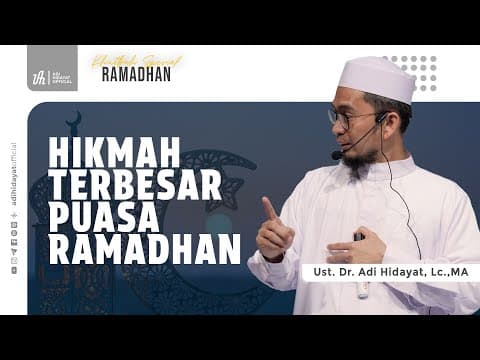
Ustadz Adi Hidayat's khutbah emphasizes the significance of Ramadan fasting as a means to enhance physical, intellectual, and spiritual well-being. He discusses the unique creation of humans, the importance of maintaining a healthy lifestyle, and the transformative power of fasting in achieving personal growth and fulfilling one's purpose in life.
In a recent khutbah delivered by Ustadz Adi Hidayat, the significance of Ramadan fasting was explored in depth. This khutbah, held on the first Friday of Ramadan 1446 Hijriah, emphasizes the importance of gratitude to Allah and the unique role of humans in the divine plan.
Ustadz Hidayat begins by urging the congregation to express gratitude to Allah for the opportunity to live and practice faith. He highlights the special nature of the first Friday in Ramadan, a time for reflection and prayer, hoping that all acts of worship performed during this month are accepted by Allah.
One of the key points made in the khutbah is the unique creation of humans, as described in the Quran. Ustadz Hidayat references Surah Al-Hijr (15:28-29), where Allah commands the angels and jinn to witness the creation of humans, emphasizing the special mission bestowed upon them. This mission is not given to angels or jinn, highlighting the importance of human existence.
Ustadz Hidayat explains that humans were created from clay, unlike angels who are made of light and jinn from fire. This distinction underscores the honor and responsibility humans carry. The khutbah stresses that understanding this creation process is vital for recognizing our purpose in life.
Ustadz Hidayat outlines three essential components of human existence:
These components work together to enable humans to fulfill their divine purpose.
Fasting during Ramadan serves as a means to enhance all three components of human existence. Ustadz Hidayat emphasizes that fasting is not merely abstaining from food and drink but is a holistic approach to improving one’s physical, intellectual, and spiritual health.
The khutbah highlights the importance of consuming healthy food and maintaining a balanced diet. Ustadz Hidayat refers to Surah Al-Baqarah (2:168), which encourages people to eat what is lawful and good. He stresses that Ramadan is an opportunity to reset eating habits and focus on nutrition.
Ramadan is also a time for intellectual growth. Ustadz Hidayat points out that many great scholars and leaders emerged during this month, using the time for reflection and study. He encourages the congregation to engage in discussions and research, fostering a culture of learning and development.
The spiritual aspect of fasting is crucial. Ustadz Hidayat explains that acts of worship, such as prayer and reading the Quran, nourish the soul. He emphasizes that neglecting spiritual practices can lead to a weakened soul, which is essential for a fulfilling life.
Ustadz Hidayat concludes that Ramadan is a month dedicated to refining all aspects of human existence. It is a time to reassess one’s life, align actions with divine guidance, and prepare for the year ahead. He encourages the congregation to reflect on their progress and make necessary changes to enhance their lives.
In summary, Ustadz Adi Hidayat's khutbah serves as a powerful reminder of the wisdom behind Ramadan fasting. It is a time for gratitude, reflection, and personal growth. By understanding our unique creation and the purpose of our existence, we can better navigate our lives and fulfill our divine mission. The khutbah calls for a holistic approach to fasting, emphasizing the importance of physical health, intellectual development, and spiritual nourishment as we strive to become better individuals during this blessed month.



















