
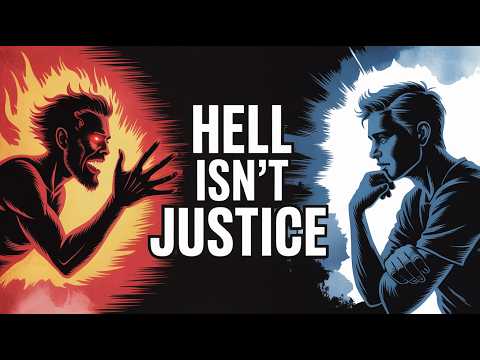
This blog post explores the moral and logical implications of the concept of hell as eternal punishment, questioning its justification and the psychological impact it has on individuals and society.
The concept of hell is one of the most disturbing aspects of organized religion. Often brushed aside as background noise, it is a belief instilled in many through fear rather than critical examination. At its core, hell represents a place of eternal punishment and infinite suffering, with no possibility of parole or redemption. This raises profound questions about justice, morality, and the nature of belief.
Consider the scale of punishment associated with hell. A single human lifetime, typically lasting 70 to 80 years, filled with limited experiences, confusion, and sometimes ignorance, is punished with an eternity of suffering. This raises the question: how can finite actions warrant infinite punishment? Even in modern civil societies, it is difficult to find a court that would deem eternal torture a fitting response to any crime, no matter how severe.
Many believers defend the existence of hell by arguing that it proves God's justice and is a necessary consequence of free will. They claim that God does not send individuals to hell; rather, they choose it themselves. However, this argument falters under scrutiny. No one consciously chooses infinite torment. People choose to think, question, and explore, and if these choices lead to condemnation, it reflects a system of coercion rather than justice.
To illustrate this point, consider a parent who tells their child, "Love me, obey me, believe everything I say, or I will lock you in a basement and torture you forever." Society would label this behavior as abusive and cruel. Yet, when similar logic is applied to a deity, it is often framed as divine justice. This contradiction highlights the moral brokenness of the concept of hell.
The fear of hell can lead to a distorted understanding of morality. When belief is enforced through the threat of eternal suffering, it is not faith; it is fear. This fear can stifle critical thinking, override empathy, and make cruelty appear as compassion. Some believers attempt to soften the image of hell by describing it as separation from God or non-literal fire, but the underlying meaning remains the same: loss, agony, and despair.
In a just system, punishment serves a purpose: it deters bad behavior, rehabilitates offenders, and protects society. However, eternal punishment lacks any constructive purpose. With no opportunity for growth or redemption, it becomes pain for the sake of pain. This raises the question of what kind of being would design such a system, one that punishes flawed humans with eternal torment.
The concept of hell reflects more about the people who created it than any divine justice. It stems from a time when fear was a powerful tool for control, using hell as a means to govern rather than guide. The psychological trauma associated with religious teachings about hell can lead to lasting scars, known as religious trauma syndrome, affecting individuals from various backgrounds.
A fundamental principle of any fair justice system is that punishment should fit the crime. However, no crime could justify infinite punishment. Even the most devout believers often struggle with the idea of their loved ones suffering eternally. This discomfort is a natural response, indicating that something is fundamentally wrong with the concept of hell.
Hell not only punishes but also erases time, stretching a single human life into an endless nightmare. It freezes a person's identity at their worst moment, denying them the opportunity for growth or change. This contradicts the essence of being human, which is defined by learning from mistakes and evolving.
Some argue that hell respects free will, suggesting that individuals choose eternal separation from God by rejecting Him. However, this notion collapses under examination. True choice requires informed consent and freedom from coercion. A child born in a remote village, unaware of the right God, does not genuinely make a choice. When belief is demanded under the threat of eternal pain, it becomes a matter of survival rather than genuine faith.
The fear of hell can distort moral reasoning, leading individuals to act out of fear rather than conscience. Instead of fostering internal principles, it creates a transactional morality where good deeds are performed to avoid punishment rather than for their intrinsic value. This mentality can seep into culture, resulting in repressive societies driven by fear rather than compassion.
History is replete with examples of violence and intolerance justified by the belief in hell. The fear of eternal damnation can lead to atrocities committed in the name of saving souls. Even today, the fear of hell influences education, politics, and mental health, perpetuating feelings of unworthiness and brokenness.
If hell did not exist, would the world become more immoral? Evidence suggests otherwise. Studies in moral psychology indicate that people are more likely to act ethically when they feel empathy rather than fear. Human understanding and compassion can drive moral behavior without the need for threats of eternal punishment.
The idea of hell primarily benefits institutions that use fear to maintain authority. It silences doubt and manufactures loyalty, but this does not make it true. If hell were real, it would imply a universe governed by a being who punishes fragile, imperfect beings for their missteps. This notion contradicts the very essence of justice.
Some theologians propose alternatives to eternal torment, such as annihilation or purgatory. However, these ideas still rest on the assumption that disbelief warrants a severe response. Why should belief, rather than actions, determine one's fate? In a just society, questioning authority should not lead to punishment.
Children naturally ask questions about rules and beliefs, but in many religious settings, such inquiries are discouraged. This suppression of curiosity can lead to lifelong fear and guilt, hindering spiritual growth and critical thinking. Many individuals spend years unlearning the fear instilled in them by religious teachings about hell.
When individuals stop believing in hell, they often experience relief rather than rebellion. They can trust their conscience and reason, free from the burden of fear. This realization challenges the notion that a moral system requires eternal suffering to function. It highlights the importance of taking ownership of one's values and living a compassionate life based on empathy rather than fear.
If a belief system relies on the threat of eternal punishment to sustain itself, it raises serious questions about its validity. Justice does not need to be enforced through fear, and truth should not come at the cost of human dignity. The challenge lies in recognizing the fear embedded in doctrines of hell and moving towards a more compassionate understanding of morality that does not rely on coercion or control. Ultimately, the pursuit of justice and truth should be rooted in empathy and understanding, not in the shadows of fear.



















