
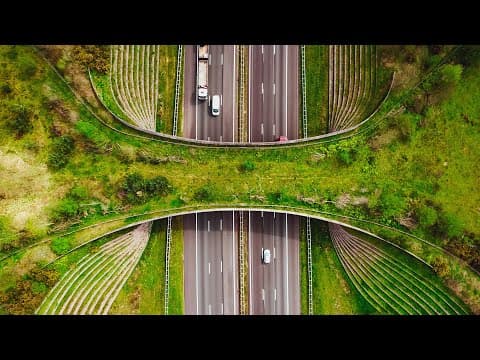
The Wallis Annenberg Wildlife Crossing, set to be the largest of its kind, represents a significant investment in infrastructure aimed at reducing wildlife-vehicle collisions and promoting ecological connectivity. This blog post explores the engineering challenges, ecological impacts, and the necessity of wildlife crossings in modern road design.
The Wallis Annenberg Wildlife Crossing is currently under construction over the 101 freeway just outside Los Angeles, California. Once completed, it will be the largest wildlife crossing on the planet, measuring 210 feet long and 174 feet wide. This ambitious project is estimated to cost around $92 million, highlighting the growing recognition of the need for infrastructure that accommodates wildlife. The Federal Highway Administration has allocated $350 million in federal funds for similar projects, indicating a shift in how we view the intersection of human infrastructure and wildlife conservation.
Roads fundamentally alter the environments they traverse. While they can be detrimental to many species, some animals, such as vultures, coyotes, and raccoons, benefit from the food sources that roads provide. However, the negative impacts of roads often outweigh these benefits. Wildlife faces habitat loss, fragmentation, noise pollution, and increased human presence, all of which pose significant challenges to their survival.
According to the Federal Highway Administration, there are over 1 million wildlife-vehicle collisions annually in the United States, resulting in tens of thousands of injuries and approximately 200 human fatalities each year. The economic toll of these collisions is staggering, with an average cost of $9,100 per deer collision and over $40,000 for a moose.
Given the substantial economic and ecological impacts of wildlife collisions, there is a growing interest in reducing these negative effects. Wildlife crossings are designed to facilitate safe passage for animals across roadways, thereby minimizing collisions and promoting ecological connectivity. The engineering behind these crossings is complex and requires careful planning and execution.
One of the first steps in designing a wildlife crossing is understanding the behavior of different species. Animals can be categorized based on their crossing styles:
This categorization helps engineers and ecologists determine the best strategies for encouraging safe crossings.
Choosing the right location for a wildlife crossing is crucial. While high-traffic roads may seem like the most dangerous, studies show that increased traffic can deter animals from attempting to cross, leading to fewer reported collisions. Therefore, engineers must consider various factors, including habitat fragmentation and the needs of migratory species.
To direct animals toward crossings, fencing is often employed. This fencing must be designed to prevent animals from digging under or climbing over it. Additionally, features like ramps or one-way doors can help animals escape if they inadvertently find themselves on the wrong side of the fence.
Wildlife crossings can be designed as overpasses or underpasses. Underpasses are often easier to implement, utilizing existing structures like bridges or culverts. However, larger animals may require overpasses, which must be designed to accommodate their size and behavioral tendencies. These structures are often covered in soil and vegetation to create a natural environment that encourages wildlife to use them.
Examples of successful wildlife crossings include the ecoducts in the Netherlands and the overpasses in Banff National Park, Canada. The Wallis Annenberg Wildlife Crossing aims to follow in their footsteps, providing a safe passage for various species, including the endangered Southern California cougar population.
The construction of wildlife crossings like the Wallis Annenberg Wildlife Crossing represents a significant step toward mitigating the negative impacts of roads on wildlife. As we continue to develop infrastructure, it is essential to consider the ecological consequences and invest in solutions that promote coexistence between humans and wildlife. With increasing federal funding and a growing awareness of these issues, we can expect to see more wildlife crossings in the future, paving the way for safer roads and healthier ecosystems.



















