
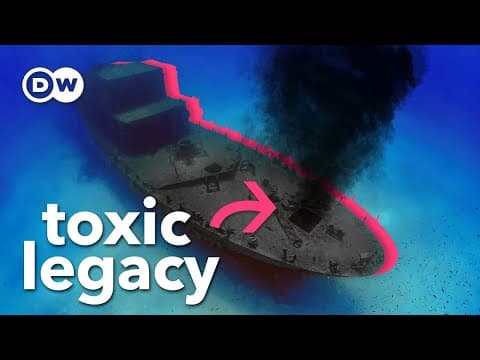
Millions of shipwrecks from World War II are at risk of leaking toxic oil into our oceans, posing a significant threat to marine life and coastal communities. Efforts to identify and clean up these wrecks are underway, but challenges remain in funding and international cooperation.
Beneath the vast waters of our oceans lie millions of shipwrecks, many of which are remnants of the devastation caused by World War II. These wrecks, often forgotten, are rusting away and threatening to leak billions of gallons of oil into the marine environment. As they corrode, the potential for catastrophic oil spills increases, posing a significant risk not only to marine life but also to the communities that rely on the sea for their livelihoods.
The map of shipwrecks from World War II reveals a staggering number of vessels—over 8,500 wrecks worldwide are at risk of leaking oil and other contaminants. Naval battles during the war wreaked havoc across the Atlantic, Pacific, and Indian Oceans. For instance, the Indian Ocean raid in 1942 saw numerous ships sunk, many of which remain undocumented today. Matt Carter, a researcher for an Australian NGO, emphasizes that while thousands of wrecks exist in the Pacific, their exact locations and potential impacts are largely unknown.
After 80 years underwater, these shipwrecks are deteriorating. Joao Sousa, a marine engineer with the International Union for Conservation of Nature, explains that various factors such as pressure, temperature, salinity, and currents contribute to the corrosion of these structures. Severe weather events, including storms and earthquakes, are becoming more frequent, further exacerbating the risk of leaks. In regions like the Bay of Bengal, even minor disturbances could lead to significant oil spills from these aging wrecks.
The potential consequences of oil leaks from these shipwrecks are dire. Experts warn that even small amounts of oil can have catastrophic effects on marine ecosystems. For example, oil contamination in mangroves, crucial spawning grounds for fish, could devastate local fisheries and the jobs that depend on them. Understanding the potential impacts of these sunken vessels is critical for coastal communities and the marine environment.
To prevent disaster, the first step is identifying which shipwrecks pose the greatest risk and understanding the type and amount of fuel they contain. The Major Projects Foundation has undertaken extensive mapping efforts in the Pacific, utilizing Japanese archives and satellite imagery to locate wrecks and assess their environmental risks. Some wrecks, like those in Chuuk Lagoon, are particularly concerning due to their high environmental risk, with estimates suggesting that many will require intervention.
Once the risks are identified, the next challenge is the cleanup process. Extracting oil from these wrecks is not straightforward. Some hulls may collapse if disturbed, while others are located at depths that require advanced technology for safe extraction. The process involves careful planning to ensure that any drilling or intervention does not exacerbate the problem.
Funding for these operations is a significant hurdle, with costs ranging from $6 to $10 million per ship. Additionally, many wrecks are politically sensitive, often considered war graves or historical sites, complicating the cleanup efforts.
In 2018, a successful operation drained the Prinz Eugen, a warship involved in nuclear tests, of approximately 230,000 gallons of fuel oil. This operation demonstrated that cleanup is possible, but many more wrecks remain unaddressed. Project Tangaroa, funded by the Lloyd's Register Foundation, aims to create a global framework for identifying and prioritizing wrecks for cleanup, while also seeking funding and support for these initiatives.
The question of responsibility for these wrecks is complex, as many are located near countries that were not involved in the war. Project Tangaroa advocates for increased collaboration among governments to pool resources and expertise, emphasizing the need for environmental justice without assigning blame.
The threat of oil spills from WWII shipwrecks is a pressing issue that requires immediate attention. The legacy of the war continues to impact our oceans, and as time passes, the risk of leaks increases. While securing funding and international cooperation poses challenges, experts believe that the problem is solvable. Identifying high-risk shipwrecks and mobilizing resources for cleanup can mitigate the potential for environmental disasters.
In conclusion, the hidden threat of WWII shipwrecks leaking oil into our oceans is a significant concern that demands action. The potential for catastrophic spills, even from smaller leaks, underscores the urgency of addressing this issue. With collaborative efforts and proper funding, we can work towards a solution that protects both marine ecosystems and coastal communities.



















