
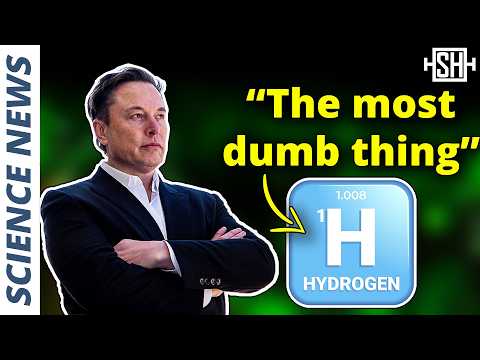
Germany and other nations are investing heavily in hydrogen as a clean energy storage solution, but significant inefficiencies and economic challenges raise doubts about its viability as a sustainable energy source.
The German government has made headlines recently with its decision to phase out nuclear power. In its place, the country is looking to hydrogen as a key component of its energy strategy. However, this move has sparked considerable debate about the practicality and efficiency of hydrogen as an energy storage solution. This article explores the challenges and inefficiencies associated with hydrogen energy, particularly in the context of Germany's ambitious plans.
Germany is not alone in its hydrogen ambitions. The United States, the United Kingdom, and the European Union have all developed national hydrogen roadmaps aimed at harnessing this element as a clean energy source. Hydrogen has been touted as a miracle fuel, capable of producing energy without carbon emissions when combined with oxygen, resulting in water as the only byproduct. However, the reality of hydrogen energy is far more complex.
While hydrogen may sound appealing, it comes with a host of challenges:
These issues are compounded by a more fundamental problem: the inefficiency of hydrogen as an energy storage medium.
The primary reason hydrogen has gained attention is its potential for energy storage, particularly in addressing the fluctuations associated with renewable energy sources like wind and solar. The concept is straightforward: excess electricity generated from renewables can be used to produce hydrogen, which can then be stored and converted back into electricity when needed.
However, this process is fraught with inefficiencies. Energy conversion always results in some loss, and the efficiency of converting electricity to hydrogen and back again can be as low as 30%. Some optimistic estimates suggest it could reach 40%, but many experts remain skeptical. This means that electricity generated from hydrogen could be three times more expensive than using it directly.
For hydrogen to be a viable solution, massive amounts of it would need to be produced quickly, requiring significant government subsidies. Despite the ambitious hydrogen strategies being developed in the U.S. and U.K., and the EU's plans for a hydrogen framework, the reality is sobering. According to the International Energy Agency, the current installed capacity for hydrogen production from renewable energy is minimal compared to the ambitious targets set for 2030. In fact, only about 3% of these plans have secured funding, raising questions about their feasibility.
So why are countries like Germany pursuing hydrogen so fervently? There are two main theories:
Germany's plans to build new gas plants that can run on hydrogen are a prime example of this approach. In practice, however, the hydrogen needed for these plants is unlikely to materialize in sufficient quantities, leading to continued reliance on natural gas.
Despite the challenges, there is a valid case for producing hydrogen from renewable sources, particularly for industrial applications. Currently, much of the hydrogen used in industry is derived from methane, which releases carbon dioxide during production. Transitioning to renewable hydrogen could significantly reduce these emissions, making it a worthwhile endeavor.
The hydrogen economy, while promising in theory, appears to be an expensive way to justify the ongoing use of fossil fuels. As Elon Musk aptly put it, hydrogen may be the "most dumb thing" for energy storage. While the world grapples with the complexities of energy transition, it is crucial to critically assess the viability of hydrogen as a solution. The future of energy storage may require more than just ambitious plans and government subsidies; it may need a fundamental reevaluation of our energy strategies.



















