
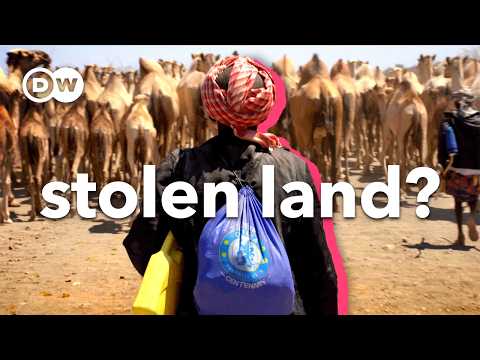
The Northern Kenya Rangelands Carbon Project, backed by major tech companies like Netflix and Meta, aims to offset carbon emissions through controlled livestock grazing. However, this initiative has led to significant community displacement, armed enforcement, and allegations of human rights abuses, raising questions about the true beneficiaries of carbon offset schemes.
In the dry and vast northern rangelands of Kenya, nomadic herders have traditionally migrated in search of fresh pastures. However, this landscape has recently become the focal point of a lucrative new resource: carbon offsets. Major Western tech companies, including Netflix and Meta, have invested millions in projects designed to absorb CO2 from the atmosphere by regulating livestock grazing. This initiative, while environmentally motivated, has sparked significant controversy and conflict within local communities.
The Northern Kenya Rangelands Carbon Project claims to be the largest of its kind globally, covering an area comparable to New Jersey or Slovenia. Launched in 2012 by the Northern Rangelands Trust (NRT), the project aims to sequester carbon by implementing a system known as 'planned rotational grazing.' This method involves keeping livestock off certain areas to allow grass to grow, thereby increasing carbon storage in the soil.
The project promises to sequester the equivalent annual carbon output of ten million cars over its first three decades. By 2022, Netflix and Meta had purchased over a quarter million tons of carbon offsets from this initiative. The revenue generated is intended to support local communities through projects like wells and schools, with claims of participatory management and transparency.
While the project is presented as a community-driven initiative, the reality on the ground is more complex. Many local herders, like Lemako Charo, report that imposed grazing boundaries have forced them to migrate closer to restricted areas, leading to dire consequences for their livestock. Charo expressed frustration over the proximity of grasslands that are now off-limits due to fencing associated with the carbon project.
Attempts by journalists to investigate these boundaries were met with resistance from armed rangers, who claimed to enforce conservation measures. Although the NRT describes these fences as anti-poaching barriers, satellite imagery indicates that the vegetation inside these areas is healthier than outside, raising questions about the project's true impact on local ecosystems.
The NRT's authority to sell carbon credits has come under scrutiny, particularly regarding the consent of local communities. An ongoing lawsuit challenges the legality of the conservancies established by the NRT, alleging that they were created without proper community involvement, violating Kenya's Community Lands Act. Human rights lawyer Innocent Makaka, representing the plaintiffs, argues that the agreements facilitating carbon offset sales lack transparency and public participation.
Many herders remain unaware of the carbon offsets being generated on their land, with some only learning about the project years after its inception. The NRT claims to have conducted community meetings, but low literacy rates and limited access to information have hindered effective communication.
Tragic accounts of violence have emerged, with some herders reporting fatal encounters with armed rangers enforcing grazing restrictions. Solomon Lempatu recounted witnessing his father's murder for grazing cattle in a restricted area, highlighting the severe consequences of the carbon offset project on local families. Human rights organizations have documented numerous extrajudicial killings of pastoralists in conservation areas, raising alarms about the militarization of conservation efforts.
Despite the significant revenue generated from carbon offsets, local communities have seen little benefit. A substantial portion of the funds is siphoned off by various intermediaries, including a US-based company that takes marketing fees and the NRT, which retains a large share for operational costs. Critics argue that this financial structure deprives communities of their rightful earnings from the sale of carbon credits.
As the global market for carbon offsets continues to grow, the need for equitable and transparent practices becomes increasingly urgent. Many community members advocate for direct engagement with local populations, emphasizing the importance of involving them in decision-making processes regarding their land and resources.
The Northern Kenya Rangelands Carbon Project illustrates the complexities and challenges of carbon offset initiatives in developing regions. While the project aims to combat climate change, it has inadvertently led to community displacement, human rights abuses, and financial exploitation. Moving forward, it is crucial to prioritize the voices and rights of local communities in the pursuit of sustainable environmental solutions.



















