
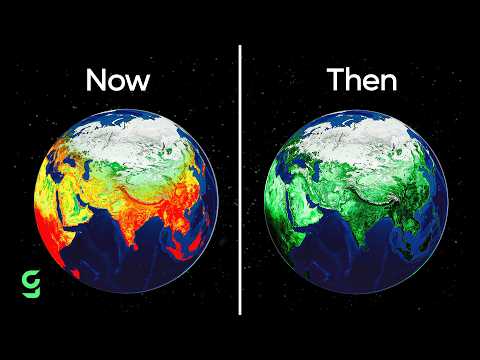
Planting 1 trillion trees could absorb 75 billion tons of carbon dioxide, significantly impacting climate change. Various initiatives like Team Trees and Project Eden are already making strides in reforestation, but strategic planning is essential for maximum effectiveness.
What if I told you that we have already destroyed half of all trees that ever existed on our planet? Every year, approximately 15 billion trees disappear due to deforestation and development, which is equivalent to a football field of forest vanishing every two seconds. While stopping deforestation is crucial, there is another significant reason to focus on trees: planting 1 trillion new trees could absorb around 75 billion tons of carbon dioxide, equivalent to about seven years of current global emissions. This blog post explores the potential impact of planting 1 trillion trees, the initiatives already underway, and the strategic considerations for maximizing their effectiveness.
Researchers from Yale University initially estimated that there were only 400 billion trees worldwide. However, better ground measurements revealed that we actually have more than 3 trillion trees today. Shockingly, this number is only half of what existed before human civilization began. The loss of trees is alarming, but there is hope in the form of various tree planting initiatives.
Forests are vital to our planet's health and biodiversity. They are home to over 73,000 different tree species, from towering evergreens to lush tropical canopies. Forests act as nature's air conditioning system, reducing summer temperatures by 1 to 5 degrees Celsius. They support millions of species, including humans, and play a crucial role in maintaining ecological balance.
One of the most notable initiatives is Team Trees, which began as a simple Reddit challenge in May 2019. Mr. Beast, a popular YouTuber, partnered with Mark Rober to launch this project, aiming to plant 20 million trees to celebrate reaching 20 million subscribers. The Arbor Day Foundation managed the planting process, ensuring that every dollar donated would plant a tree. In just 56 days, Team Trees reached its $20 million goal, resulting in nearly 25 million trees planted, which will absorb approximately 1.66 million tons of CO2 annually.
Another significant initiative is Project Eden, which has been transforming landscapes since 2005. This project focuses on hiring local villagers facing extreme poverty to restore their native forests, creating fair-paid jobs while improving the environment. As of now, Eden has planted an impressive 830 million trees across ten countries, including Indonesia, Kenya, and Brazil.
In January 2020, the World Economic Forum launched a challenge to conserve, restore, and grow over 1 trillion trees by 2030. This initiative aims to be the largest climate action in human history, with the United States creating the 1 Trillion Trees Interagency Council to facilitate partnerships and tree planting efforts.
Research indicates that tropical forests are the most effective at capturing carbon and should be prioritized for restoration. Countries like Brazil, Indonesia, China, Mexico, and Colombia hold more than half of the world's tropical restoration potential. Additionally, there are 1.5 billion hectares of degraded forests worldwide that could be revitalized, offering a significant opportunity for carbon absorption.
When planning tree planting, it is essential to consider connectivity. Trees can act as green highways, linking habitats that human development has fragmented. Wildlife crossings can significantly reduce accidents involving animals and help maintain biodiversity.
If we successfully plant 1 trillion new trees, they could absorb around 75 to 100 billion tons of carbon dioxide over their lifetimes, potentially slowing global warming by approximately 0.2 degrees Celsius. While this alone will not stop climate change, it is a crucial step in the right direction. New forests would also clean our water, protect our soil, and provide habitats for wildlife.
Despite the potential benefits, the goal of planting 1 trillion trees is daunting. Currently, the world plants about 5 million trees daily, which would take 548 years to reach a trillion. However, with increasing global partnerships and efforts, more people are working to restore our forests.
The question remains: should we focus more on planting trees, or perhaps encourage more initiatives like Team Trees? The answer is clear: every effort counts. By supporting tree planting initiatives and participating in local projects, we can all contribute to a healthier planet. Let us know your thoughts in the comments below!



















