
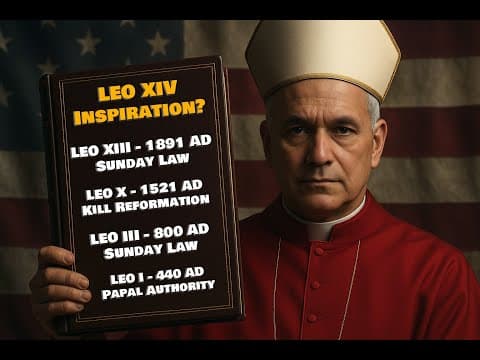
The election of Pope Leo XIV, the first American pope, raises significant questions about the revival of Sunday laws and the potential re-establishment of the Holy Roman Empire. This blog explores the historical context of the name chosen by the new pope and its prophetic implications, particularly in relation to church-state relations and the enforcement of Sunday worship.
The recent election of Cardinal Robert Francis Provost as Pope Leo XIV has sent shockwaves through the Catholic community and beyond. This marks a historic moment as he becomes the first American pope, a development that many believed would never happen due to the perceived overreach of American influence in global affairs. This blog post delves into the significance of his papal name and the potential implications for Sunday laws and the revival of the Holy Roman Empire.
When a pope is elected, he typically chooses a name that reflects his vision for his papacy, often inspired by previous popes. Pope Leo XIV's choice of name is particularly noteworthy, as it connects him to a lineage of popes who have played pivotal roles in church history.
Pope Leo I (Leo the Great): Known for establishing the authority of the papacy and promoting the idea of papal supremacy. His influence set the stage for the pope's role as the head of the church.
Pope Leo III: He crowned Charlemagne, marking the official establishment of the Holy Roman Empire. This act symbolized the union of church and state, a relationship that has been pivotal throughout history.
Pope Leo X: His papacy coincided with the rise of the Reformation and the excommunication of Martin Luther, highlighting the church's struggle against reformist movements.
Pope Leo XIII: Known as the Pope of the working man, he addressed social justice issues and advocated for workers' rights, linking them to the observance of Sunday as a day of rest.
The selection of Pope Leo XIV raises questions about his agenda and the potential revival of Sunday laws. The historical actions of previous popes named Leo suggest a pattern that could inform his papacy.
Pope Leo III's crowning of Charlemagne established a precedent for the intertwining of ecclesiastical and civil authority. This historical moment is echoed in contemporary discussions about the role of religion in government, particularly in the United States. The recent actions and statements of political leaders, including former President Donald Trump, indicate a growing trend towards merging religious influence with state governance.
Historically, the enforcement of Sunday as a day of worship and rest has roots in the actions of past popes. For instance, Charlemagne enacted laws mandating Sunday observance, a practice that has resurfaced in modern discussions about work-life balance and workers' rights. The connection between Sunday rest and religious observance is becoming increasingly relevant as society grapples with the demands of modern work schedules.
The prophetic narrative suggests that Protestants in the United States may play a significant role in the revival of these old laws. The Great Controversy highlights a future scenario where religious and secular authorities combine to enforce Sunday observance, which could lead to increased tensions between different faiths and practices.
As we navigate this new era under Pope Leo XIV, it is crucial for individuals to remain vigilant and aware of the unfolding events. The call to "watch" resonates strongly in light of the historical patterns and prophetic implications associated with the papacy.
The election of Pope Leo XIV is not just a historical milestone; it is a potential turning point in the relationship between church and state, particularly regarding the enforcement of Sunday laws. As we reflect on the implications of this papacy, it is essential to engage in self-examination and remain watchful of the times we live in. The words of Christ to "watch" are more relevant now than ever, urging us to stay informed and spiritually attuned as we witness prophecy unfold.



















