
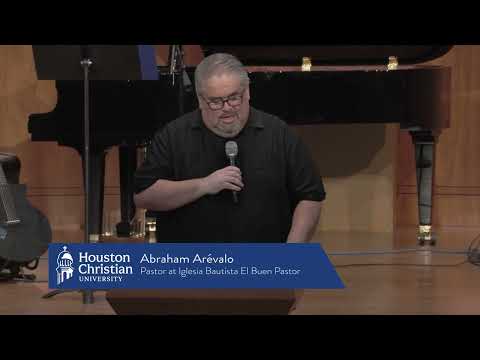
Pastor Abraham Arevalo emphasizes the vital role of the local church in the Christian faith, highlighting its importance for spiritual growth, community, and fulfilling God's mission.
In a recent Spanish convocation at Houston Christian University, Pastor Abraham Arevalo shared profound insights on the significance of the local church in the life of a believer. With over 31 years of ministry experience, Arevalo's message resonated with the audience, emphasizing the church's role in spiritual growth and community engagement.
The event began with a heartfelt prayer led by Pastor Arevalo, thanking God for the day and asking for blessings on the gathering. This set a tone of reverence and gratitude, preparing the attendees for a time of worship and reflection.
Pastor Arevalo hails from Ensenada, Mexico, and has been married to his wife, Esther, for 31 years. Together, they have three children. Arevalo has dedicated his life to ministry, serving as a church planter, mentor, and missionary with the North American Mission Board, focusing on planting Hispanic churches in Kansas and Nebraska.
Pastor Arevalo's message centered on the importance of the local church, a topic he is passionate about and currently exploring in his doctoral dissertation. He referenced Titus 1:5, where the Apostle Paul instructs Titus to correct deficiencies in the church and appoint elders in every city. This scripture highlights the foundational role of church leadership in maintaining the health and vitality of the church community.
Arevalo pointed out that Paul, regarded as one of the greatest missionaries in history, understood the necessity of community in the Christian faith. He did not operate in isolation but instead focused on multiplying leaders and strengthening local churches. This approach was crucial for the spread of the Gospel and the establishment of healthy church communities.
The pastor emphasized that the Christian life is not merely a personal journey but a communal experience. The growth of individual believers is intertwined with the health of the church. Arevalo noted that in modern society, there is a tendency to view church involvement as optional or secondary to personal spiritual growth. However, he argued that this perspective undermines the biblical understanding of the church's role in a believer's life.
Arevalo discussed the rise of individualism in contemporary culture, where personal expression often takes precedence over communal commitments. He referenced Carl Truman's concept of "expressive individualism," which suggests that society prioritizes individual desires and self-fulfillment over collective responsibilities. This mindset can lead to a transactional view of church membership, where individuals seek to fulfill their needs rather than contribute to the community.
According to Arevalo, the church exists for a greater purpose than personal satisfaction. It is a divine institution designed to glorify God and fulfill His mission on earth. He reminded the audience that being part of a church is not about meeting personal expectations but about participating in God's plan for humanity.
A critical point in Arevalo's message was the necessity of developing strong leaders within the church. He highlighted that the first task Paul assigned to Titus was to appoint elders who would guide and nurture the congregation. Effective leadership is essential for addressing the challenges faced by the church and ensuring its growth and health.
Pastor Arevalo concluded his message by urging attendees to reflect on their involvement in their local church. He encouraged them to prioritize being part of a community of believers, to serve, and to use their gifts for the benefit of others. The church is not merely a place to attend but a vital part of a believer's spiritual journey.
The convocation ended with a prayer, thanking God for the opportunity to gather and worship together, and asking for continued guidance and blessings for the community.
In summary, Pastor Abraham Arevalo's message serves as a powerful reminder of the importance of the local church in the life of every believer. It is a place for growth, service, and fulfilling God's mission, and it is essential for Christians to engage actively in their church communities.



















