
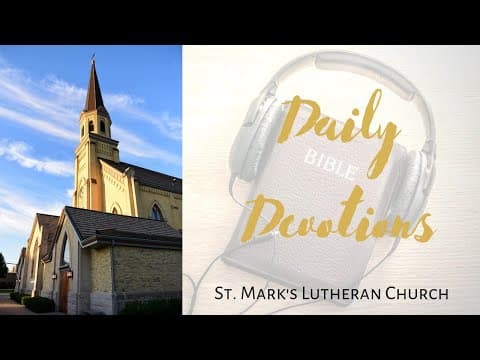
This blog post explores the historical context of pastoral relationships at St. Mark's, highlighting the challenges faced by early pastors and the importance of unity among current pastors through prayer, scripture study, and shared ministry planning.
In contemporary congregations, it is common to find multiple pastors working together. This shift reflects a growing expectation for pastors to engage in a variety of roles beyond traditional preaching and catechetics. However, this was not always the case. Nearly a century ago, the landscape of pastoral leadership looked quite different, particularly at St. Mark's, where the presence of multiple pastors was a rarity.
In 1928, St. Mark's was already a large congregation, which necessitated the addition of another pastor to its ranks. At that time, Pastor Julius Klingman had been serving the congregation for decades. He was known as the De Haar Pastor and is perhaps most famously remembered for distributing pictures of himself to his confirmands.
Joining Pastor Klingman in 1928 was Pastor William Eggert. Today, Pastor Eggert is recognized as the father of Kurt Eggert, who served as the editor of the congregation's old hymnal. Despite their contributions to the church, the relationship between these two pastors was notoriously contentious.
The dynamic between Pastor Klingman and Pastor Eggert was marked by conflict. It was said that if they encountered each other on the sidewalk, one would cross to avoid a greeting. Their disagreements often escalated into loud arguments, particularly over funeral services, leading to a divided congregation. If one pastor preached on a Sunday, the supporters of the other would sometimes leave in protest. This rivalry was so pronounced that it became a source of humor among the congregation, with jokes about the potential for their pictures to come to blows.
Reflecting on this historical tension raises important questions for the present: Do the current pastors at St. Mark's get along? If so, how do they maintain their unity? The answer is a resounding yes; the current pastors do get along, and their ability to do so is attributed to the grace of God. They acknowledge their own imperfections and recognize that unity is essential for effective ministry.
The current pastors at St. Mark's attribute their harmonious relationship to several key practices:
These practices, combined with the congregation's prayers, play a crucial role in maintaining their unity. The pastors emphasize the importance of continued prayer for their collective mission, peaceful coexistence, and doctrinal unity.
Unity among pastors is not just beneficial for their relationship; it is vital for the congregation as well. The pastors at St. Mark's understand that their unity in faith in Jesus Christ is foundational to the salvation of both themselves and their congregation. They encourage the church community to keep praying for their unity and for a shared sense of mission.
In conclusion, the historical lessons from St. Mark's serve as a reminder of the importance of unity among pastors. By fostering relationships through scripture study, collaborative planning, and shared joy, the current pastors are committed to serving their congregation effectively. As they continue to grow together in faith, they invite the congregation to join them in prayer for ongoing unity and mission fulfillment.
Keep praying, and have a terrific week!



















