
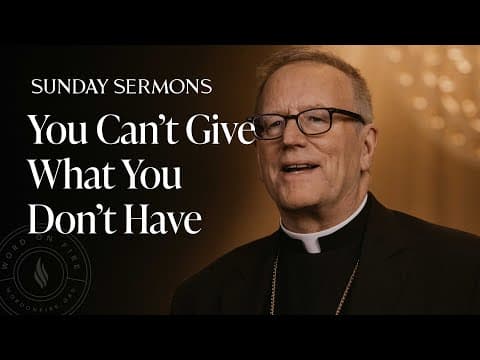
Bishop Barron's sermon emphasizes the necessity of both walls and bridges in the Christian faith, using the historical context of Nehemiah and Ezra to illustrate how identity and cultural relevance are intertwined in the life of the church.
Peace be with you. On this third Sunday of Ordinary Time, Bishop Barron reflects on the concepts of walls and bridges, drawing inspiration from John Lennon's album, "Walls and Bridges." In contemporary discourse, there is a tendency to view walls negatively and bridges positively. However, Barron argues that both are essential in the life of the church, depending on the context.
Bishop Barron suggests that it is not a matter of choosing between walls or bridges, but rather understanding the necessity of both. He emphasizes that to live the Christian faith correctly, one must recognize the importance of both structures.
To illustrate his point, Barron refers to the first reading from the book of Nehemiah in the Old Testament. This period in Israelite history marks the return of Babylonian captives to their homeland, where they find Jerusalem in ruins. The anguish of the people is palpable as they confront the destruction of their once-glorious city.
Imagine a Parisian returning to a devastated Paris or a Roman witnessing the ruins of Rome after a siege. This sense of loss resonates deeply with the Israelites as they return to their homeland. Nehemiah's first action is to rebuild the walls of Jerusalem, which in the ancient world were crucial for defining a city's identity and protecting its inhabitants.
While Nehemiah focuses on the physical walls, Ezra, the priest, understands the need to restore the spiritual and cultural identity of the people. He recognizes that the younger generations, born in exile, have lost touch with their heritage. Ezra reads from the Torah and the prophets, engaging the people and rekindling their connection to their faith. The emotional response of the people, who weep upon hearing the law, signifies a rediscovery of their identity and soul.
Bishop Barron draws parallels between the physical walls of Jerusalem and the spiritual walls that define the identity of Catholics today. He reflects on his own experience growing up after Vatican II, a time when the church emphasized cultural relevance. While this was important, it also led to a dilution of the church's identity, as the walls that defined Catholicism began to crumble.
Walls serve to define who we are as Catholics. They encompass the laws, practices, and moral convictions that shape our faith. Without these defining walls, individuals may lose their bearings, much like the Israelites returning to a destroyed Jerusalem. Barron argues that walls are not inherently bad; they are necessary for maintaining a clear sense of identity.
In the Gospel reading, Barron highlights Jesus' return to his hometown, where he reads from the scroll of the prophet Isaiah. This moment serves as a redefinition of Israel's identity, as Jesus embodies the Word made flesh. By proclaiming his mission, he reinforces the walls that define the people of Israel.
While Bishop Barron emphasizes the importance of walls, he also acknowledges the significance of bridges. Once the identity of Israel is established, the purpose shifts to proclaiming the Word to the world. The church, as the new Israel, is called to bring the light of Christ to all nations. However, this mission cannot be fulfilled without a strong understanding of one's identity.
Bishop Barron warns against the oversimplification of viewing walls as negative and bridges as positive. Both are essential for a balanced approach to faith. The pastoral genius lies in recognizing the need for both structures at different times. Just as Ezra and Nehemiah understood the needs of their people, modern leaders must discern when to emphasize identity and when to reach out to the world.
In conclusion, Bishop Barron's sermon serves as a reminder of the delicate balance between walls and bridges in the Christian faith. Both structures are necessary for a robust and meaningful expression of faith. Understanding and maintaining our identity allows us to effectively engage with the world, ensuring that we can proclaim the Word of God with clarity and purpose. God bless you.



















