
The informal economy in the United States is a growing sector that includes marginalized workers such as immigrants, women, and people of color. Despite the country's economic growth, many workers are trapped in low-paying, unstable jobs without protections. This blog post explores the challenges faced by informal workers, the historical context of labor rights, and the ongoing struggle for recognition and fair treatment in the workforce.
In recent years, the U.S. economy has shown signs of growth, with the unemployment rate at its lowest since 2001 and job creation reaching record levels. However, this economic expansion has not translated into fair wages or job security for many workers. Millions of Americans are employed in jobs that were once considered middle class but now leave them struggling to make ends meet. This blog post explores the informal economy, a sector that has become increasingly significant yet remains largely unrecognized.
The informal economy consists of workers who are not protected by labor laws and regulations. These workers often include immigrants, people of color, and women, who face systemic barriers to stable employment. The rise of the informal economy is linked to a broader trend of income inequality, where the wealth generated by economic growth is not shared equitably among workers.
Many individuals in the informal economy are engaged in part-time or unstable jobs, often out of necessity. They hustle daily to provide for their families, yet they lack access to basic labor protections such as minimum wage, health benefits, and overtime pay. This situation has led to a survival economy, particularly for low-income individuals who are systematically excluded from the formal labor market.
The concept of a social contract in America suggests that workers should have access to stable employment and fair labor standards. However, this ideal has not been realized for many marginalized groups. Historically, African Americans, Latino communities, and undocumented immigrants have faced significant challenges in the labor market, often relegated to informal work.
Initially, the informal economy was viewed as a phenomenon of developing countries, with the belief that it would diminish as economies modernized. Contrary to this expectation, the informal economy in the U.S. has expanded, revealing a complex web of employment relationships that often go unnoticed. Workers in this sector, such as day laborers and domestic workers, frequently operate outside the law, lacking the protections afforded to formal employees.
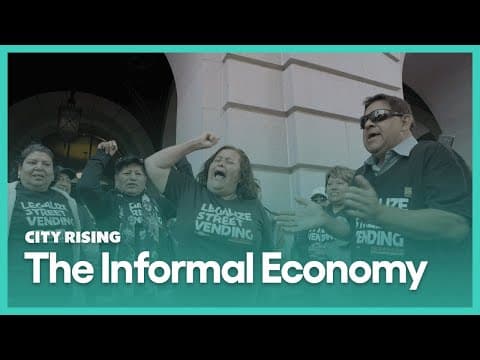
In cities like Los Angeles, street vendors represent a significant portion of the informal economy. Despite their contributions to the local economy, these vendors often operate illegally and face harassment from law enforcement. A campaign to legalize street vending has emerged, led primarily by women who are determined to secure their right to work without fear of arrest.
The trucking industry also exemplifies the challenges faced by informal workers. Many truck drivers are classified as independent contractors, leaving them without benefits or protections. They often work long hours for minimal pay, with companies shifting costs onto them. This misclassification has led to widespread frustration and efforts to organize for better working conditions.
The rise of neoliberalism in the late 20th century has contributed to the erosion of labor rights and the growth of the informal economy. Policies that prioritize market efficiency over worker protections have left many vulnerable. The decline of union membership and the dismantling of labor regulations have further exacerbated the situation, leading to increased economic inequality.
Addressing the challenges of the informal economy requires a concerted effort to redefine labor rights and protections. There is a growing movement to establish a new social contract that recognizes the contributions of all workers, regardless of their employment status. This includes advocating for policies that support fair wages, job security, and access to benefits.
Community organizations and worker centers play a crucial role in supporting informal workers. They provide resources, training, and advocacy to help workers navigate the complexities of the labor market. By empowering workers to organize and demand their rights, these groups are working to create a more equitable economy.
The informal economy is a vital yet often overlooked part of the American workforce. As the economy continues to evolve, it is essential to recognize and address the challenges faced by informal workers. By advocating for fair labor practices and protections, we can work towards a more inclusive and just economy for all.



















