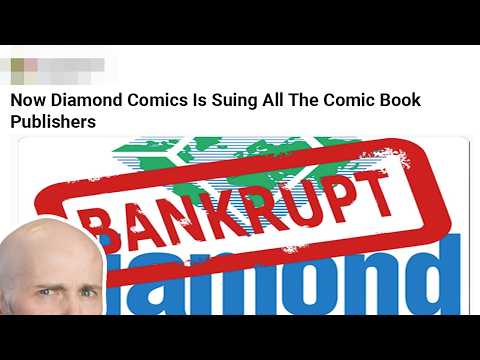
In 2025, Diamond Comic Distributors, a near-monopoly in comic book distribution, declared bankruptcy, triggering a chaotic series of bids, lawsuits, and ownership disputes. The sale process involved Alliance Entertainment and Adopulum's Sparkle Pop, leading to legal battles over bids, employee poaching, and ownership of millions in consigned comic inventory. Publishers face legal and financial challenges as the situation remains unresolved.
Are you ready to go on a crazy journey? The story of Diamond Comic Distributors' bankruptcy and the ensuing legal battles is wild, filled with twists and turns that reveal the complexities of the comic book distribution business.
Since the late 1990s, Diamond Comic Distributors has held a near-monopoly on comic book distribution in the United States. Acting as the middleman between publishers and comic shops, Diamond would receive comics from publishers, solicit orders, and then fulfill weekly orders placed by comic shops. Founded by Steve Jebby, Diamond wielded significant power in the industry, sometimes controversially.
In January 2025, Diamond filed for Chapter 11 bankruptcy. The reasons behind the bankruptcy are complex and will be discussed separately, but the immediate consequence was the initiation of a bidding process to sell Diamond's assets to pay back creditors.
Several companies submitted bids to acquire Diamond's assets. The highest bid came from Alliance Entertainment, a company primarily involved in music, movies, and games distribution, offering approximately $72 million. The second-highest bid was from Adopulum, at about $57 million.
Despite Alliance's higher bid, Diamond chose to sell to Adopulum for less money, sparking allegations of backroom dealings. This decision was controversial because the sale proceeds were meant to repay creditors, and maximizing value would typically be in their interest.
Alliance Entertainment sued Diamond, demanding the sale be made to them as the highest bidder. The court sided with Alliance, confirming the sale to them and leading to the withdrawal of the lawsuit. However, just before the sale was to close on April 25, Alliance backed out on April 24.
Subsequently, on May 1, Sparkle Pop, a subsidiary of Adopulum, purchased Diamond. This led to another lawsuit where Alliance accused Diamond of fraudulent misrepresentation, particularly regarding their relationship with Wizards of the Coast, a major client responsible for $40 million in annual revenue. Alliance claimed Diamond concealed the expiration of their exclusive contract with Wizards of the Coast, which influenced their decision to back out.
After Sparkle Pop acquired Diamond, they immediately began cutting costs, including staff layoffs and withholding payments to vendors. Employees alleged that Joel Wang Shanker, CEO of Sparkle Pop, pressured staff to lay off colleagues or face salary cuts.
One employee, Shiml, was fired via email, though Sparkle Pop claimed he resigned. Shortly after, Shiml and six other former Diamond employees joined Alliance Entertainment. Sparkle Pop then sued Alliance, accusing them of stealing employees and violating confidentiality agreements related to the sale process.
A major complication arose concerning millions of dollars worth of comic books stored in a warehouse in Mississippi. Much of this inventory was on consignment, meaning Diamond had not purchased these books outright but was holding them for publishers.
Ownership of this inventory became a contentious issue. Diamond claimed ownership due to administrative oversights during bankruptcy filings and sought to sell the inventory to repay debts, particularly to JP Morgan Chase Bank, their largest creditor.
Publishers contested this claim, leading to mass lawsuits from Diamond against every comic publisher asserting ownership of the inventory. This legal battle imposed significant financial and operational burdens on publishers, many of whom are small businesses.
Sparkle Pop, now controlling Diamond's operations, reported that the consigned and owned inventory were mixed together, complicating ownership and sales. They continued selling inventory, generating millions in revenue, but the court ordered them to stop due to unclear ownership.
Publishers banded together to reclaim their inventory, but the situation remained unresolved. Sparkle Pop argued that no one had paid rent for storing the inventory and that they were owed fees for sales made without explicit permission.
On December 12, 2025, Diamond converted to Chapter 7 bankruptcy, signaling the end of the company. However, the consignment inventory issue persisted, with publishers seeking to recover their stock and Sparkle Pop asserting warehouse liens to retain possession until paid.
JP Morgan Chase's legal representatives stated that as long as their interests were acknowledged, they were indifferent to the inventory's ownership resolution.
Publishers formed groups to support efforts to release the consigned stock, but the legal and financial complexities continue to stall progress.
The ongoing legal battles and inventory disputes have severely impacted comic book publishers. Many have lost access to significant inventory, including Kickstarter-backed add-ons, and face mounting legal costs to fight for their property.
The situation has created a bottleneck in distribution, with uncertainty over who controls the inventory and how debts will be settled.
The Diamond Comic Distributors bankruptcy and subsequent sale have unleashed a chaotic and complex legal saga involving multiple companies, lawsuits, and disputes over millions of dollars in inventory. The comic book industry faces significant challenges as publishers struggle to reclaim their property and navigate the fallout.
For those interested in following this story in detail, journalist Brett at graphicpolicy.com has provided extensive coverage and document summaries.
This saga highlights the intricate and sometimes ruthless nature of business dealings in the comic book world, reminding us that behind the colorful pages lies a complex web of corporate and legal battles.