
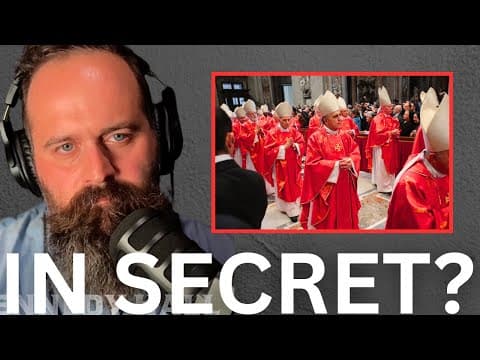
This blog post explores the fascinating history of secret conclaves in the Catholic Church, focusing on the election of popes, the evolution of the conclave process, and notable historical events, including the dual conclaves of 1130. It highlights the complexities and controversies surrounding papal elections and the implications for the Church today.
The election of popes has always been a significant event in the Catholic Church, often shrouded in mystery and intrigue. In this post, we will delve into the history of secret conclaves, particularly focusing on the notable events of 1130, and explore how these historical precedents might resonate with contemporary issues in the Church.
The term "conclave" refers to the gathering of cardinals to elect a new pope. However, the formal process we recognize today did not emerge until the year 1059, when a papal constitution declared that only cardinals would elect the pope. Before this, the election process was quite different. In the early Church, the clergy and people of Rome would elect the pope by acclamation. This often led to dramatic and unexpected outcomes, such as the election of Pope Fabian, who was chosen after a dove landed on his head during the election.
For the first millennium of the Church, the election of popes was influenced by various factors, including the Roman nobility and even emperors. The emperors, particularly during the early Middle Ages, played a significant role in determining who would ascend to the papacy. This led to a series of reforms aimed at establishing a more independent papacy, culminating in the election of popes by cardinals without imperial interference.
One of the most remarkable instances of a secret conclave occurred on February 14, 1130, following the death of Pope Honorius II. A small group of cardinals, led by Cardinal Heimrich, convened a conclave without informing the rest of the cardinals or the clergy of Rome about the pope's death. This was a clear violation of canon law, which mandated a waiting period after the pope's burial before a conclave could begin.
Upon learning of the secret conclave, the remaining cardinals and clergy of Rome were outraged. They held their own conclave and elected Cardinal Pietro Leonei as Pope Anacletus II. This led to a significant conflict, with supporters of both popes clashing in the streets of Rome. Ultimately, Anacletus II's faction prevailed, and he ruled for eight years, during which he excommunicated Innocent II and appointed his own cardinals.
St. Bernard of Clairvaux emerged as a key figure during this tumultuous period. He supported Innocent II and worked tirelessly to gain the backing of powerful leaders, including the kings of France and England. His influence was crucial in legitimizing Innocent's papacy, despite the irregularities surrounding his election. Eventually, Anacletus II died, and Innocent II was recognized as the legitimate pope by an ecumenical council, which declared Anacletus an antipope.
The events of 1130 raise important questions about the nature of papal elections and the potential for irregularities in the process. The historical precedent of a secret conclave suggests that similar situations could arise today, where factions within the Church might attempt to influence the election of a pope.
The concept of universal peaceful acceptance, articulated by St. Alphonsus Liguori, posits that even if a pope is elected through irregular means, acceptance by the Church can legitimize his authority. This doctrine has been debated in light of recent papacies, particularly regarding the legitimacy of Pope Francis and the implications of his election.
The history of secret conclaves in the Catholic Church serves as a reminder of the complexities and challenges inherent in the papal election process. As the Church navigates contemporary issues, understanding these historical precedents can provide valuable insights into the potential for future conflicts and the ongoing quest for a faithful and legitimate papacy. In these "interesting times," as the saying goes, the faithful are called to remain vigilant and prayerful, trusting in the guidance of the Holy Spirit amidst the uncertainties of Church governance.



















